What Is a Surge Protective Device and How Does It Work?
A sudden voltage spike can travel through power lines, wiring, or connected equipment. Lightning is one possible source, but switching motors, compressors, and other loads can also create brief surges. These events may be too quick to notice. Their effects can appear later as damaged power supplies, flickering displays, or equipment that no longer works.
A Surge Protective Device (SPD) helps reduce the risk by limiting excess voltage and directing surge current toward a grounding path. Many devices use components such as metal-oxide varistors, which respond when voltage rises beyond a set level. The SPD then returns to its normal state once the event passes. In plain terms, it acts like a pressure outlet. Not a shield for everything.
Choosing an SPD involves more than checking a product label. Its voltage rating, surge capacity, installation location, and compatibility with the electrical system all matter. A device installed at a service panel can protect against some incoming surges, while point-of-use protection may help shield sensitive electronics nearby. Neither arrangement guarantees that equipment will never be damaged. Grounding quality and correct installation matter, too.
That detail is easy to miss. An SPD also has limits and may wear down after repeated surges. Understanding how it works helps homeowners and facility managers make more informed decisions, but a qualified electrician should assess installation needs and local conditions. The practical goal is risk reduction, not a promise of perfect protection.
What a Surge Protective Device Is
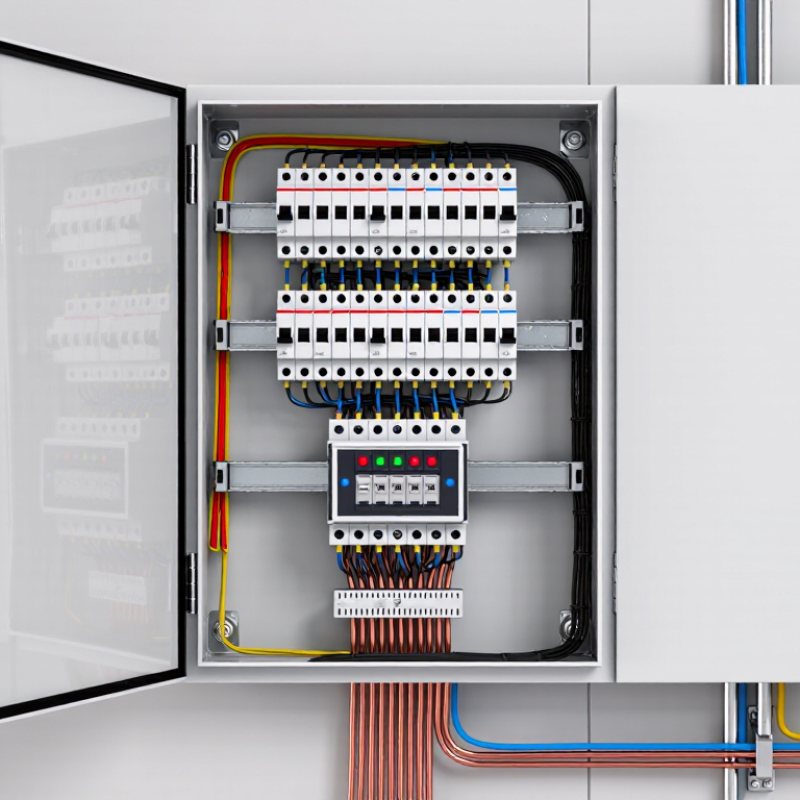
A surge protective device (SPD) is an electrical safety component that limits brief overvoltages and redirects excess current away from connected equipment. It is commonly installed at a building’s electrical panel or near sensitive devices. Inside, components such as metal-oxide varistors respond when voltage rises above a set level. They conduct surge current toward the grounding path, then return to a high-resistance state. The SPD does not stop every surge or provide backup power. That distinction matters.
Surges can come from lightning, utility switching, or equipment cycling inside a building. IEEE’s C62.41.2 recommended practice describes surge testing with a 1.2/50-microsecond voltage waveform and an 8/20-microsecond current waveform. These values characterize test conditions, not a promise that every real surge behaves identically. An SPD’s ratings, installation, and grounding all affect its performance. A loose ground connection can undermine protection. Small details count. Devices also age after repeated stress, and some provide an indicator when protection is reduced. Yet an indicator cannot reveal every failure, so inspection and replacement guidance deserve attention. Protection is useful, but it is not perfect.
What Is a Surge Protective Device and How Does It Work?
A surge protective device (SPD) limits transient overvoltage by diverting surge current away from connected equipment. This illustration compares a nominal 120 V RMS supply with an example surge and the reduced voltage that may remain after an SPD responds. Actual protection levels vary by device and installation.
Illustrative values, not a product rating: a 6 kV surge is shown as an example, and the SPD’s let-through voltage depends on its specifications and test conditions.
How Electrical Surges Occur
An electrical surge is a brief rise in voltage above the level equipment is designed to handle. It may last only microseconds, too quickly to notice, yet stress delicate electronic components. Surges can enter a building through power lines, phone cables, or other connected wiring. The cause is not always visible.
Lightning is a familiar source. A nearby strike can induce a sudden voltage in electrical lines, even without hitting a house directly. Utility operations can also create surges when equipment switches or a fault is cleared. Inside a building, devices with motors—such as air conditioners, refrigerators, and pumps—may produce smaller switching surges as they start or stop. A lamp flickering when a compressor kicks on can be a clue, but it does not prove a damaging surge occurred. That distinction matters.
Surges vary in strength and path. A surge may pass unnoticed, or it may contribute to gradual wear, data loss, or immediate equipment failure. The exact cause is often hard to establish after the fact. Even a damaged device does not tell the whole story. A surge protective device is intended to limit excess voltage reaching connected equipment, but it cannot prevent every electrical problem or guarantee protection from a severe lightning event.
What Is a Surge Protective Device and How Does It Work? — How Electrical Surges Occur
| Surge Source |
How the Surge Occurs |
Typical Example |
How an SPD Helps |
| Lightning-related activity |
A nearby lightning strike can create a rapidly changing electromagnetic field that induces a transient voltage in power or communication wiring. A direct strike can also introduce severe surge energy into electrical systems. |
A storm induces a voltage transient on an overhead service line or an outdoor cable. |
An SPD limits transient voltage at its installation point and provides a path for surge current, subject to its rating, installation, and grounding arrangement. |
| Utility-system switching |
Switching operations on the electrical grid can produce brief voltage transients as circuits or equipment are connected and disconnected. |
Utility equipment switches a feeder or capacitor bank. |
An SPD responds to transient overvoltage by conducting surge current away from protected circuits and limiting the voltage that reaches connected equipment. |
| Inductive-load switching |
When current through an inductive load changes abruptly, the magnetic field collapses and can generate a voltage transient. |
A motor, transformer, relay, or solenoid is switched off. |
An SPD can limit transients on the supply wiring. Suppression at the load may also be appropriate, depending on the equipment and circuit design. |
| Capacitor-bank switching |
Connecting or disconnecting capacitors can cause transient oscillations in an electrical system, depending on the network and switching conditions. |
A power-factor-correction capacitor bank is switched in or out. |
An appropriately selected and installed SPD can help limit resulting transient overvoltages on the protected system. |
| Electrostatic discharge (ESD) |
Static charge accumulated on a person or object can discharge suddenly when it contacts or approaches an electronic circuit. |
A static discharge occurs while handling an electronic device or circuit board. |
Equipment-level protection components can divert or limit ESD current at sensitive signal or power connections. A service-panel SPD alone may not protect against every ESD event. |
| Fault clearing and switching events |
Changes associated with a fault being interrupted or a circuit being switched can create transient overvoltages in some systems. |
A protective device interrupts a fault, or a large load is switched. |
An SPD provides transient protection within its specified operating limits; it does not replace overcurrent protection or correct sustained overvoltage. |
The Main Components Inside an SPD
The Main Components Inside an SPD
Inside a surge protective device, metal-oxide varistors (MOVs) do much of the clamping. When voltage rises above a set threshold, their resistance drops, diverting surge current away from connected equipment. A gas-discharge tube may provide another path, especially in some service-entrance designs. These parts are not interchangeable; their ratings and placement matter.
Small components, serious work.
A thermal disconnect separates an overheating MOV from the circuit, reducing fire risk if the component degrades. A fuse or circuit breaker provides additional overcurrent protection, while an indicator window shows whether protection remains active. Under UL 1449, nominal discharge current test levels include 3, 5, 10, and 20 kA; these are test ratings, not guarantees against every surge. IEEE C62.72 guidance also stresses selecting and installing SPDs for the system they protect. One detail is easy to miss: an illuminated indicator cannot prove every internal component is healthy. I would check its instructions and inspection schedule, rather than trust the green window alone.
How an SPD Detects and Diverts Excess Voltage
A surge protective device (SPD) responds when voltage rises above a level its protective components are designed to tolerate. Inside many common SPDs, metal-oxide varistors normally resist current. During a brief voltage spike, their resistance drops sharply. The device then provides a lower-resistance path, limiting the voltage that reaches connected equipment.
The surge current is directed toward the grounding system, where it can dissipate. It happens very quickly. A nearby lightning strike or a switching event in the electrical network can create a transient surge that lasts only a fraction of a second. The SPD does not make that surge disappear; it helps keep the voltage at a safer level. Some residual voltage may still pass through.
In practice, the path is rarely as tidy as a diagram suggests. Long wires or poor connections can reduce an SPD’s effectiveness, and a worn device may need replacement. A small indicator window can show its status, but it is not a full test. Installation details matter. A qualified electrician can check that the SPD suits the panel and has a sound grounding path.
Common SPD Types and Where They Are Used
Surge protective devices (SPDs) are commonly grouped by where they connect in an electrical system. Type 1 devices are installed near a building’s service entrance, where incoming surges can reach the wiring. They are designed to handle high-energy events. Type 2 SPDs are typically fitted in a main or sub-distribution panel, helping limit surges that travel through internal circuits. In many buildings, the two types work together.
Type 3 devices are installed close to sensitive equipment, such as computers, televisions, or control systems. They provide a final layer of protection at the point of use, but should not be treated as a substitute for panel-level protection. A small plug-in device beside a desk may help with nearby equipment; it cannot correct poor wiring or an unsuitable electrical installation. Details matter.
Type labels and installation rules can differ by region and standard, so check the device documentation and local requirements. An electrician can assess the panel, grounding, and surge exposure before selecting an SPD. Coordination matters, too: a device’s ratings should suit its location and the protection already installed. The labels can feel straightforward, but choosing by label alone is easy to get wrong.



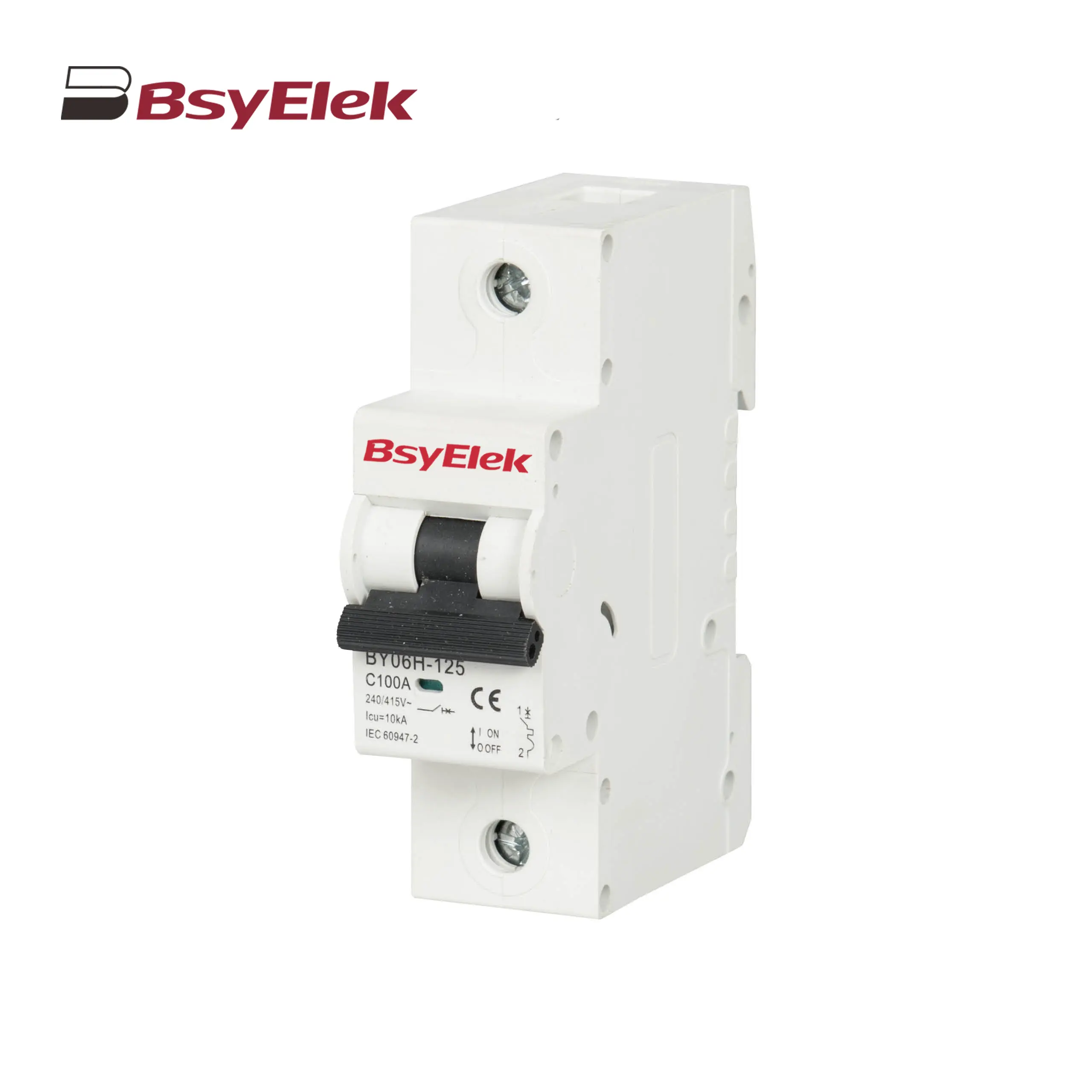 BY06H-125 MCB 10-15KA Miniature Circuit Breaker
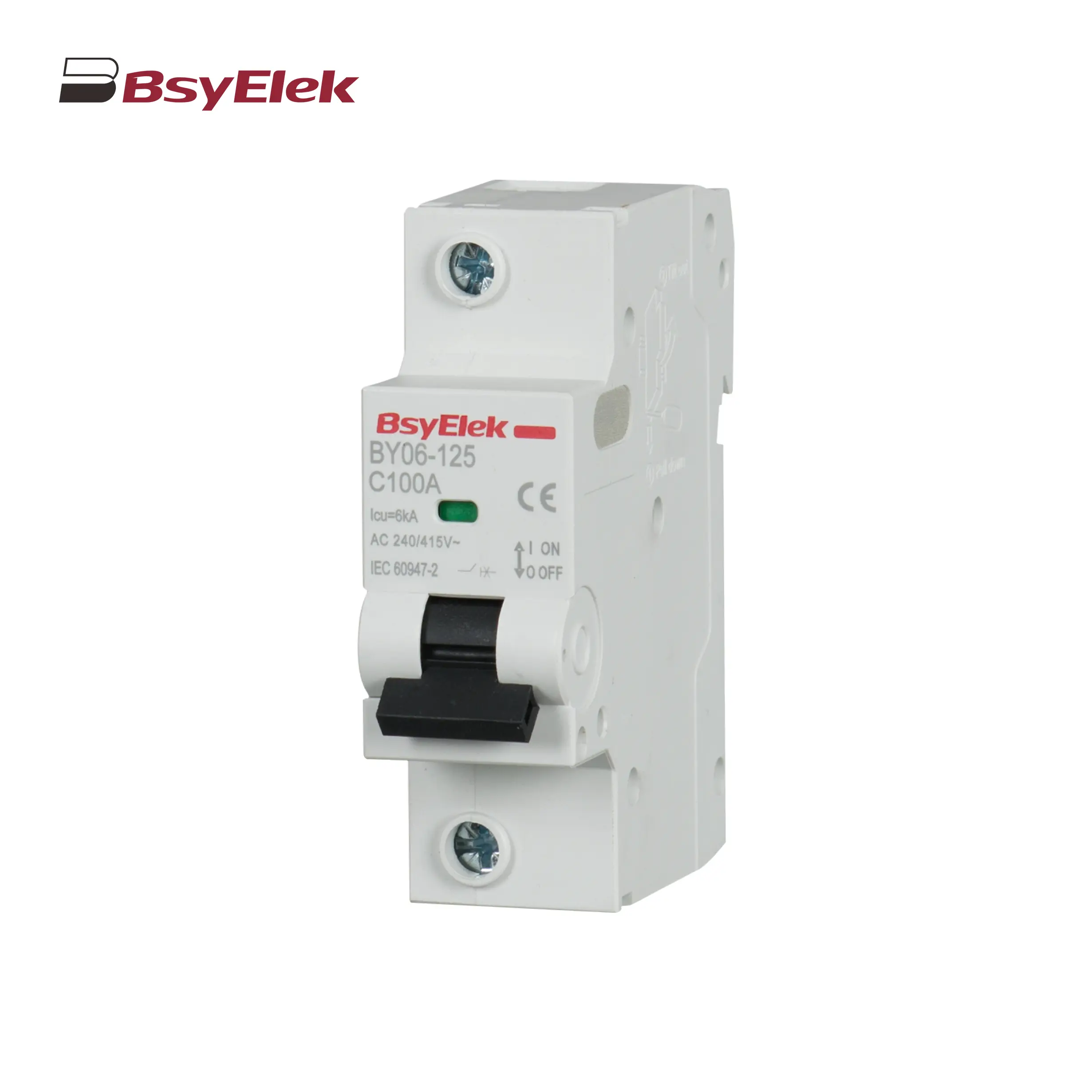 BY06-125 MCB 6KA Miniature Circuit Breaker
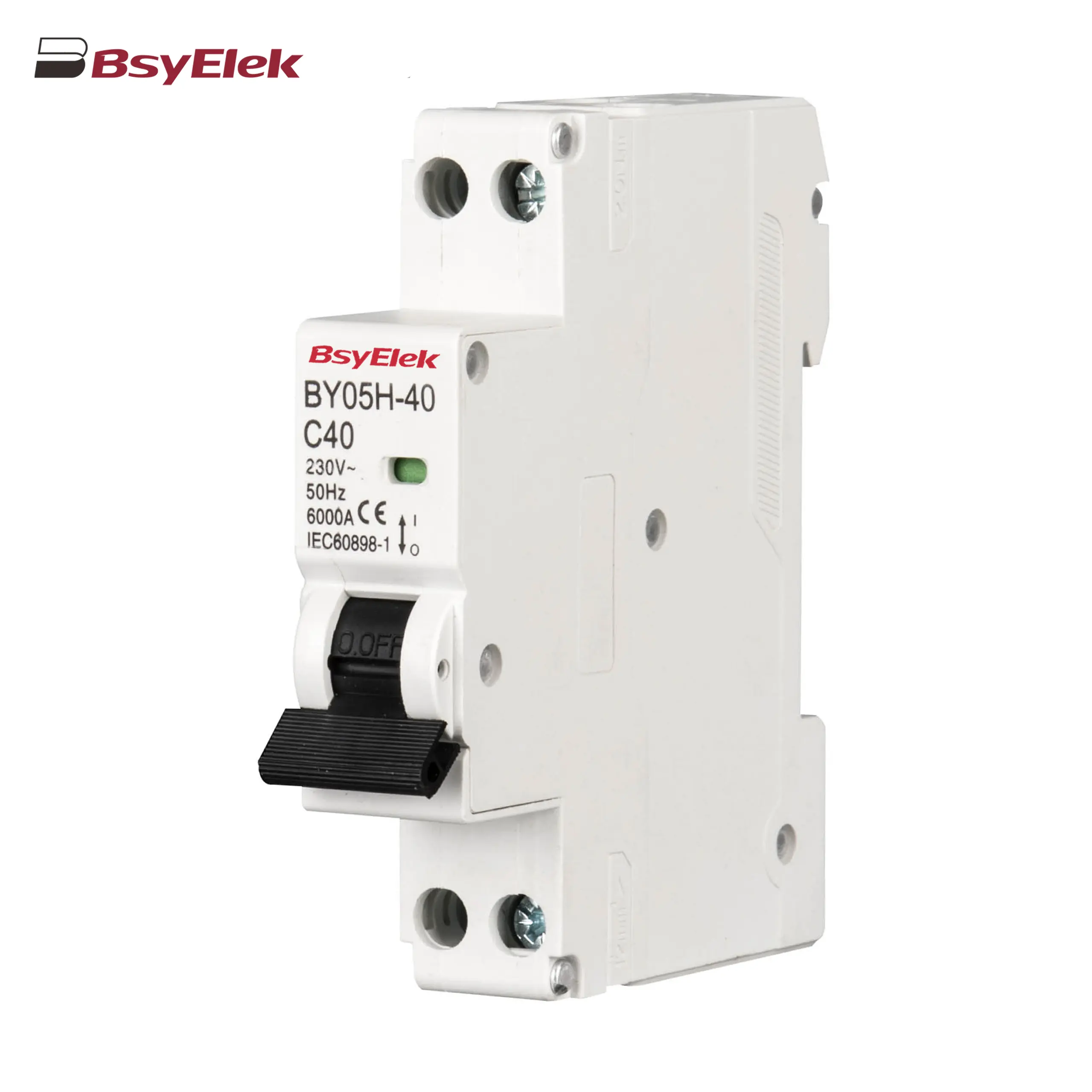 BY05H-40 MCB Single Modular 6KA Miniature Circuit Breaker
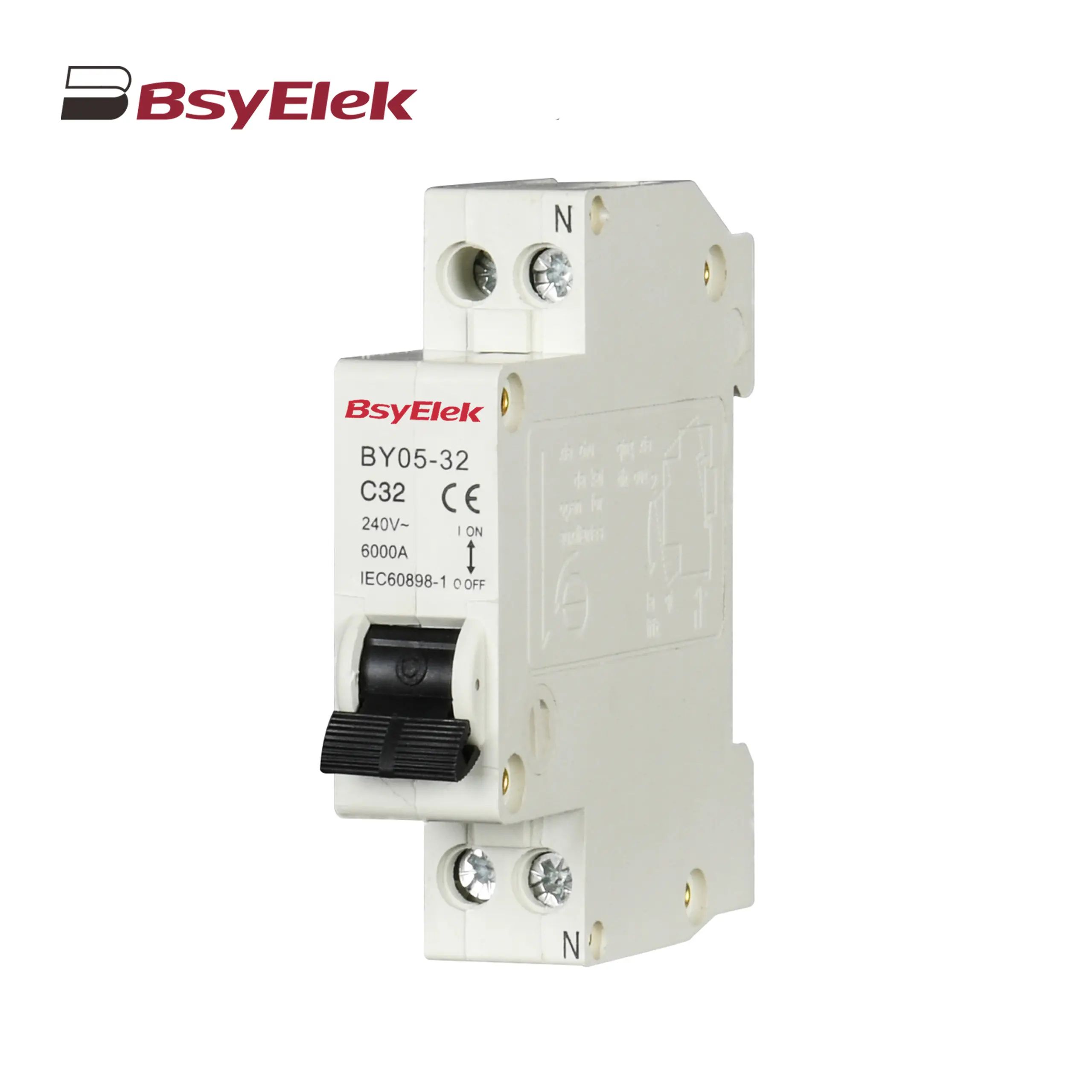 BY05-32 MCB Single Modular 3KA Miniature Circuit Breaker
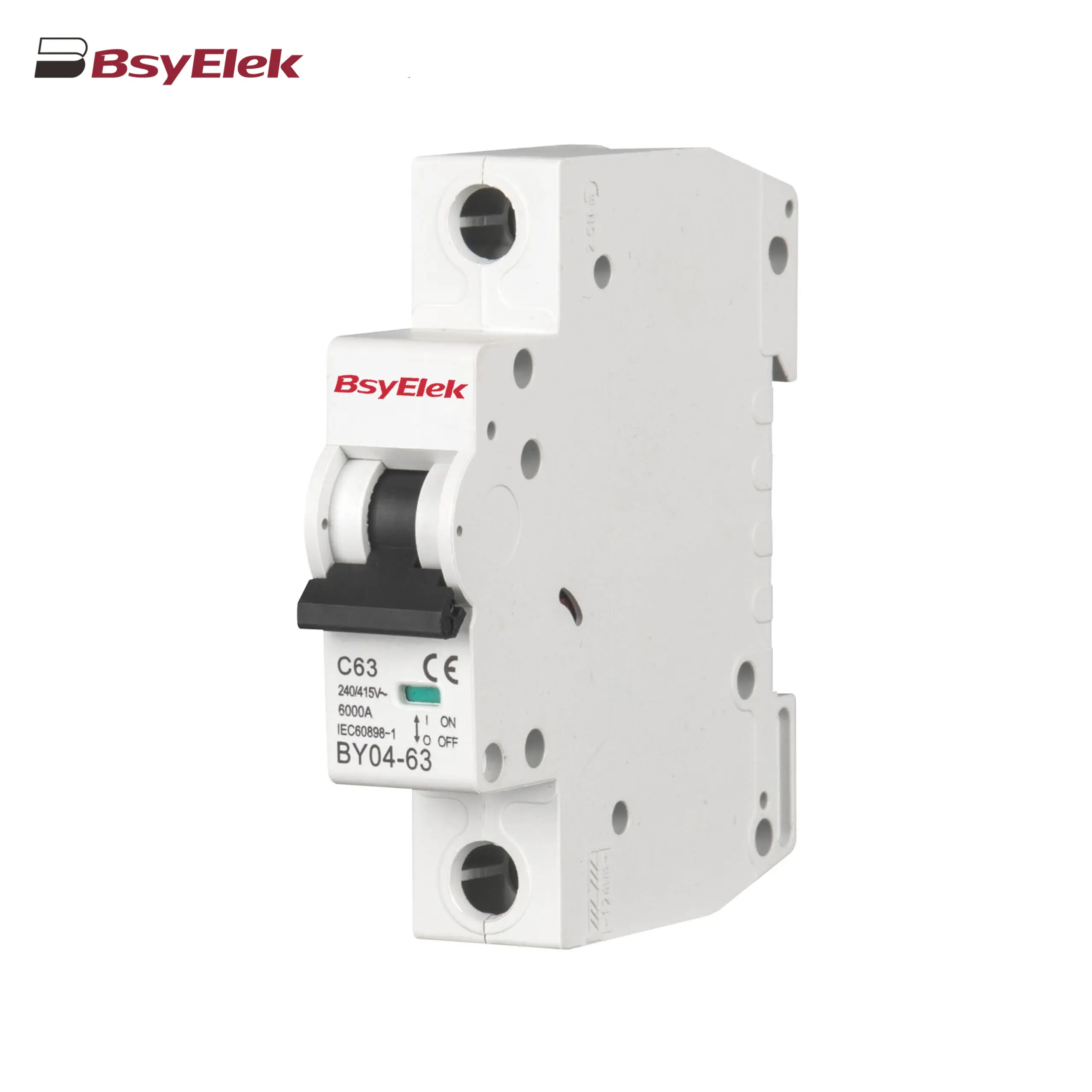 BY04-63 MCB 6-10KA Miniature Circuit Breaker
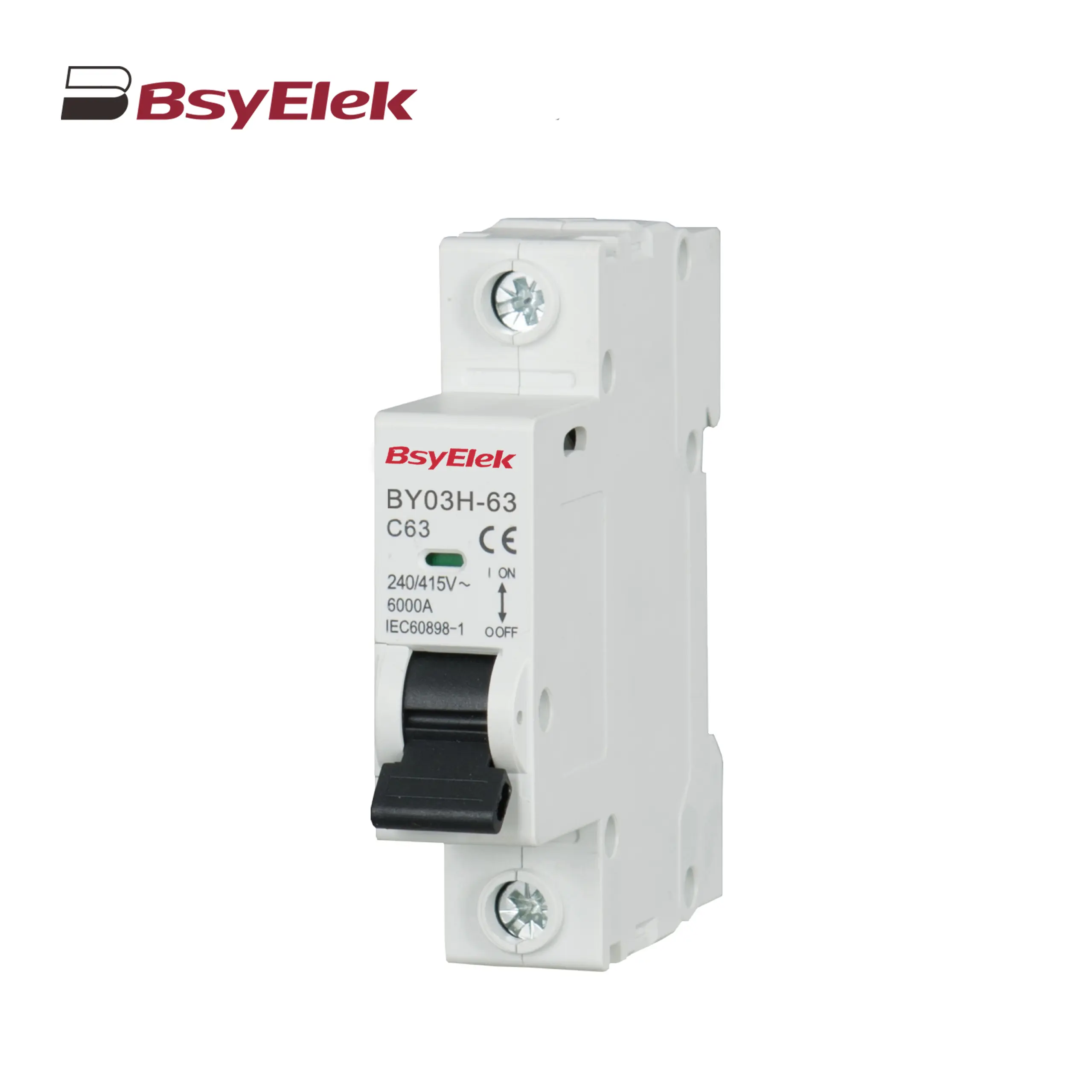 BY03H-63 MCB 6KA Miniature Circuit Breaker
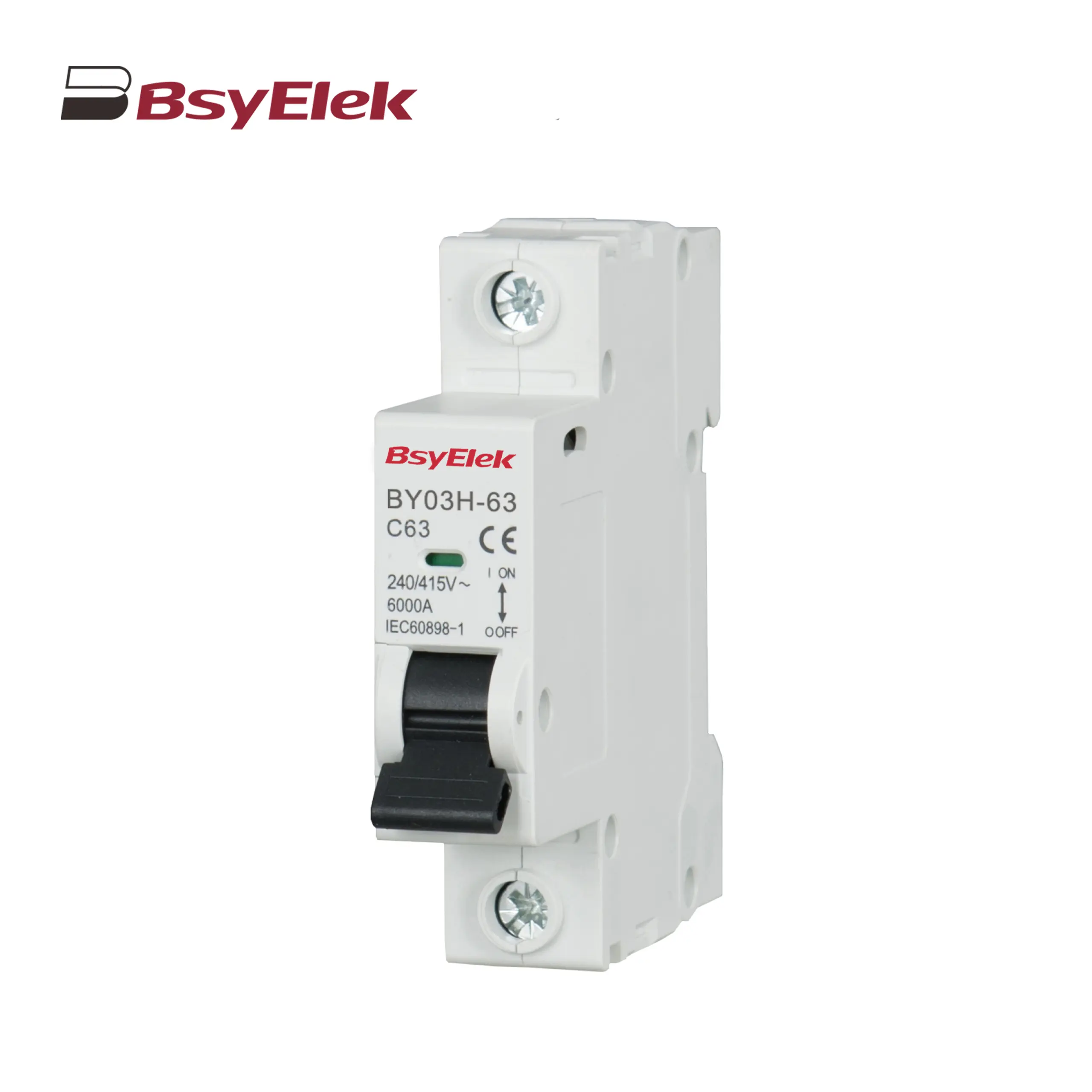 BY03-63 MCB 4.5KA Miniature Circuit Breaker
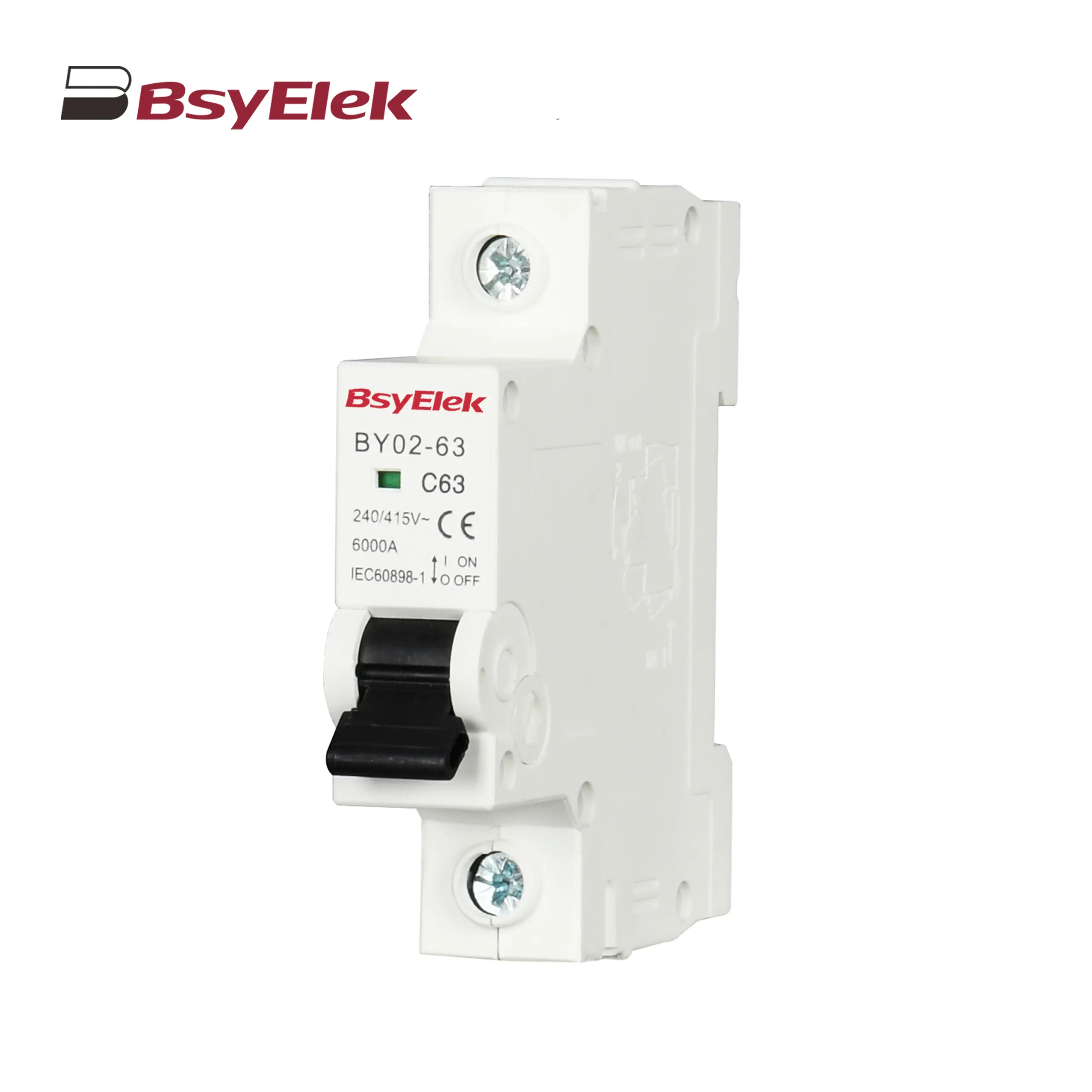 BY02-63 MCB 3kA Miniature Circuit Breaker
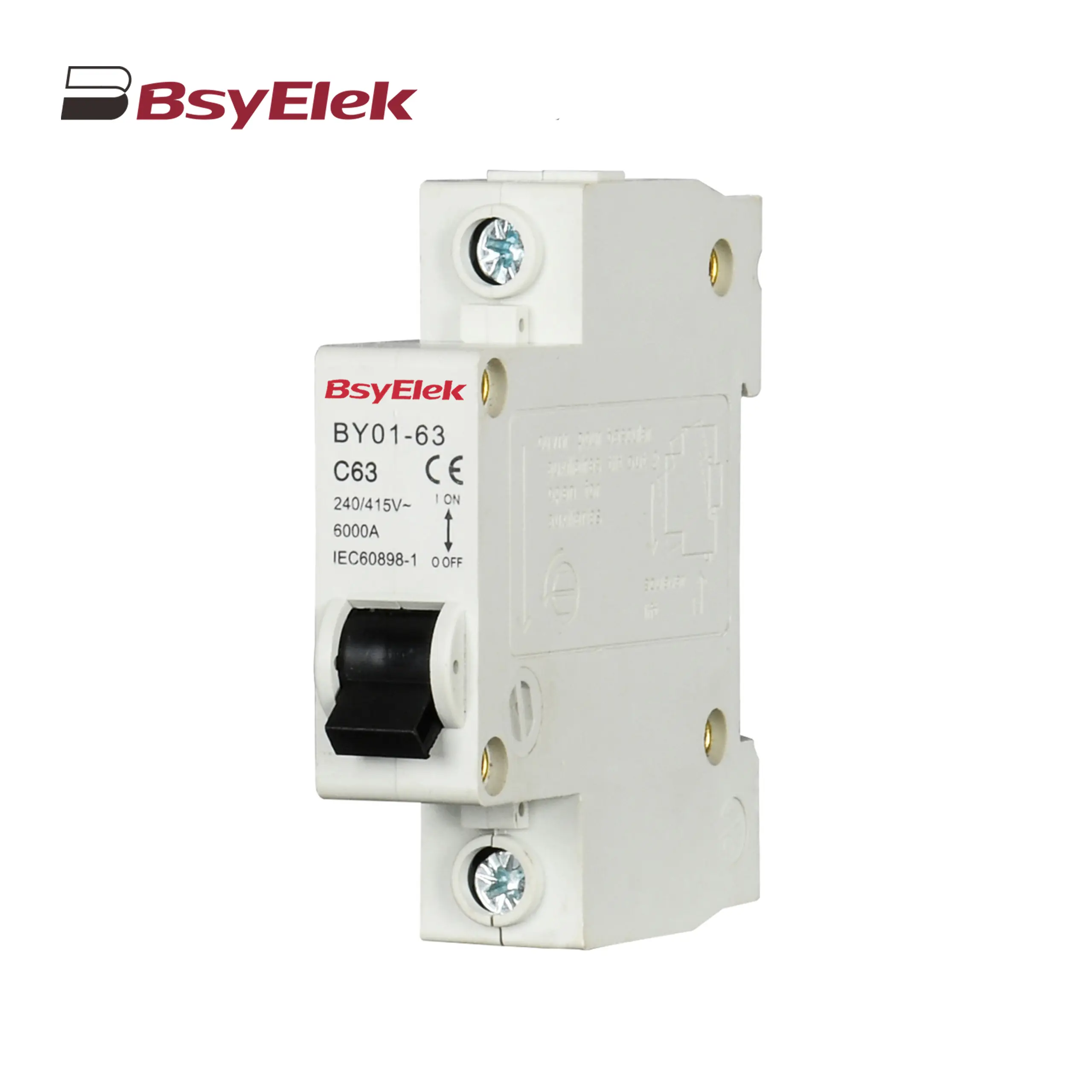 BY01-63 MCB 3kA Miniature Circuit Breaker
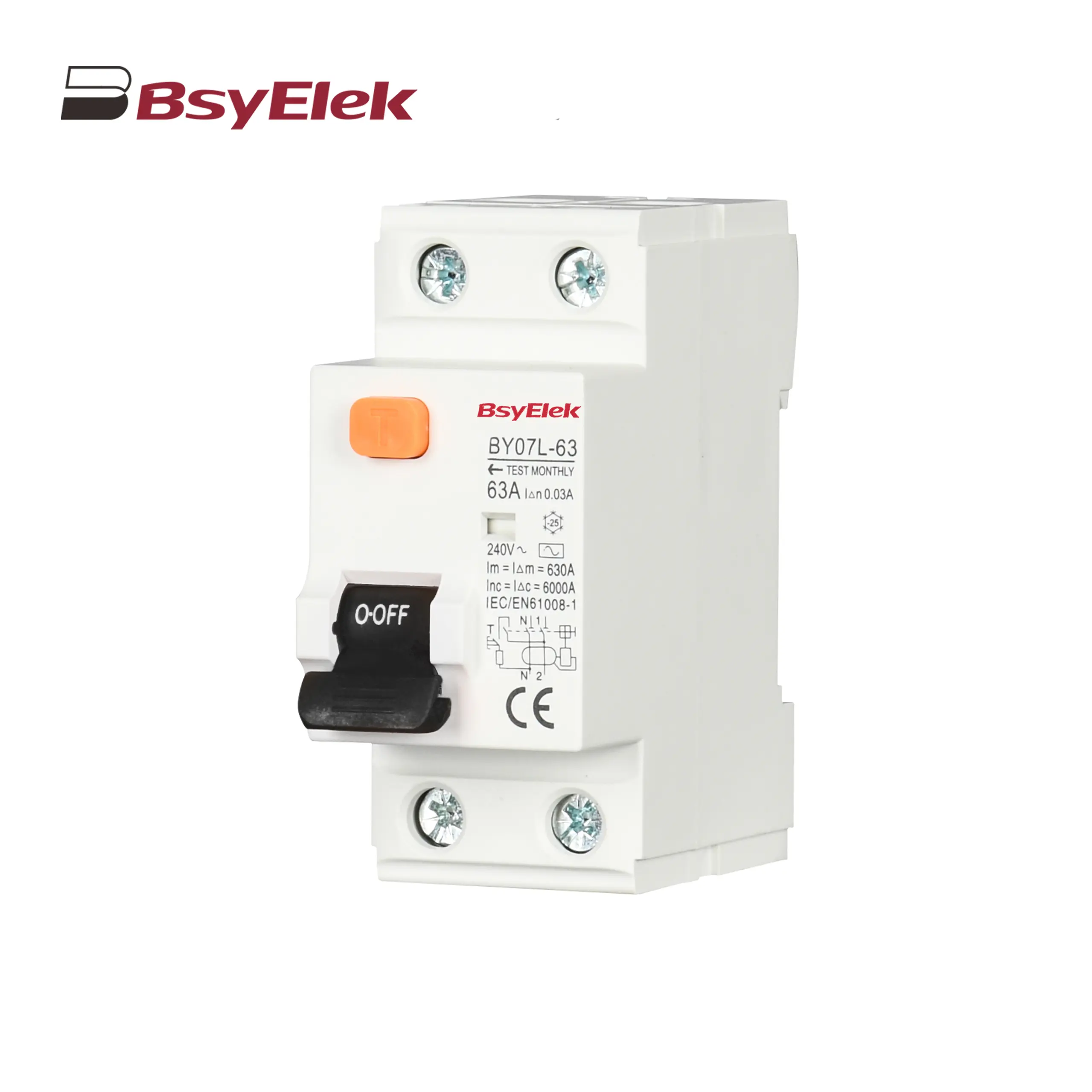 BY07L-63 RCCB 6KA Residual Current Circuit Breaker
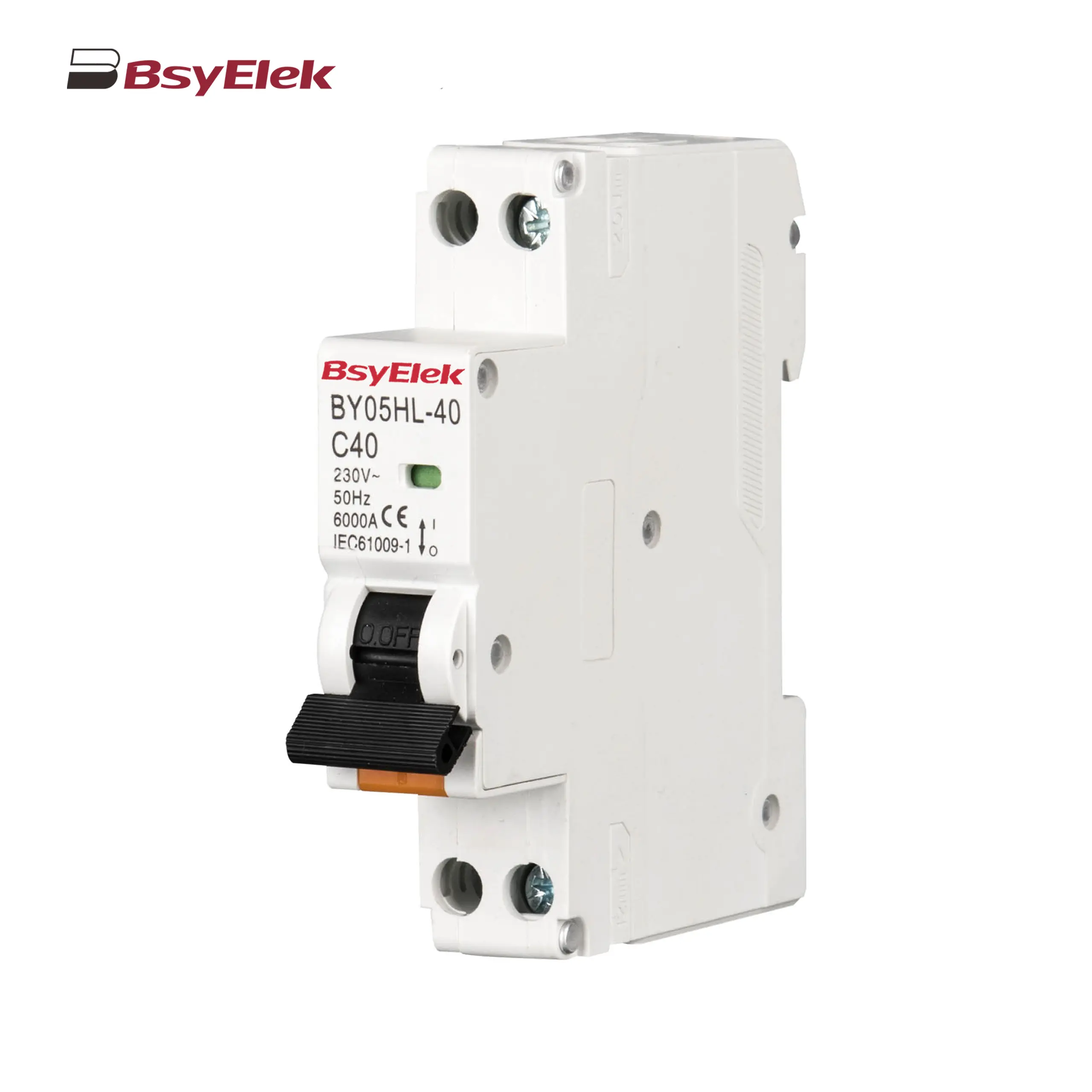 BY05HL-40 RCBO 6KA Residual Current Circuit Breaker with Over-current Protection
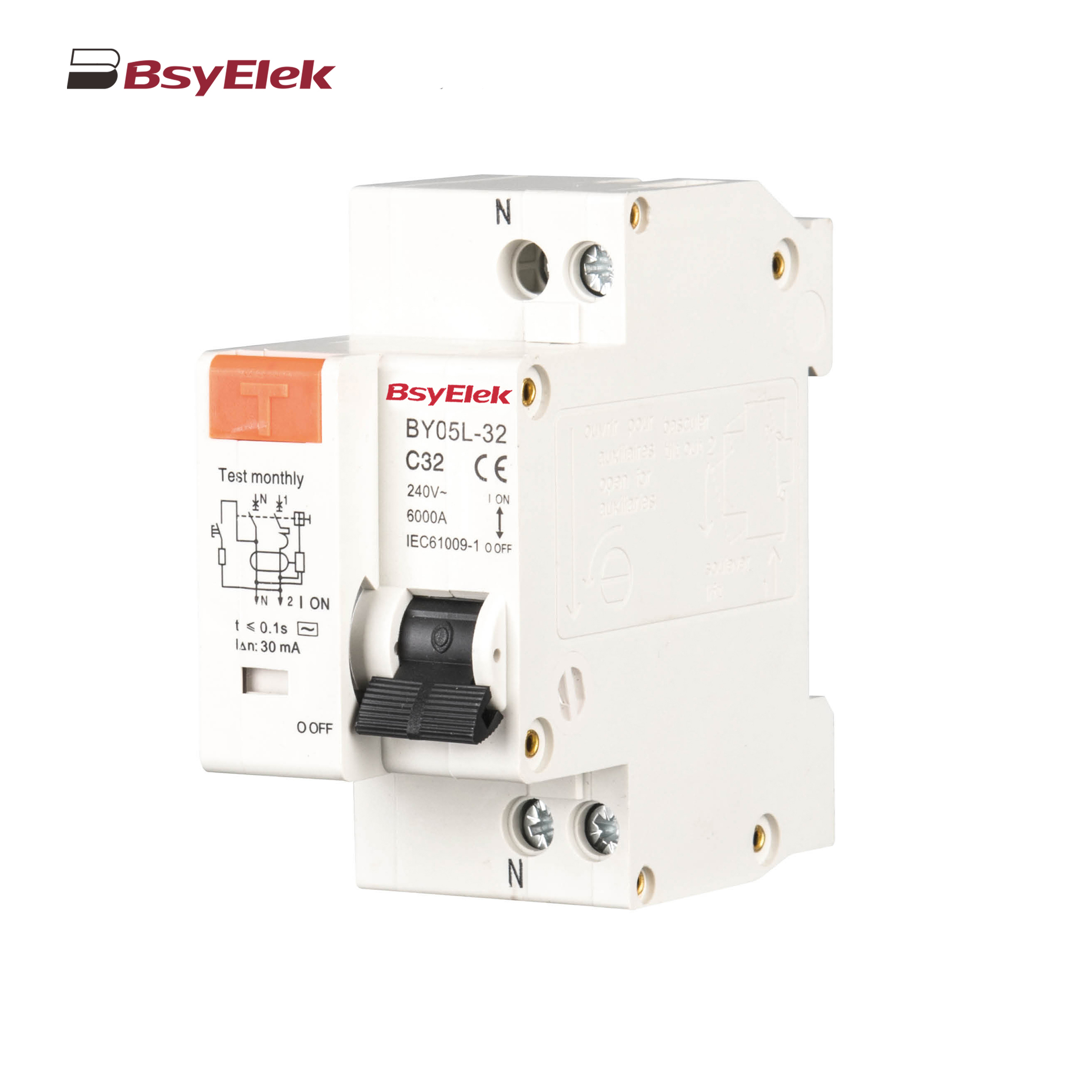 BY05L-32 RCBO 3KA Residual Current Circuit Breaker with Over-current Protection
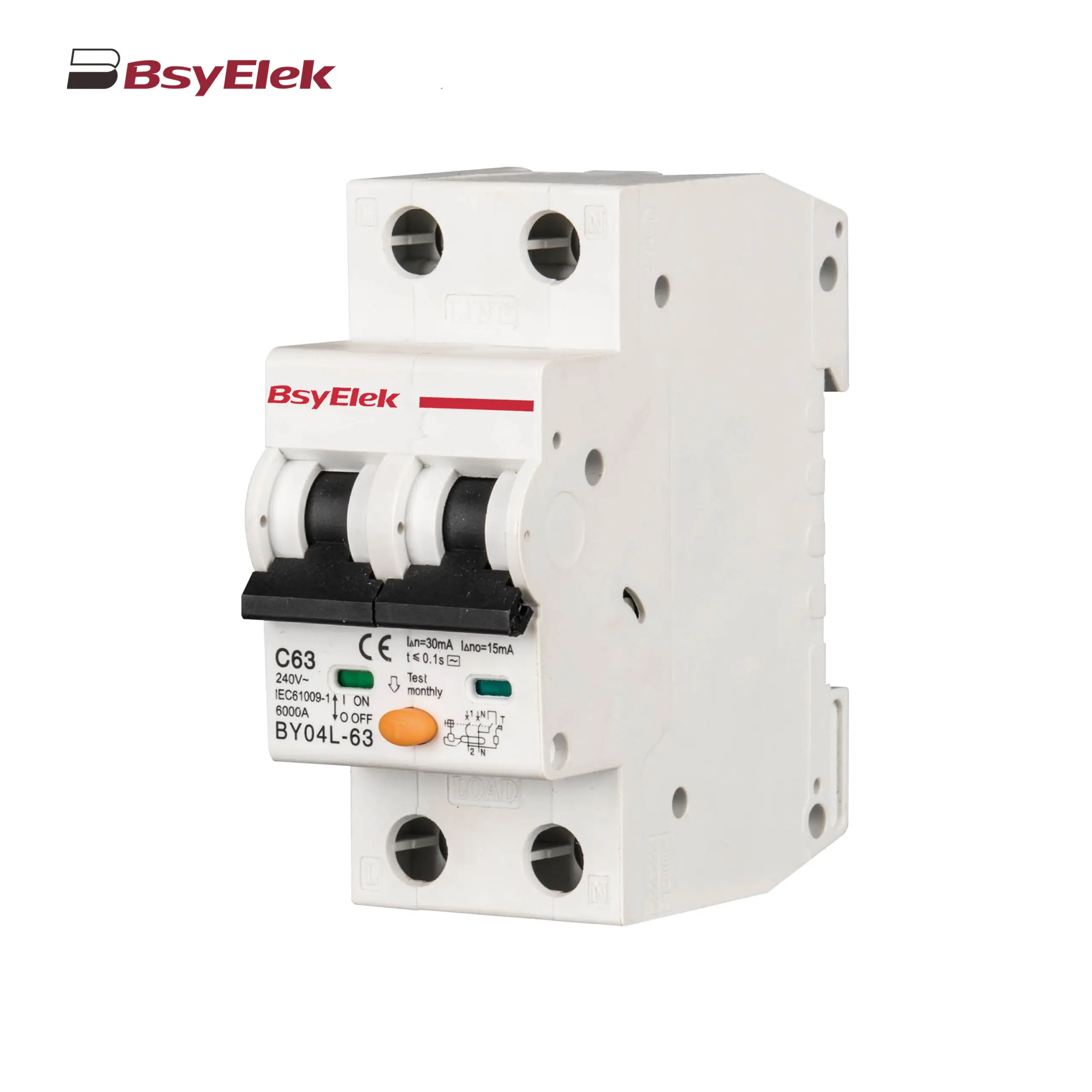 BY04L-63 RCBO 6KA Residual Current Circuit Breaker with Over-current Protection
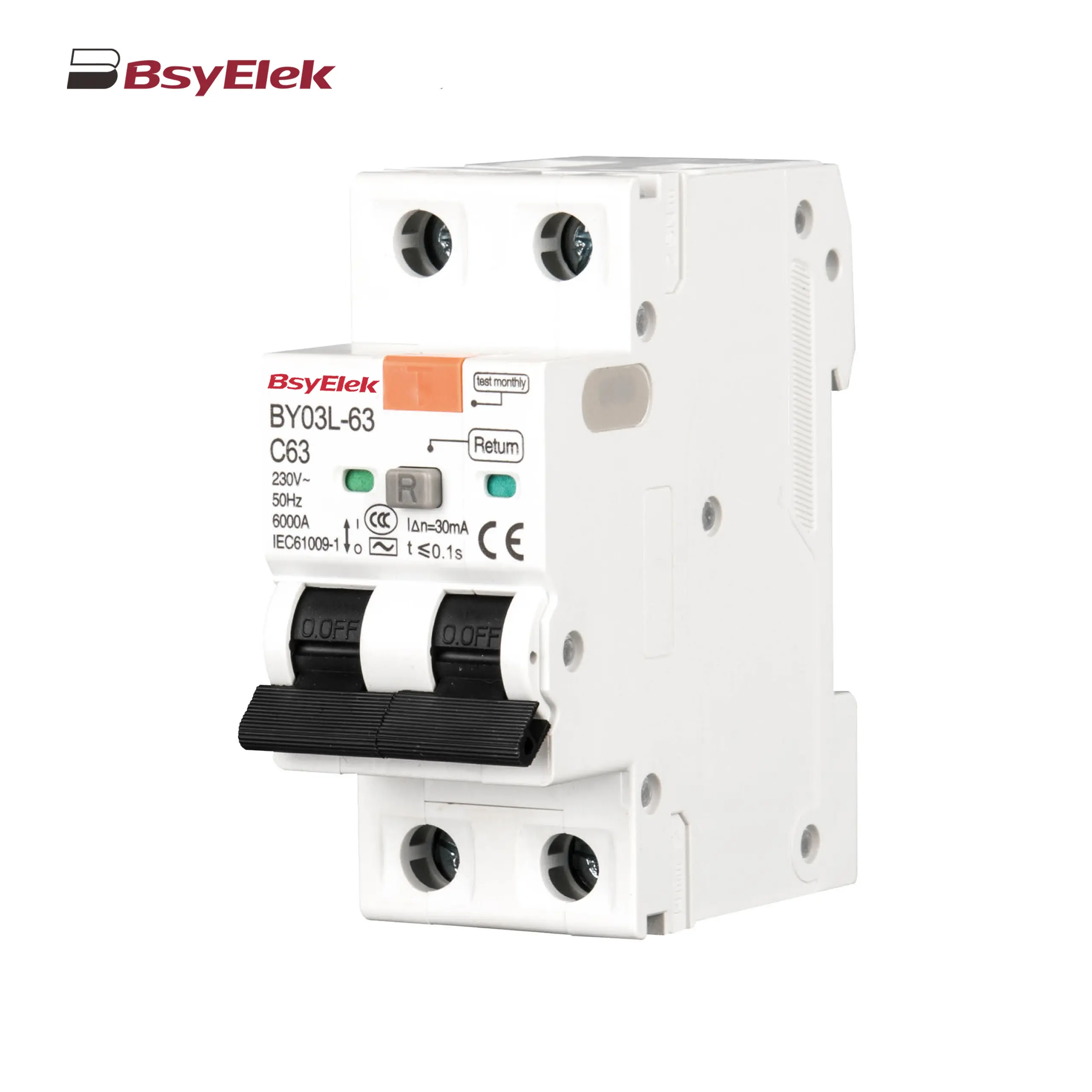 BY03L-63 RCBO 4.5KA Residual Current Circuit Breaker with Over-current Protection
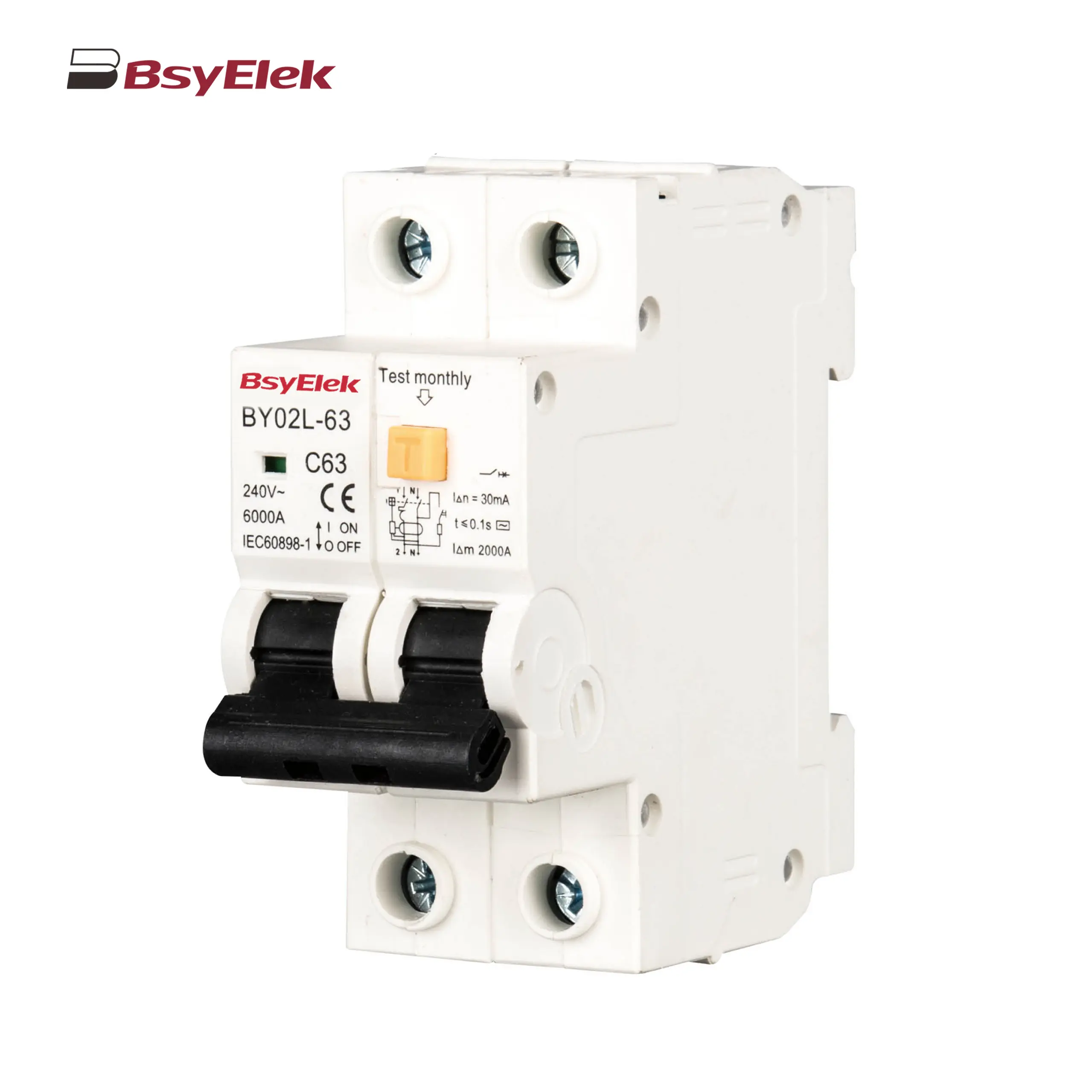 BY02L-63 RCBO 3KA Residual Current Circuit Breaker with Over-current Protection
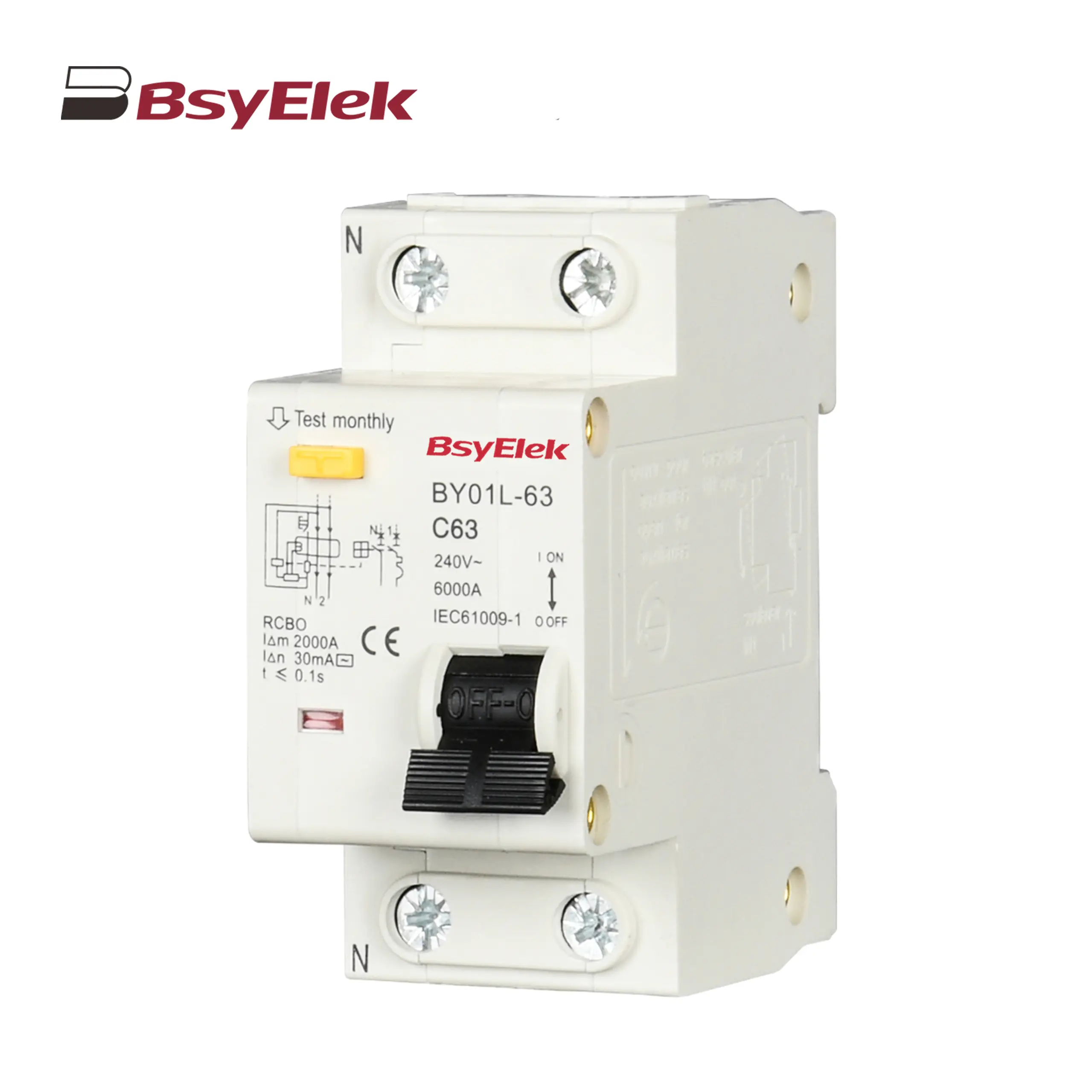 BY01L-63 RCBO 1P+N 3KA Residual Current Circuit Breaker with Over-current Protection
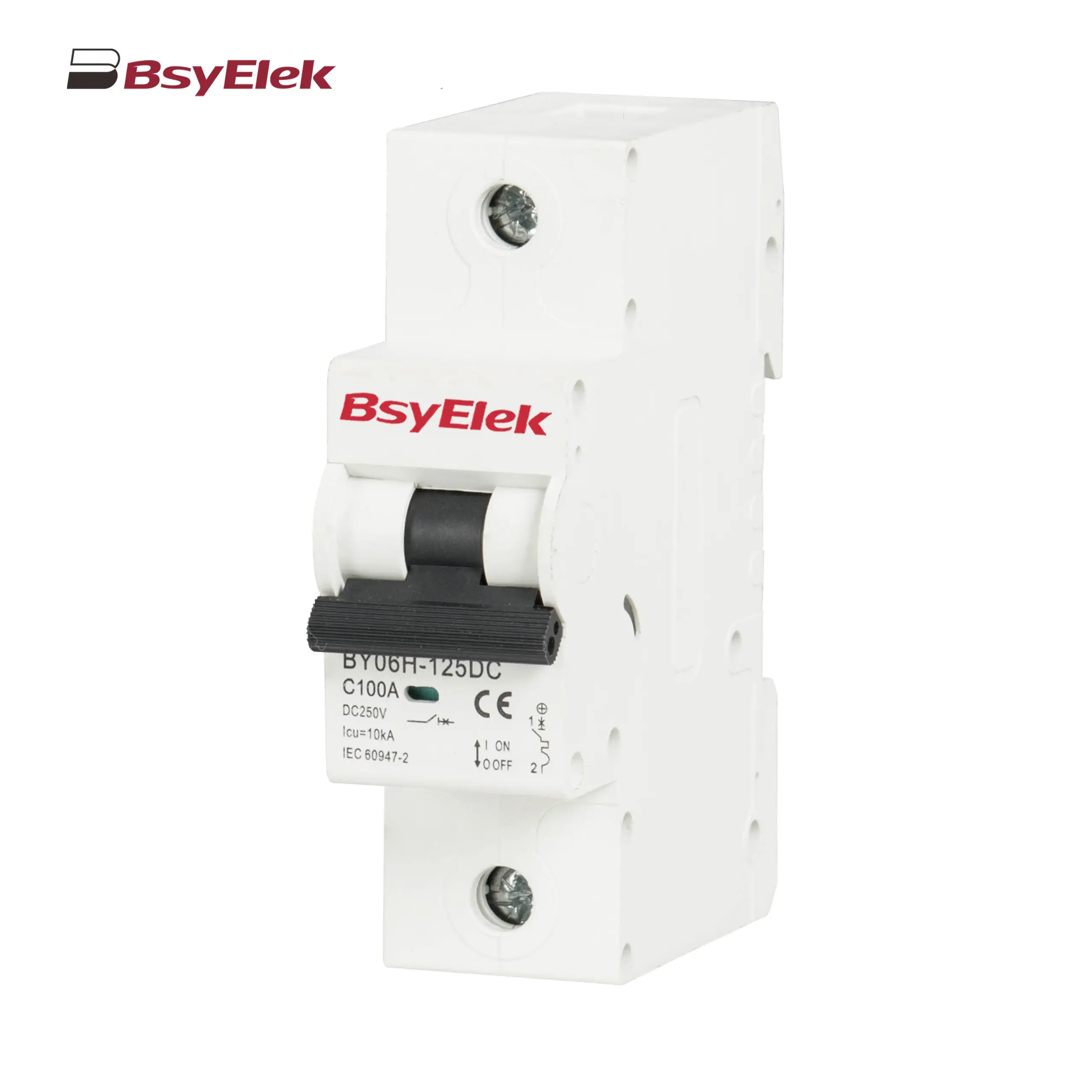 BY06H-125DC MCB 10-15kA DC Miniature Circuit Breaker
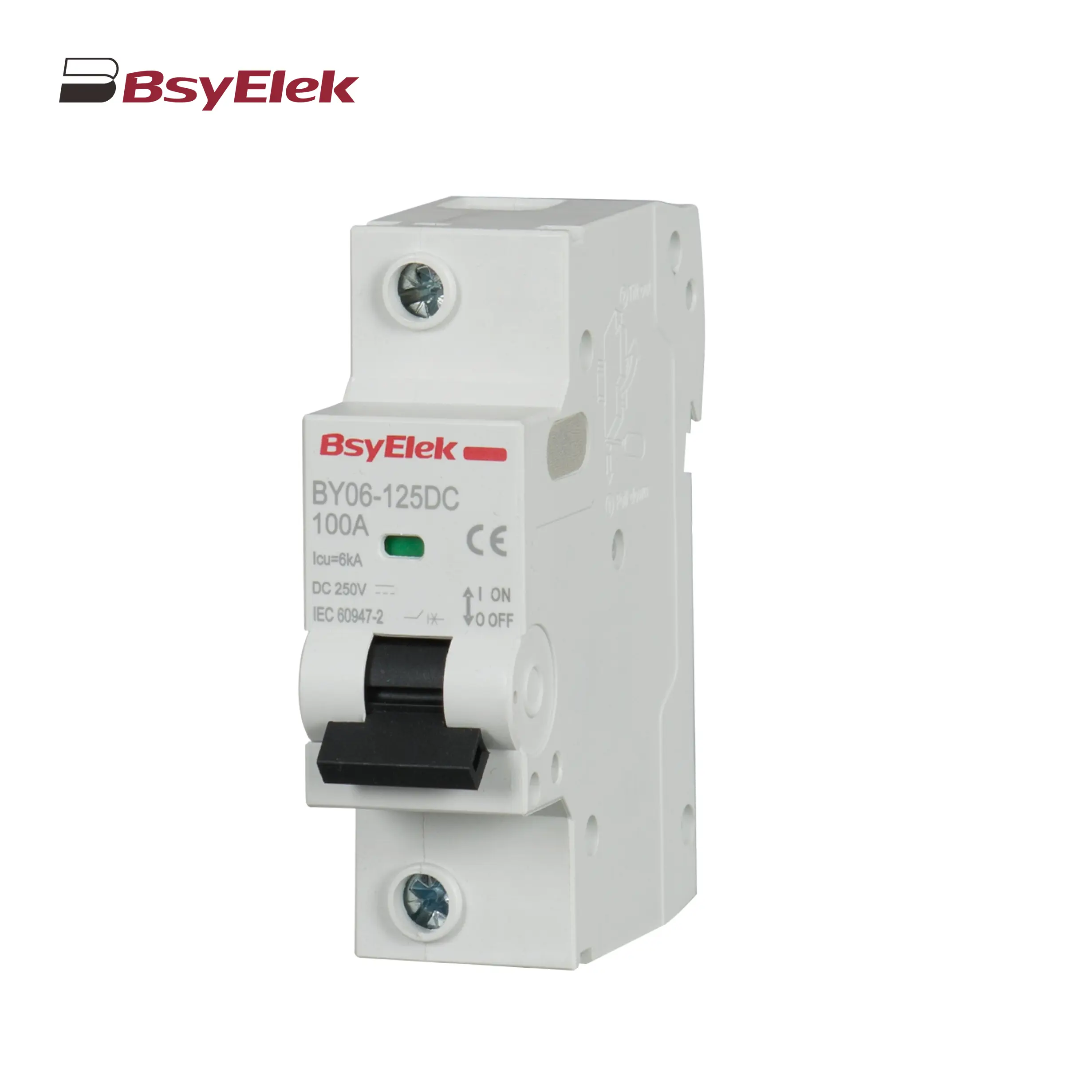 BY06-125DC MCB 6kA DC Miniature Circuit Breaker
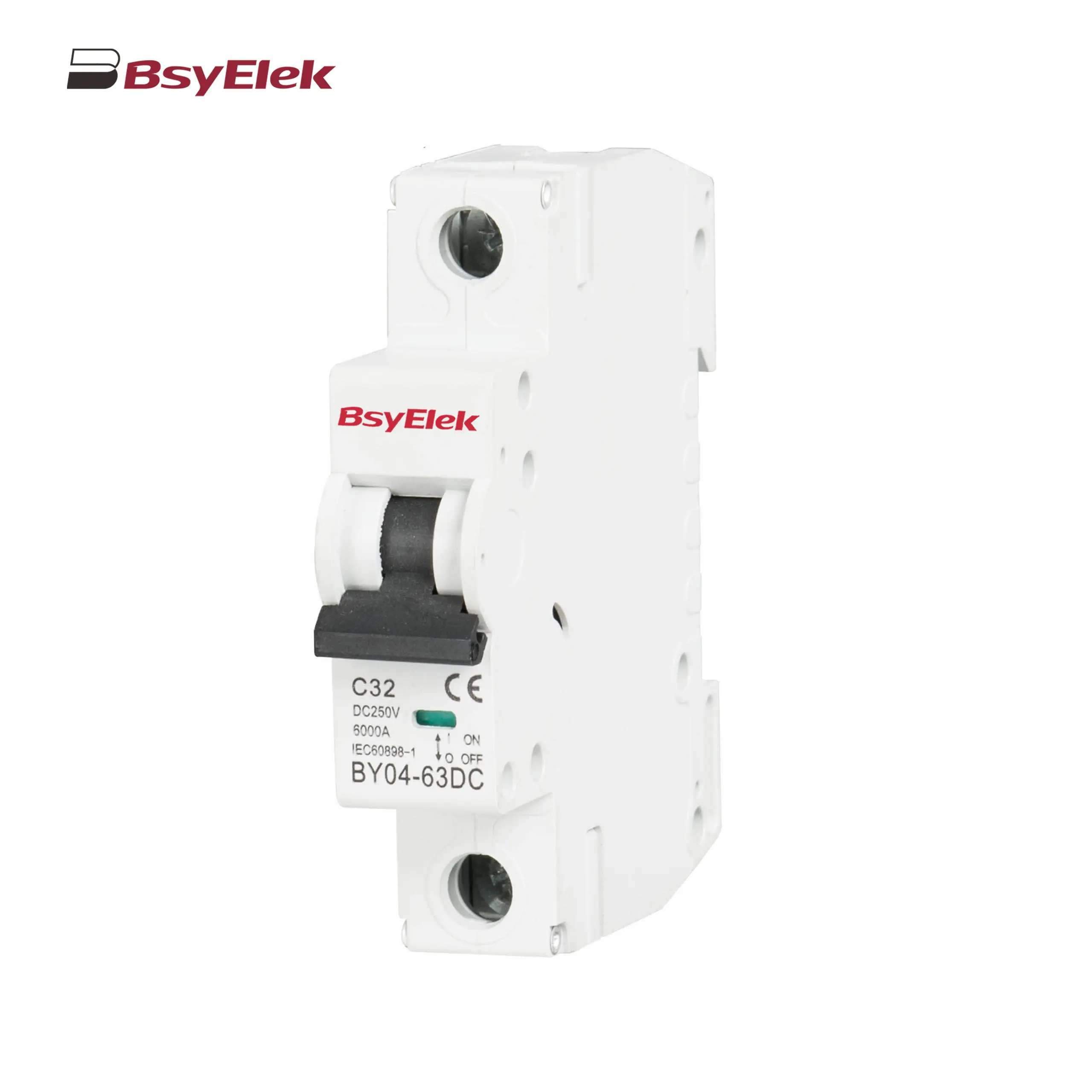 BY04-63DC MCB 6-10kA DC Miniature Circuit Breaker
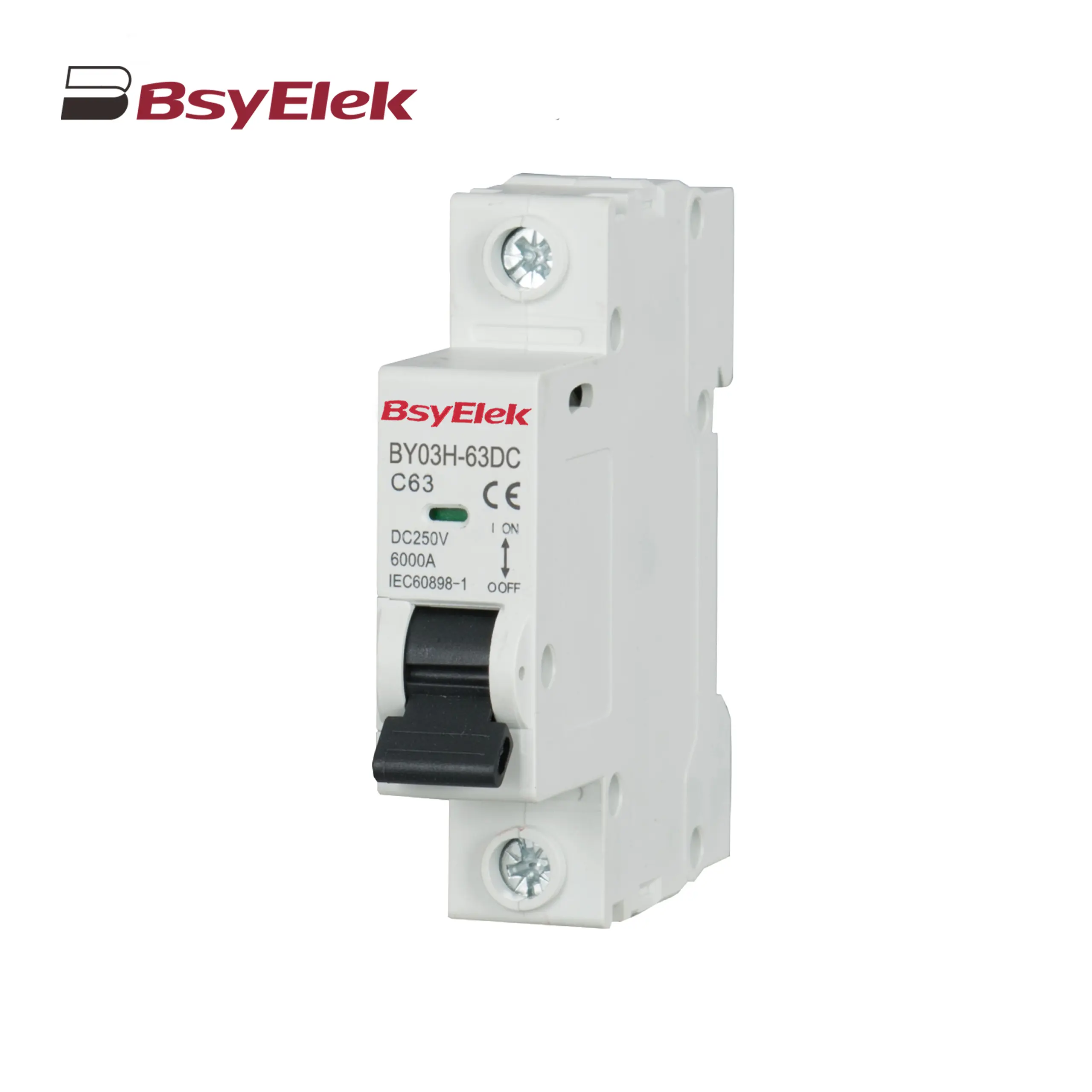 BY03H-63DC MCB 6kA DC Miniature Circuit Breaker
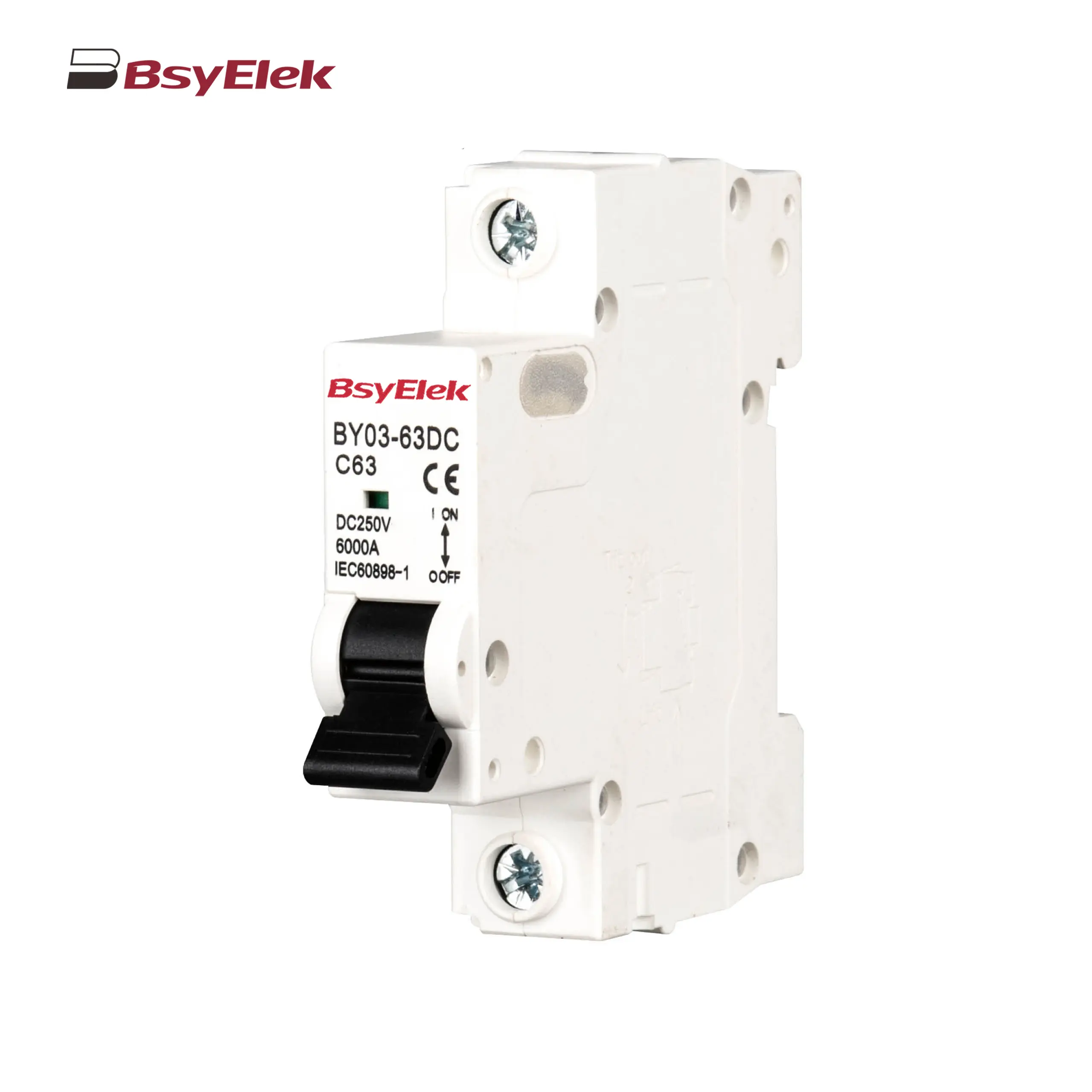 BY03-63DC MCB 4.5kA DC Miniature Circuit Breaker
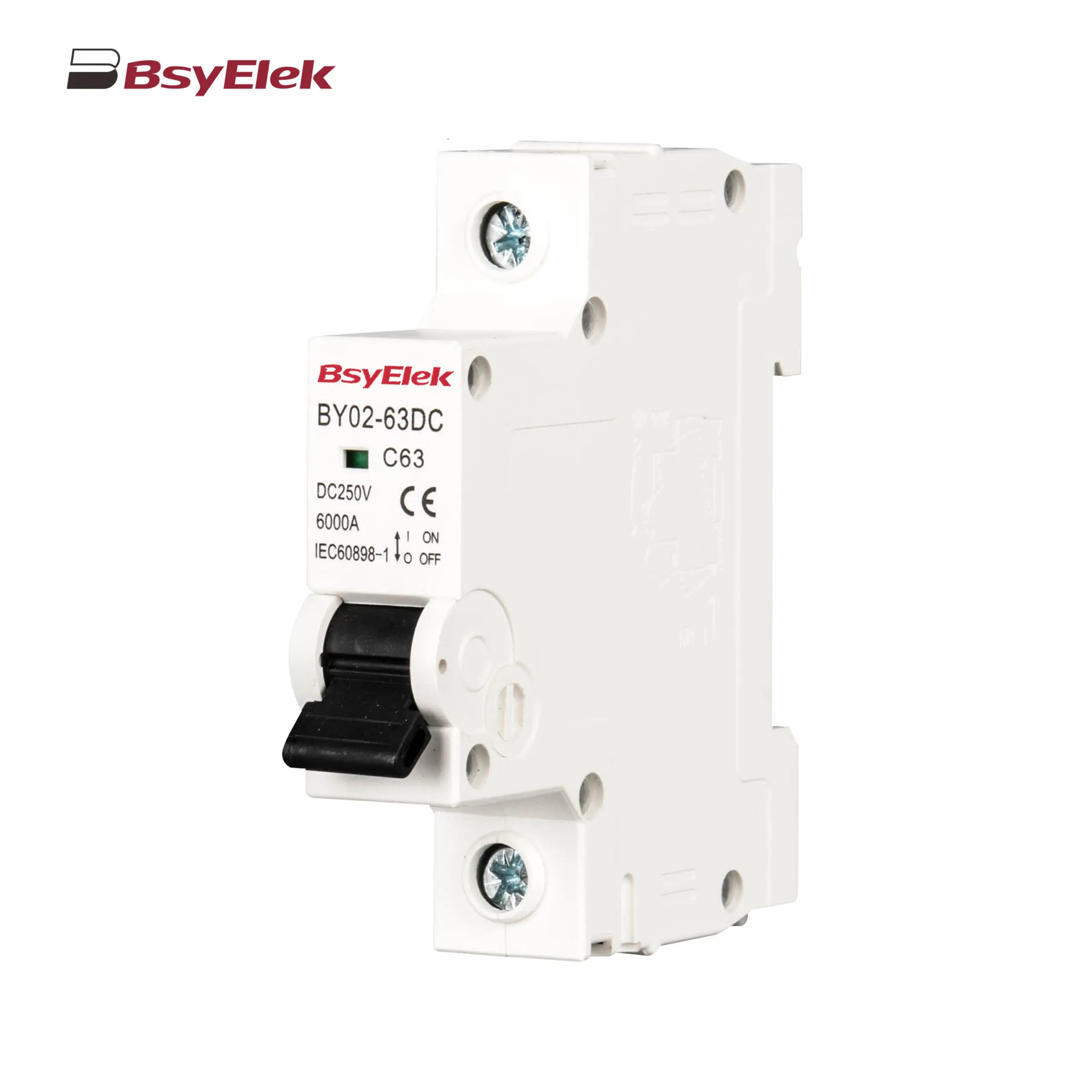 BY02-63DC MCB 3kA DC Miniature Circuit Breaker
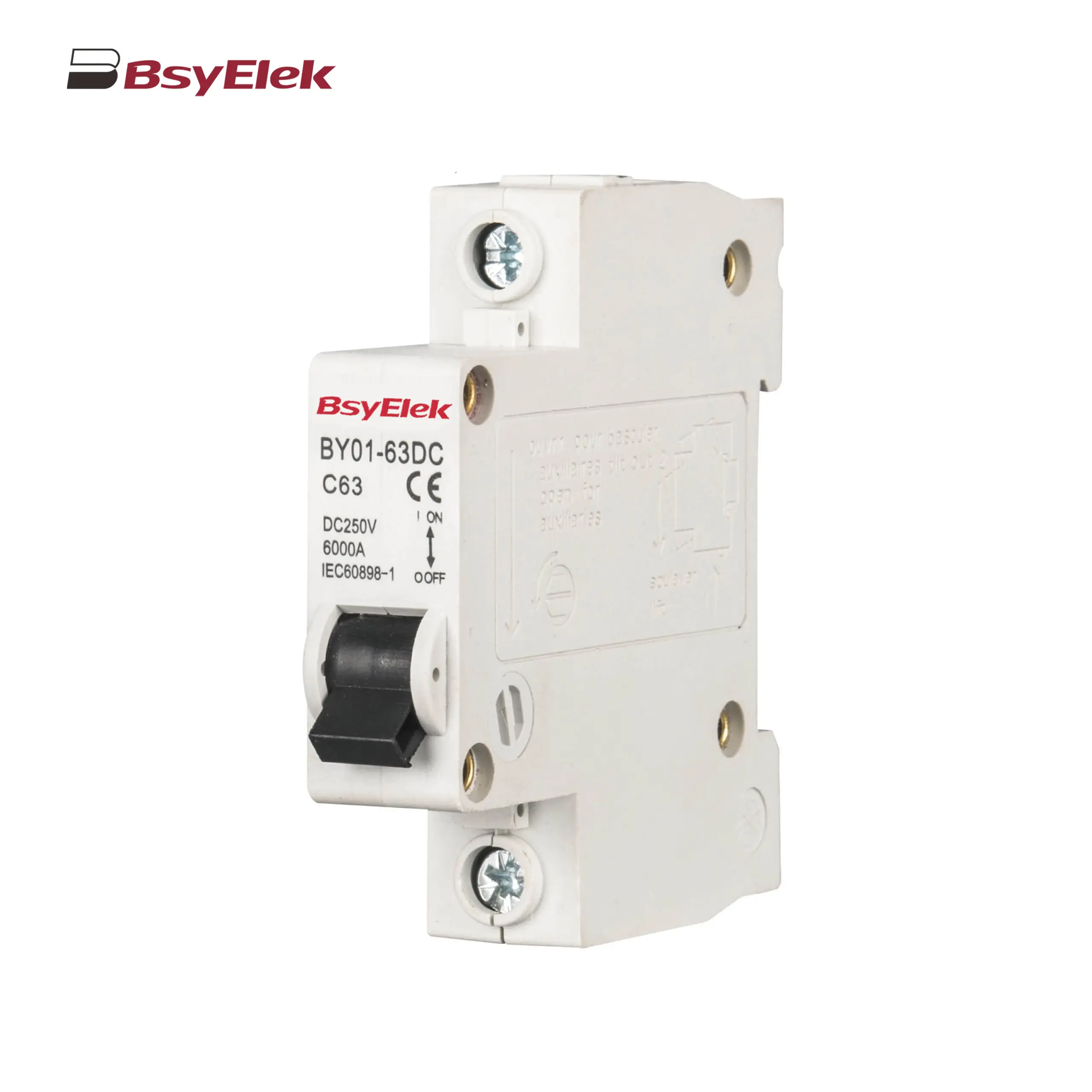 BY01-63DC MCB 3kA DC Miniature Circuit Breaker
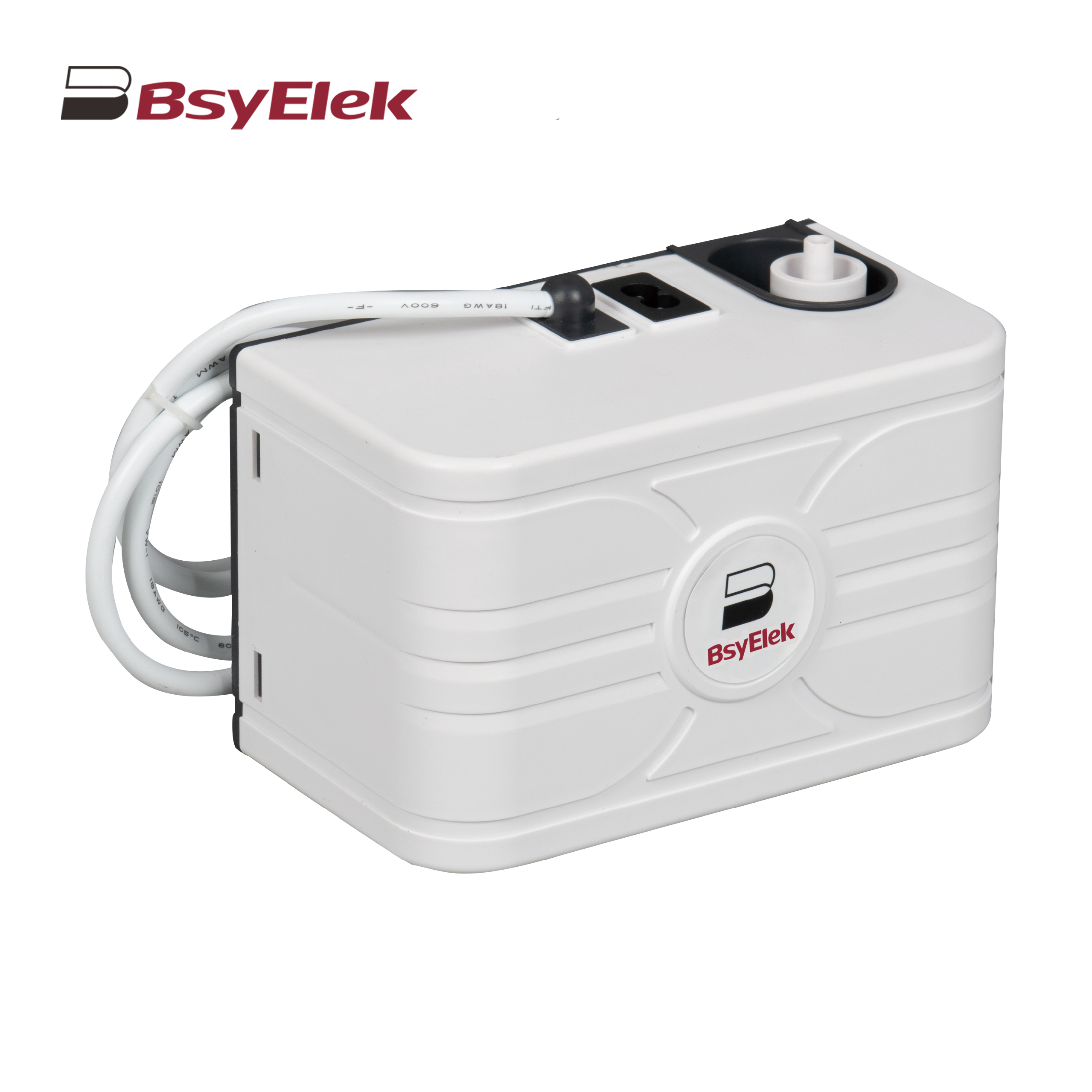 BY-5018 1.8M Engineering Drainage Pump
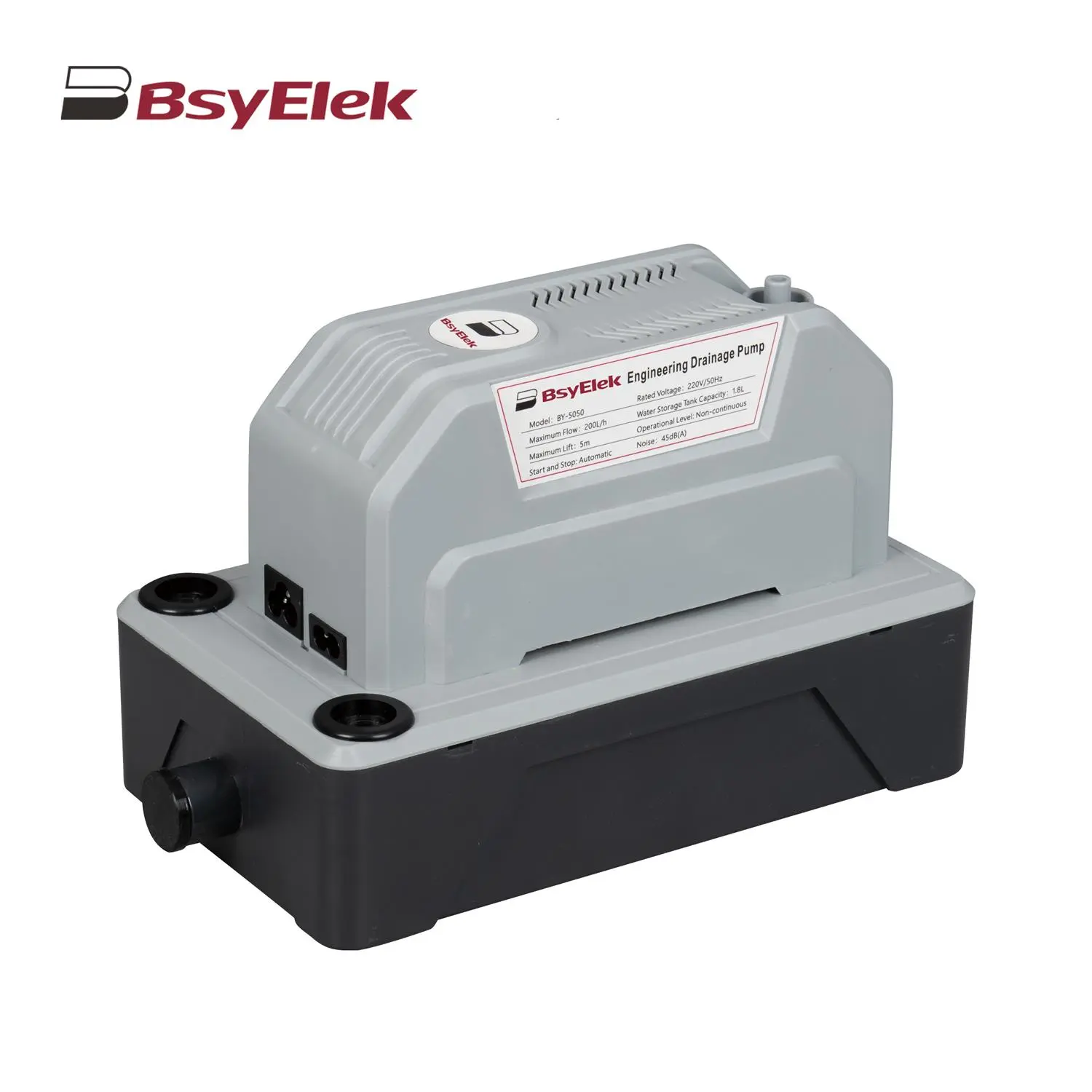 BY-5050 5M Engineering Drainage Pump
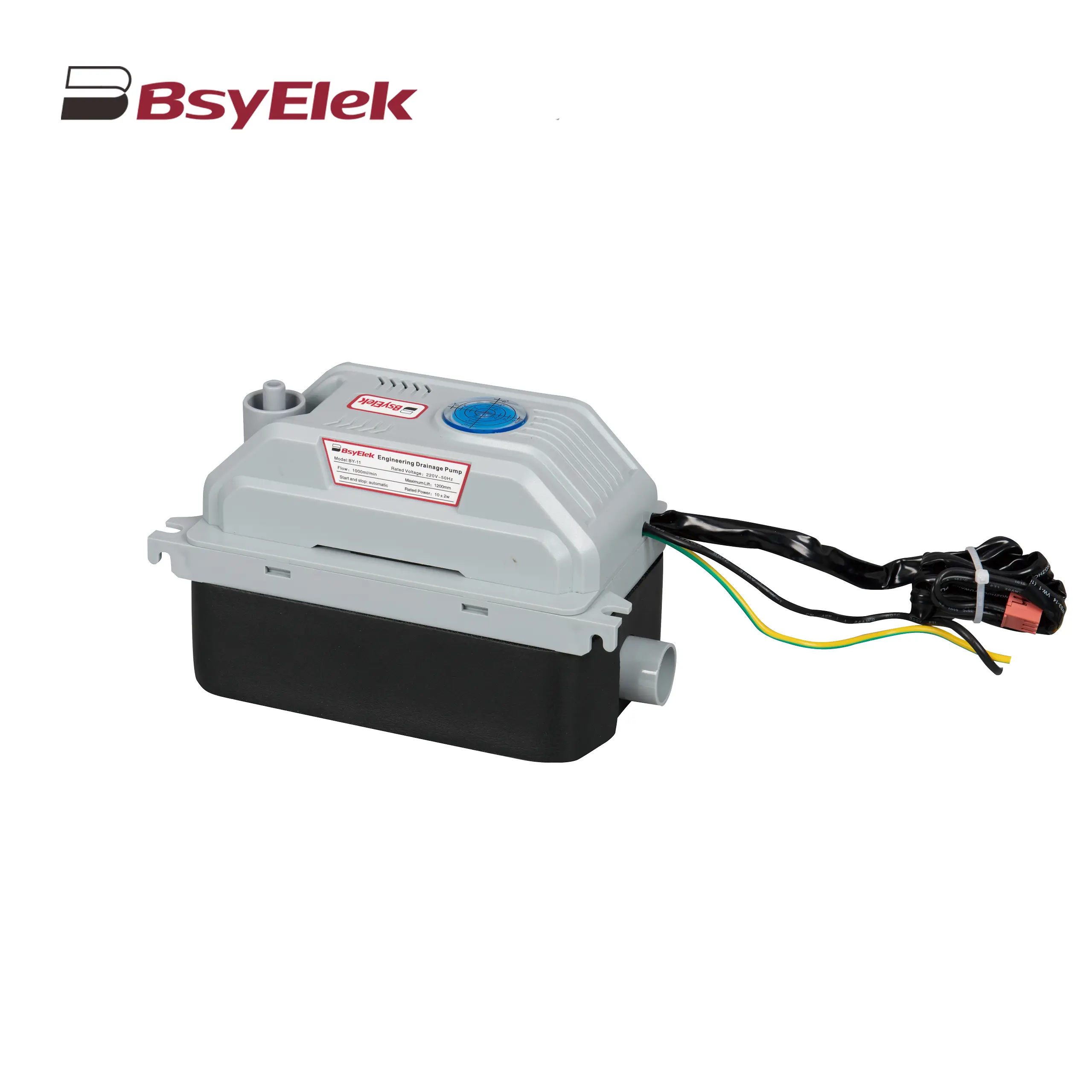 BY-11 1.2M Engineering Drainage Pump
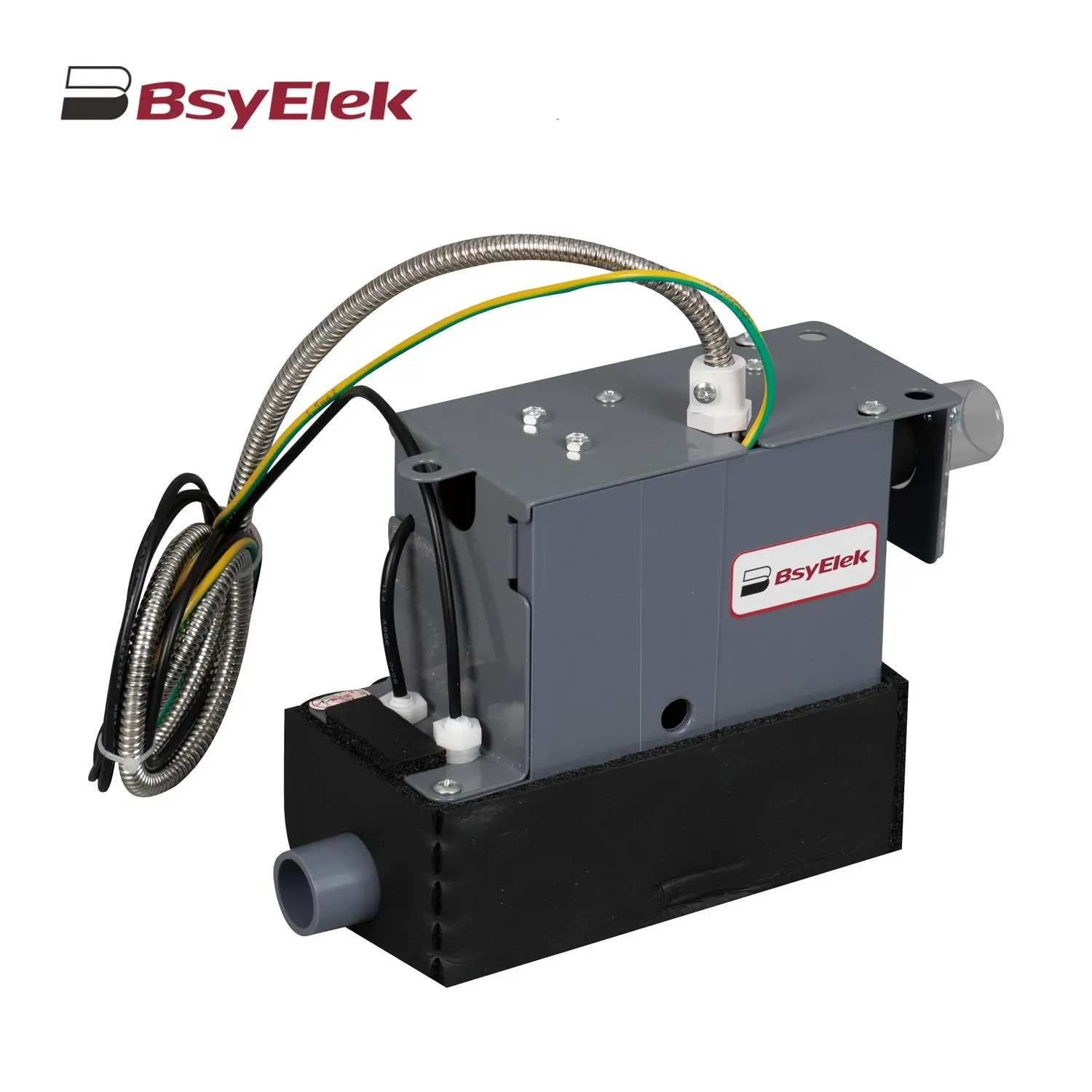 SBH-05 0.7M Original Drainage Pump of Duct Type Air Conditioner
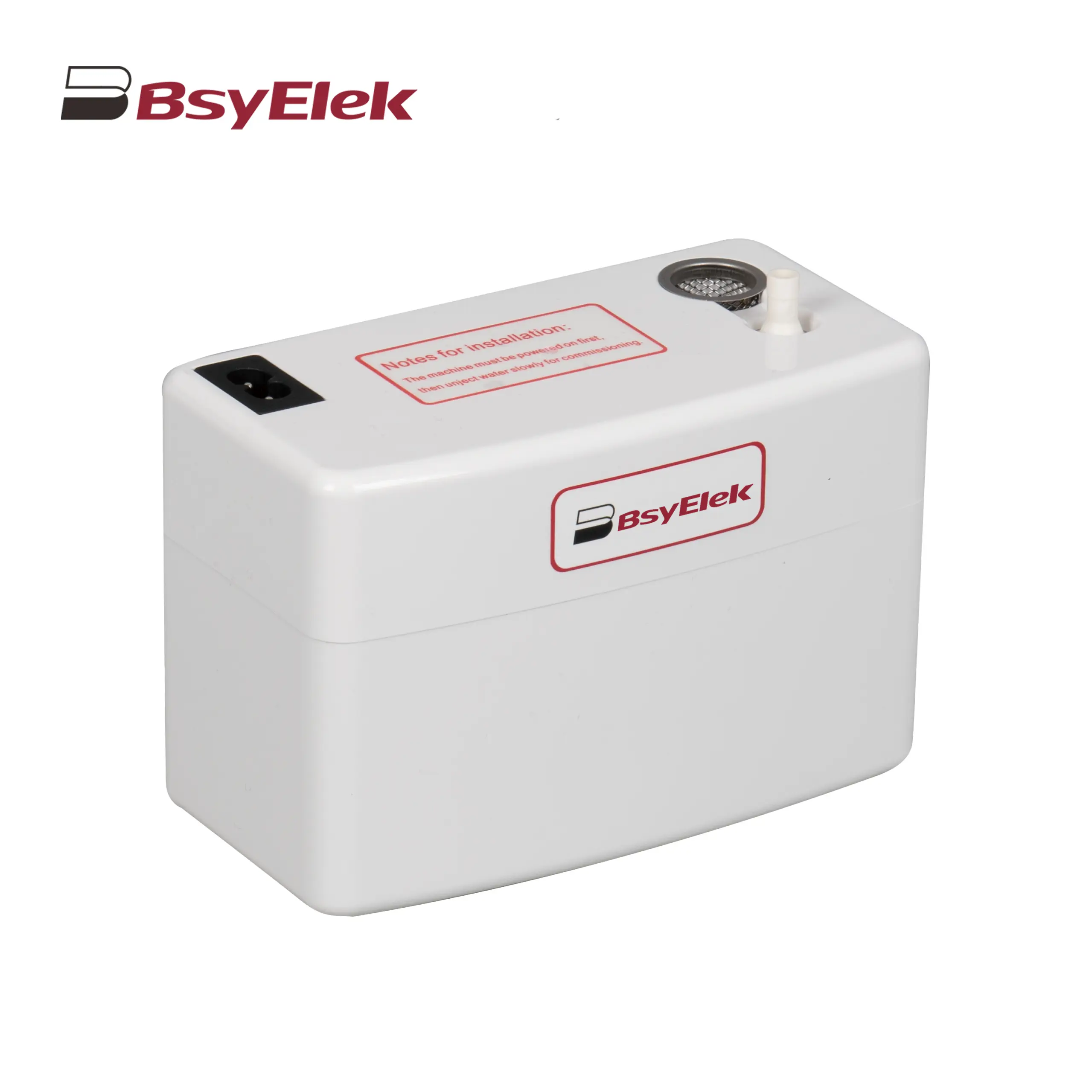 BY-24A/40A 10M Drainage Pump of Air Conditioner
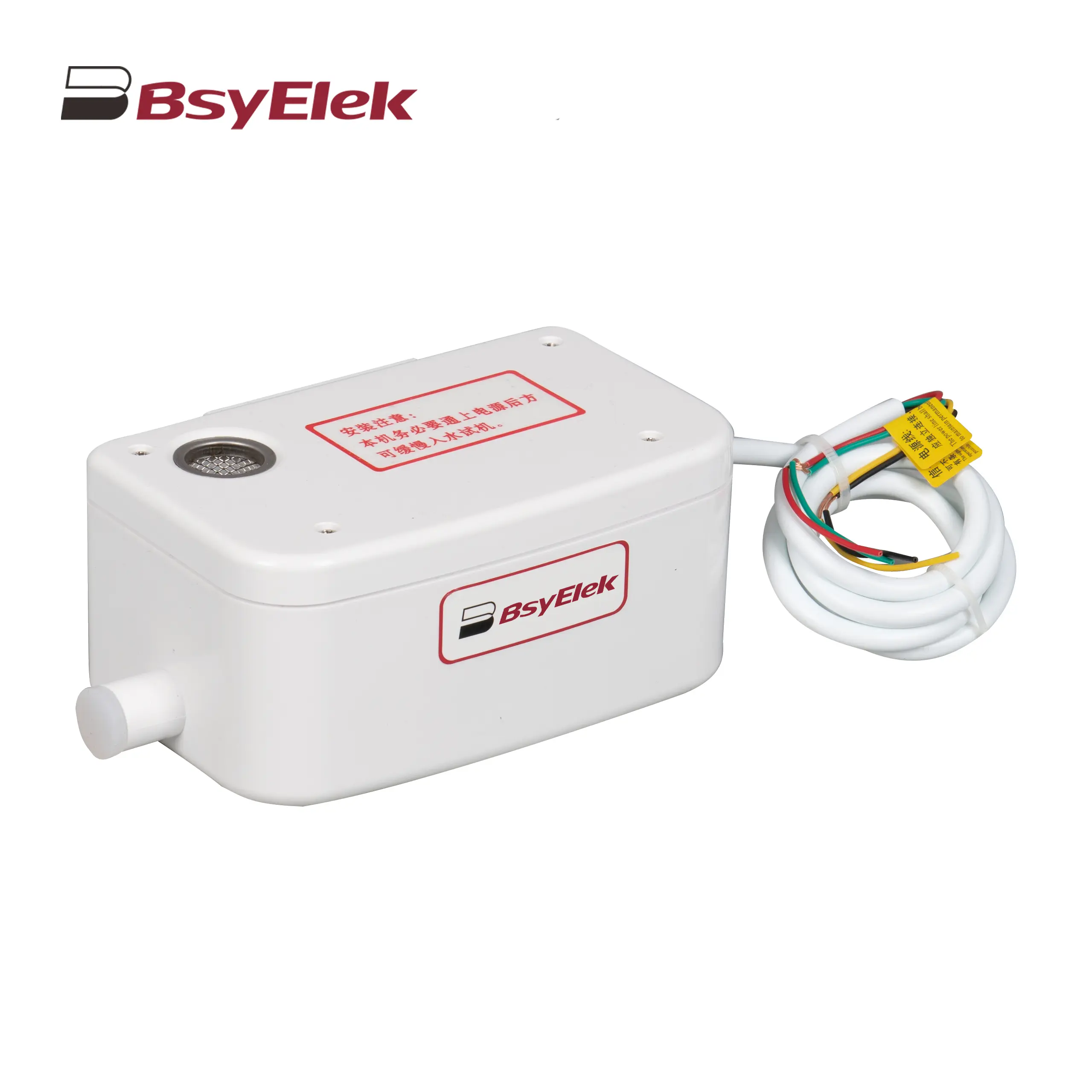 BY-50A 12M Drainage Pump of Air Conditioner
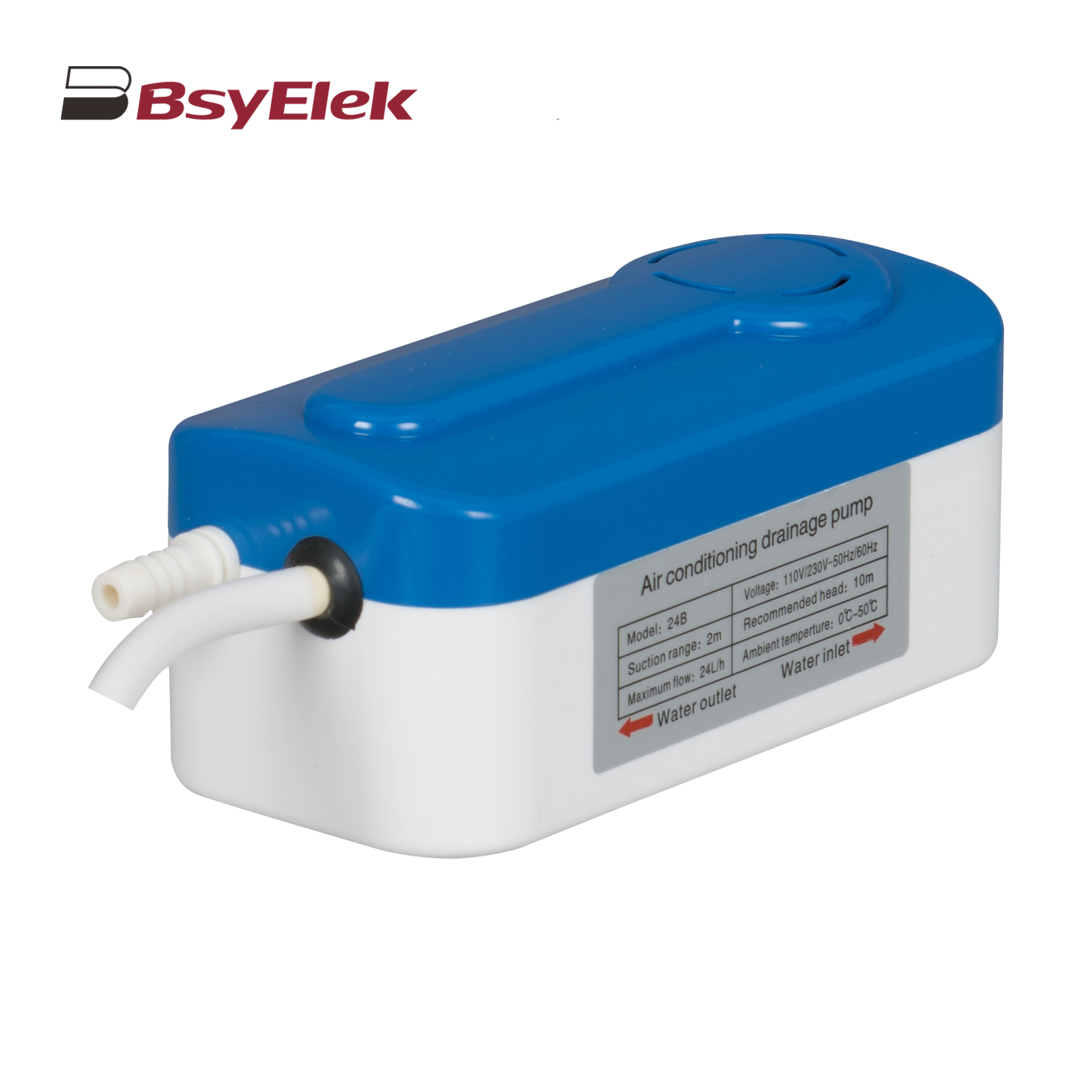 BY-24B/40B 10M Split Type Drainage Pump
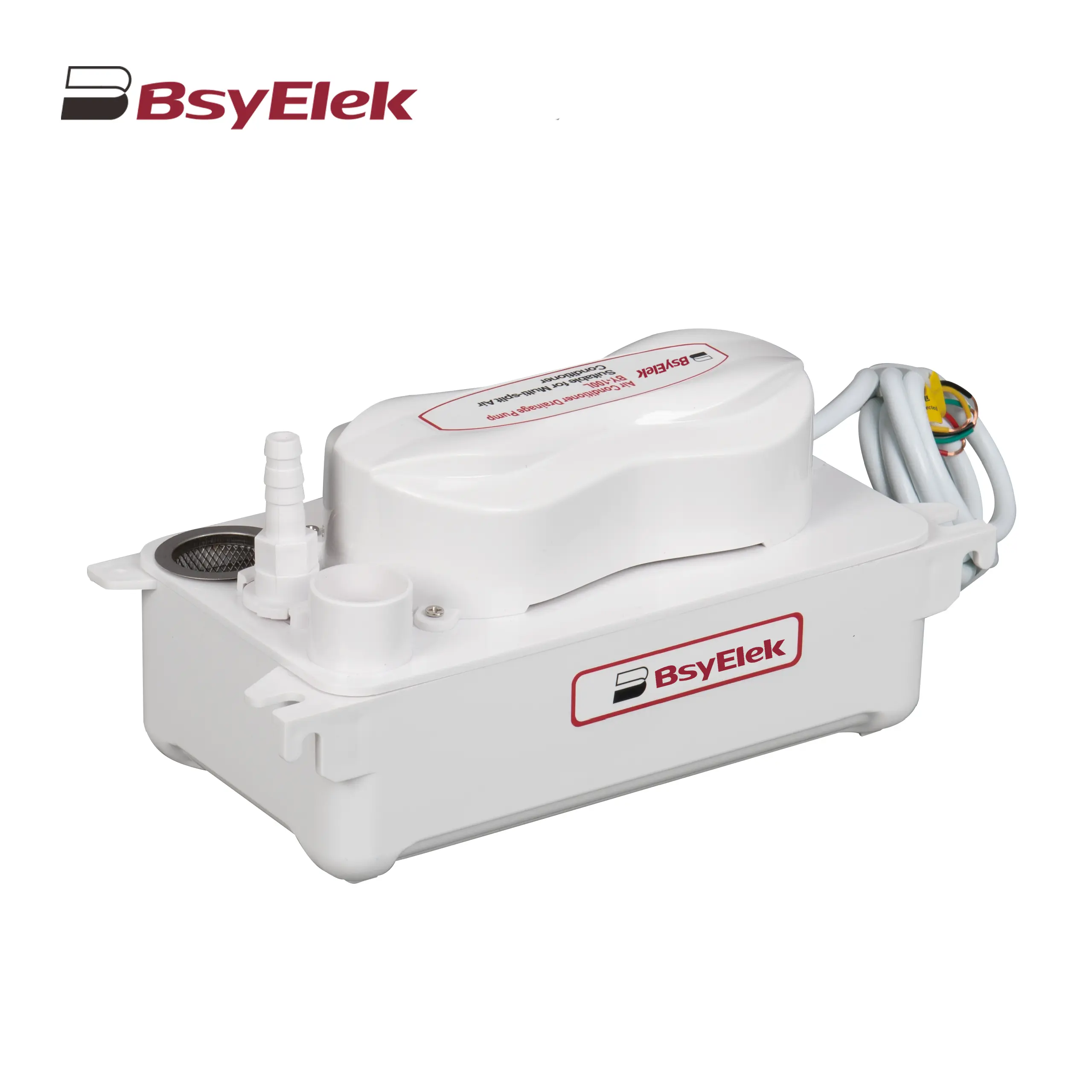 BY-100L 2M Drainage Pump of Air Conditioner
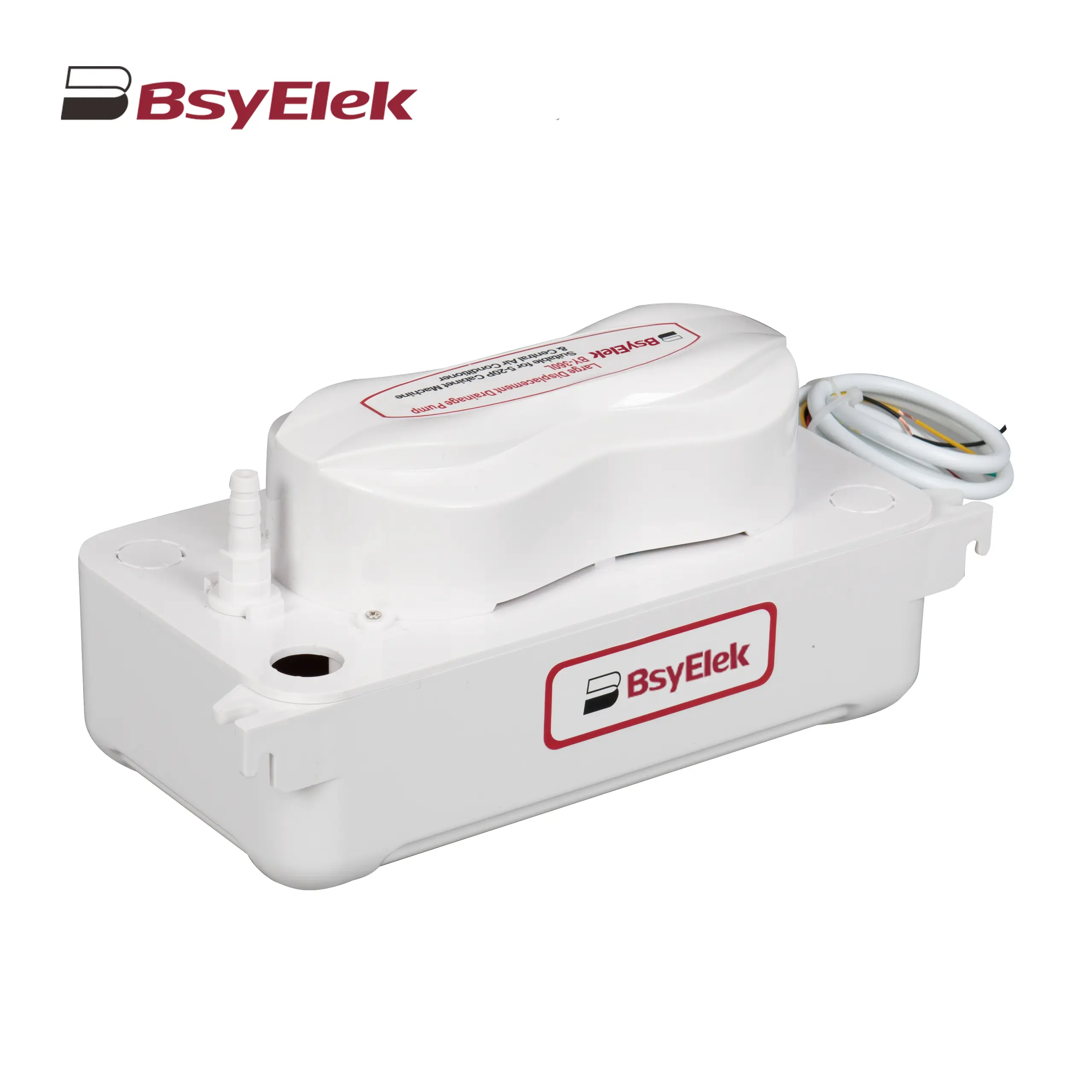 BY-360L 6M Large Displacement Drainage Pump
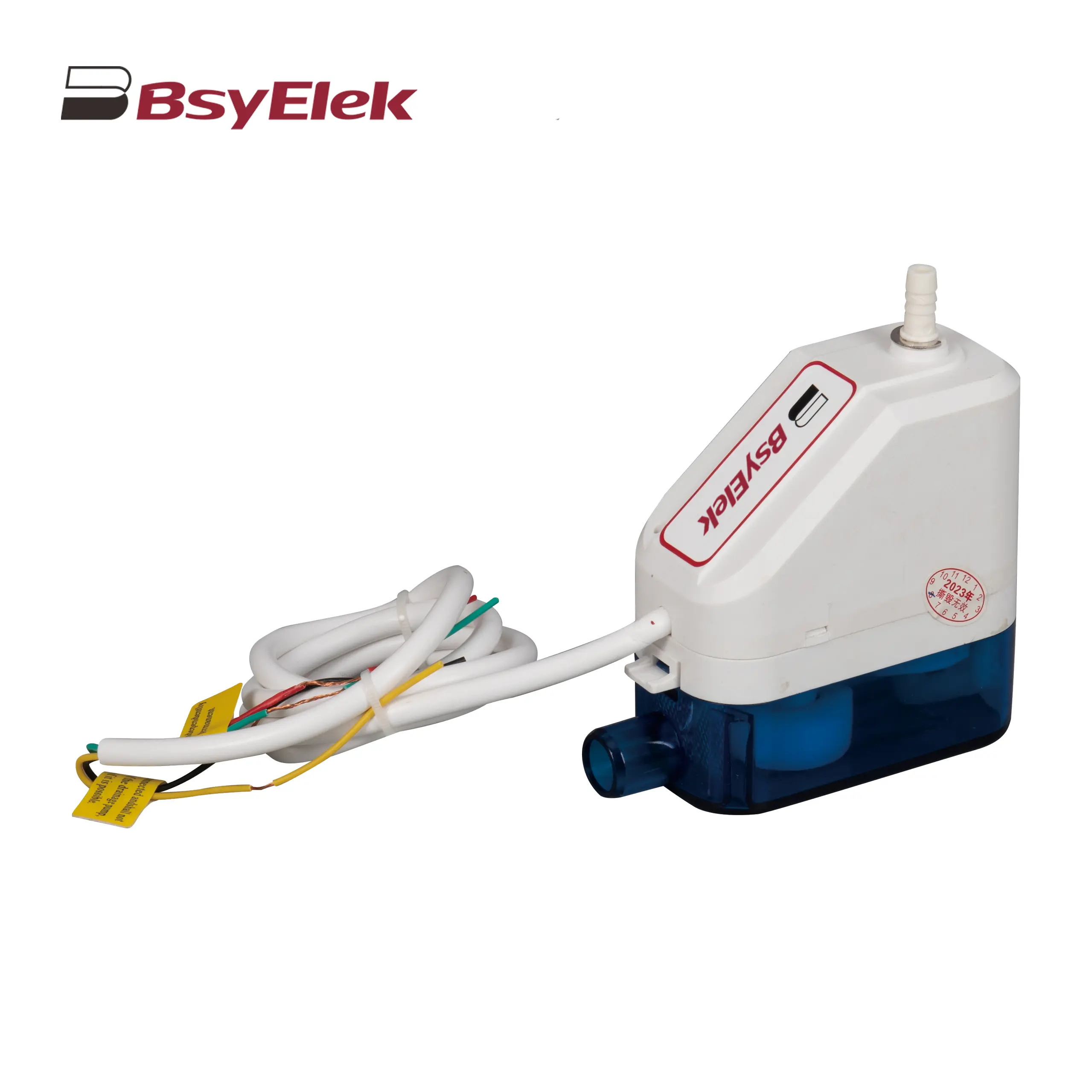 BY-24C/40C 10M Corner Drainage Pump
What is a miniature circuit breaker (MCB)?
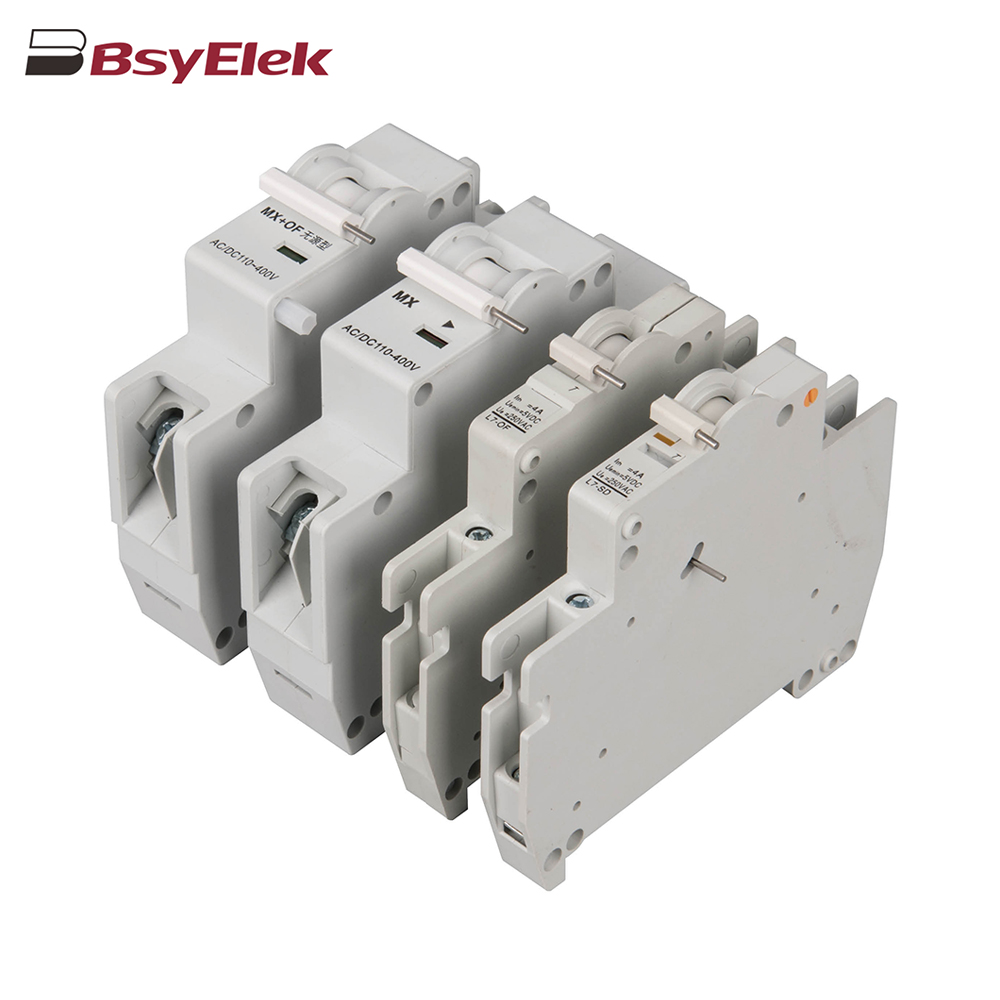 OF SD MX OF MCB Miniature Circuit Breaker Accessories
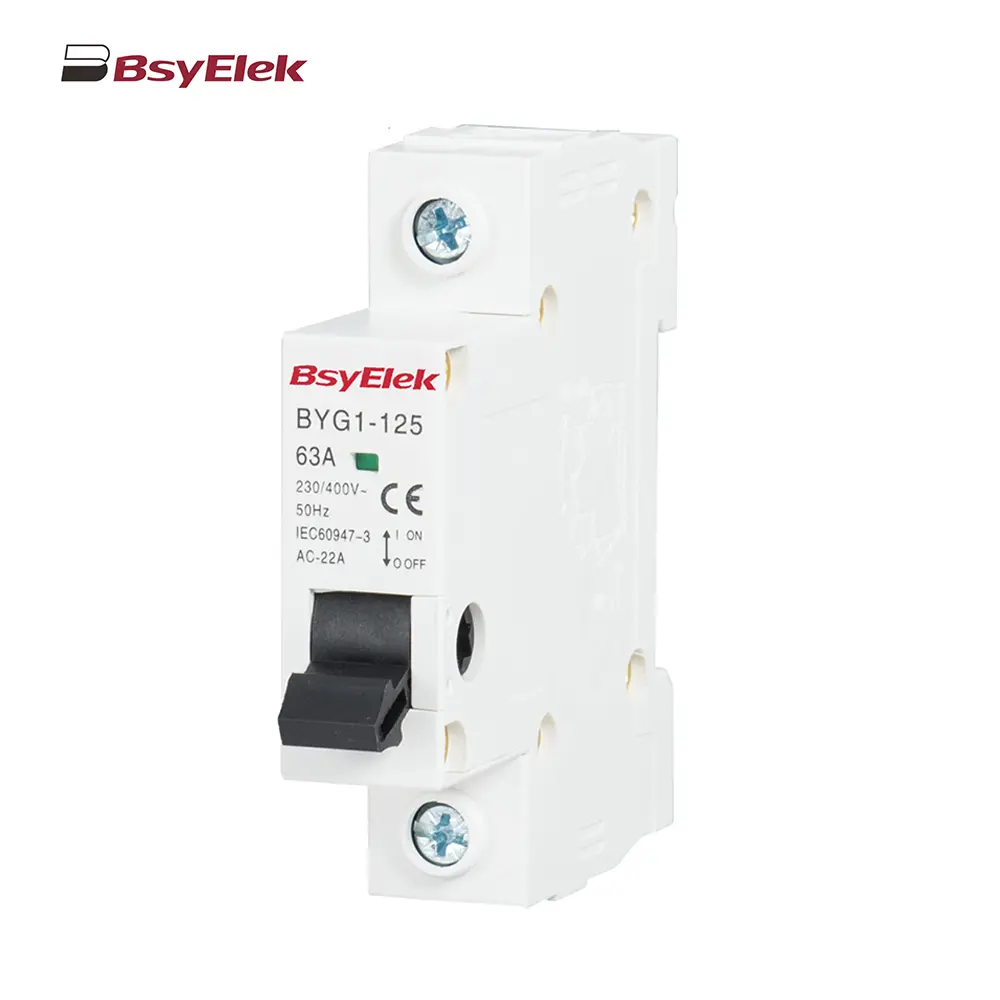 BYG1-125 Main Switch MCB Isolator Switch
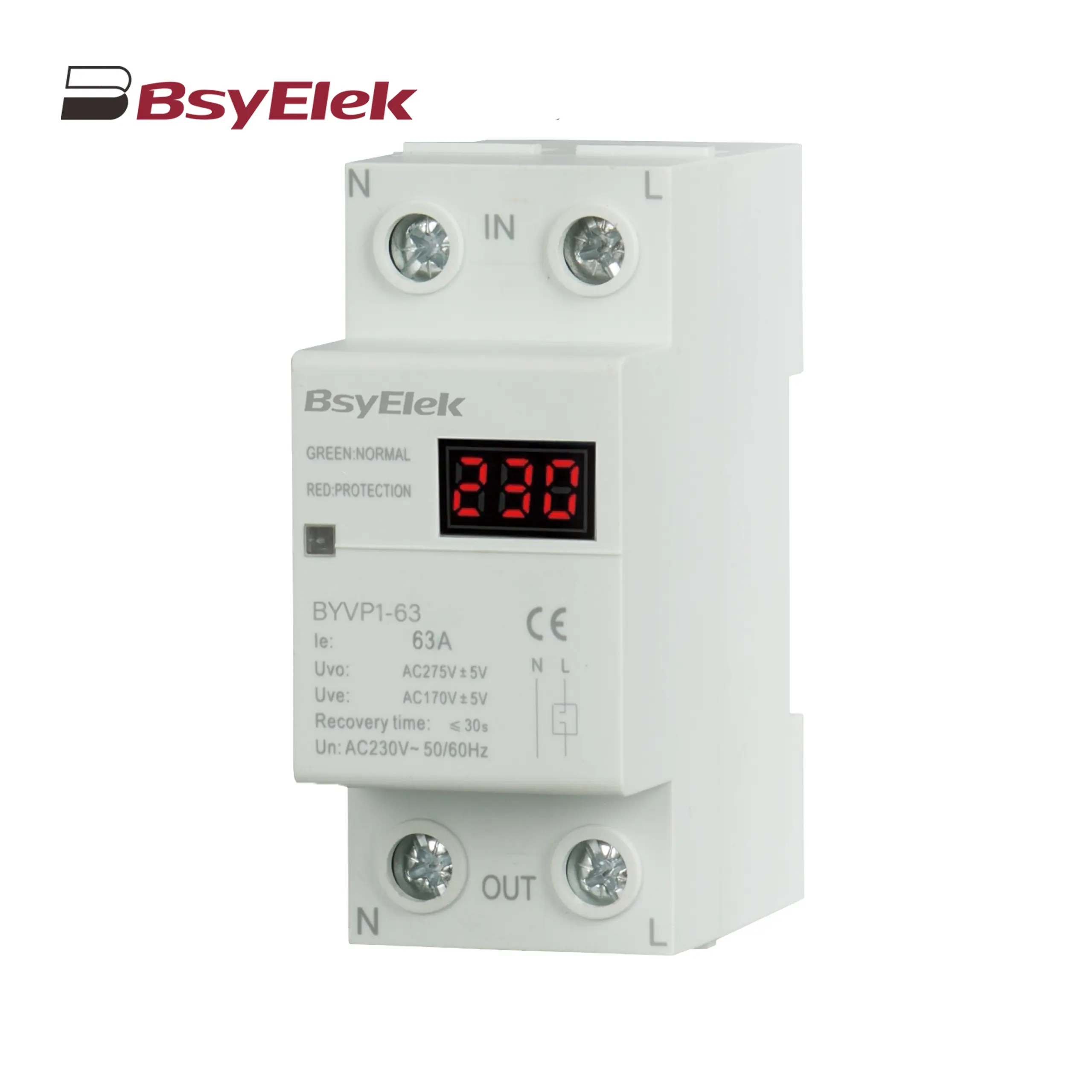 BYVP1-63 100A Single Display Overvoltage and Undervoltage Protector
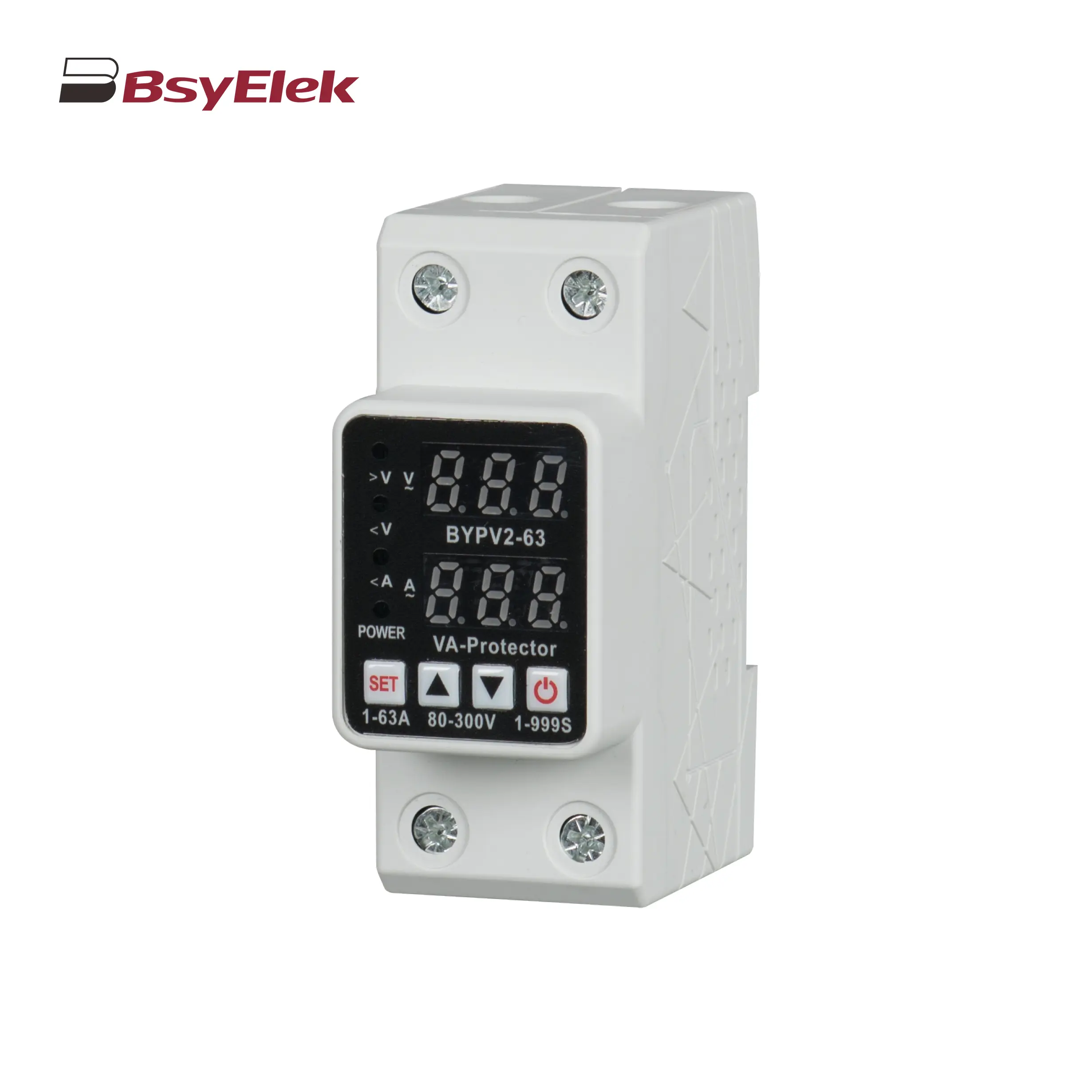 BYVP2-63 40A 63A Adjustable Dual Display Overvoltage and Undervoltage Protector
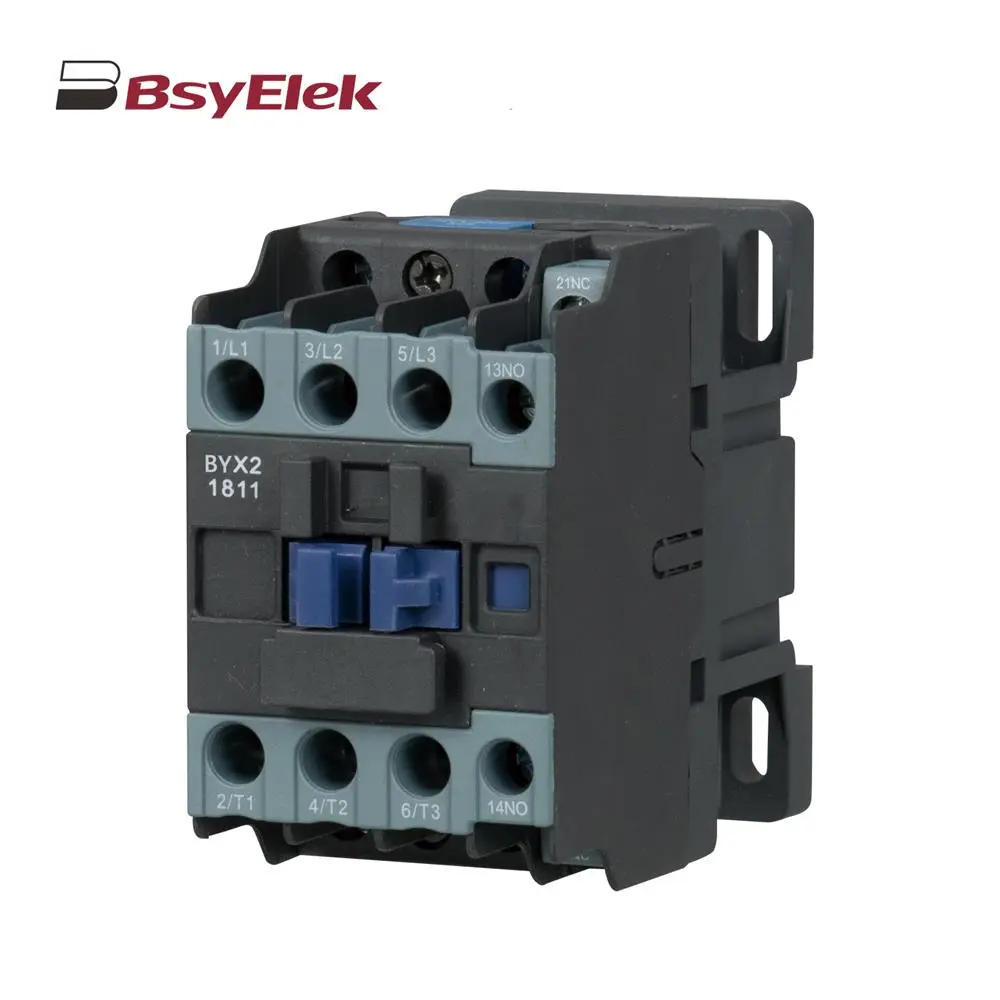 BYX2 6-95A AC Contactor
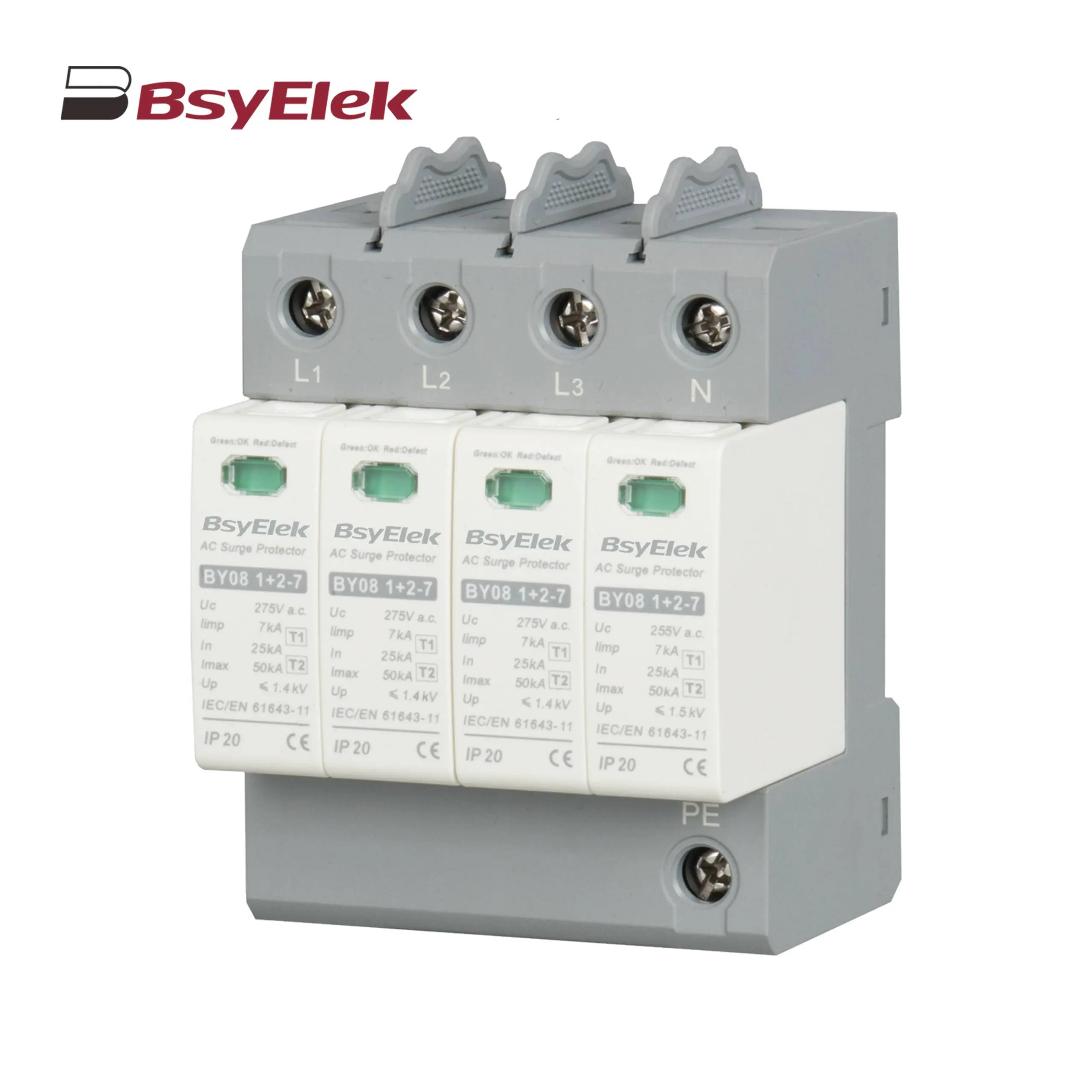 BY08 1+2-7 SPD Class T1+T2 Imax 50KA Surge Protective Device
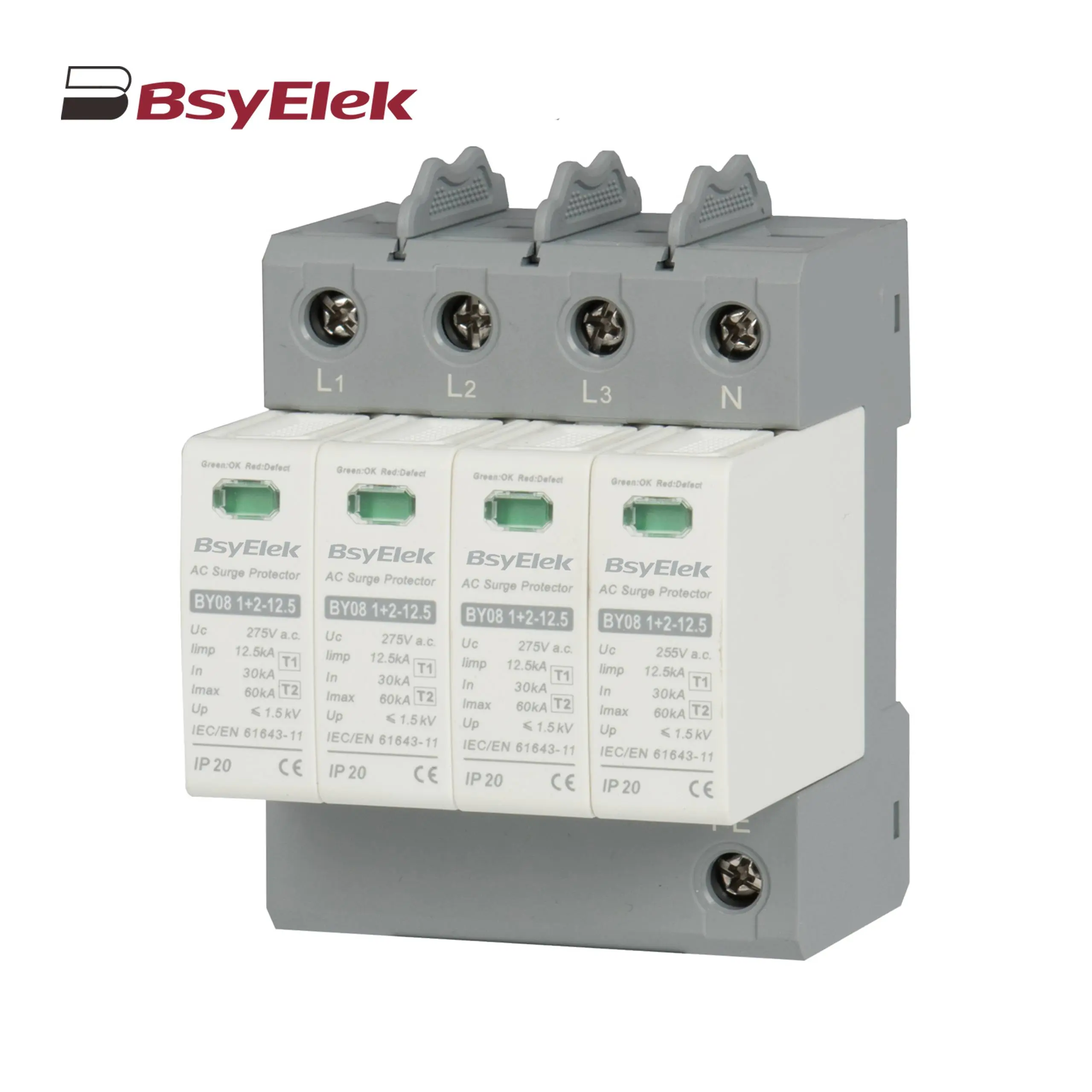 BY08 1+2-12.5 SPD Class T1+T2 Imax 60KA Surge Protective Device
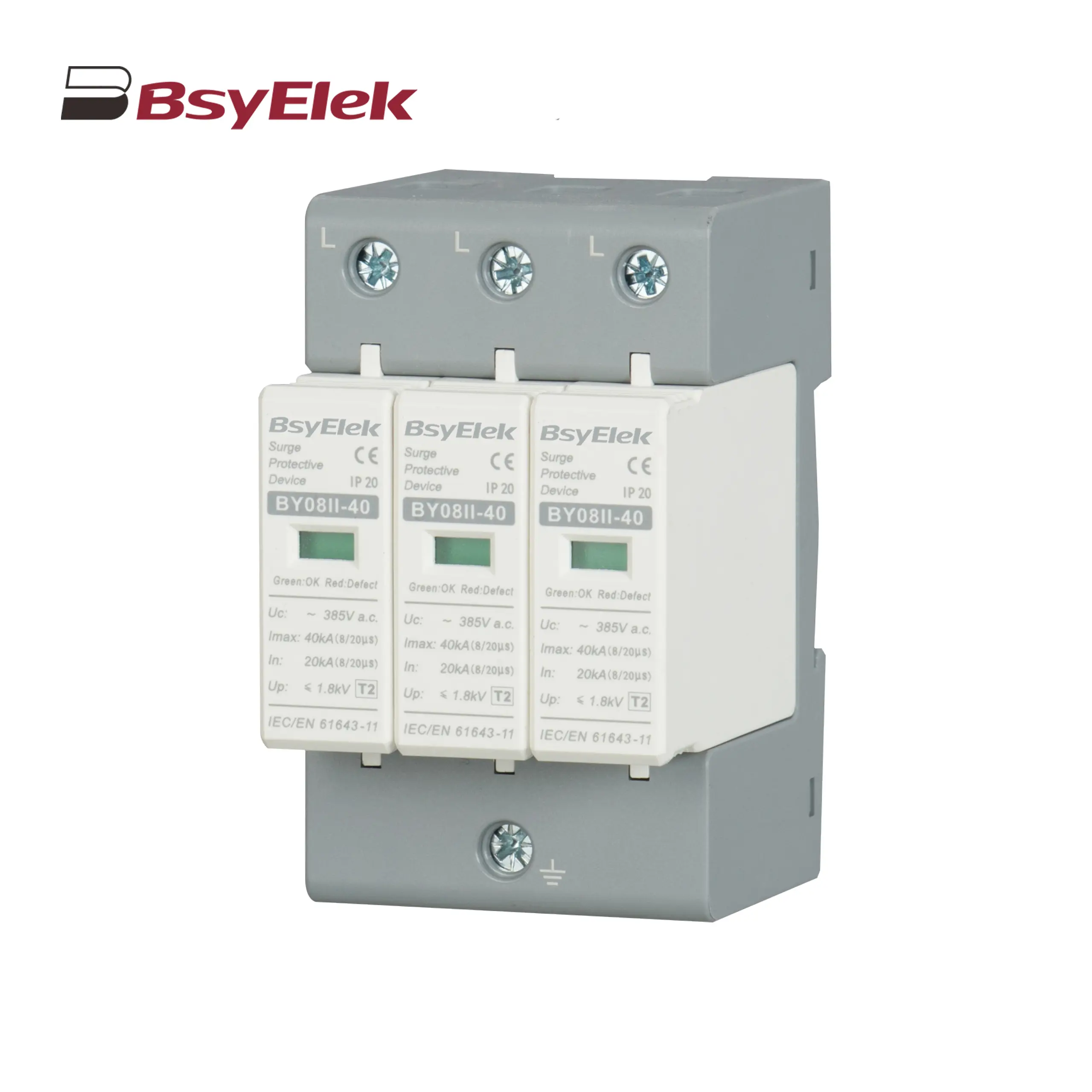 BY08II-40 SPD Class T2 Imax 40KA Surge Protective Device
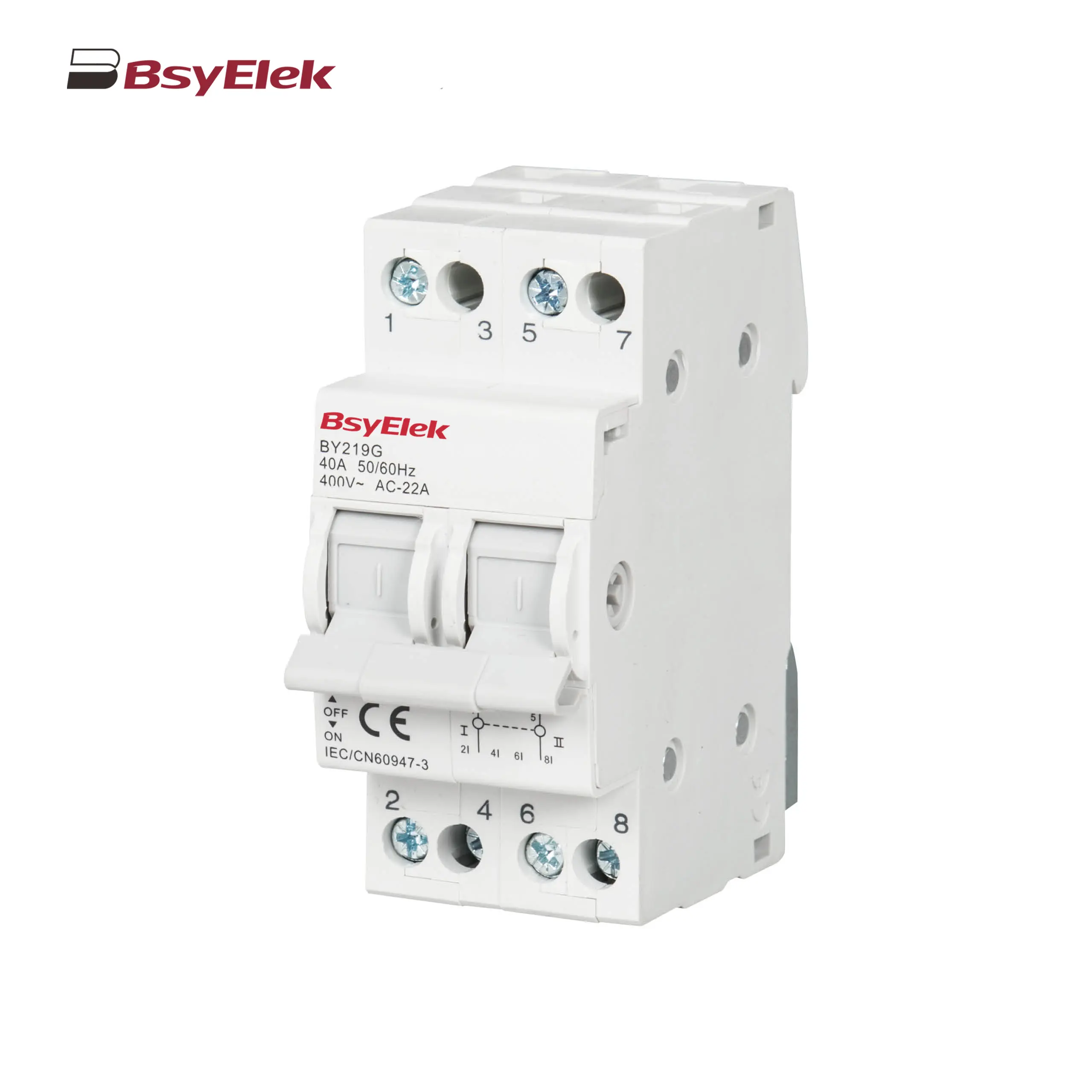 BY19G 63A Manual Changeover Switch
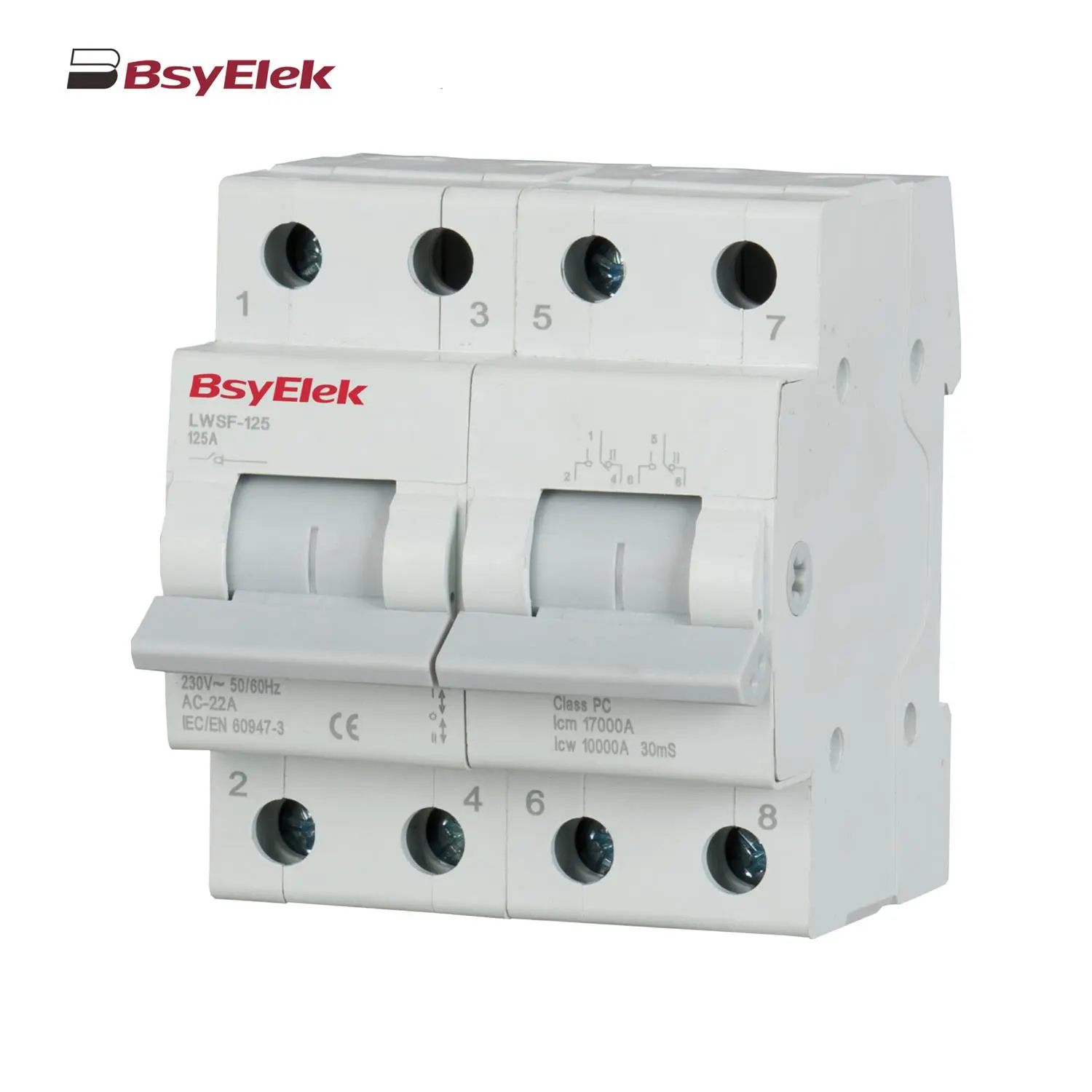 LWSF-125 125A Manual Changeover Switch
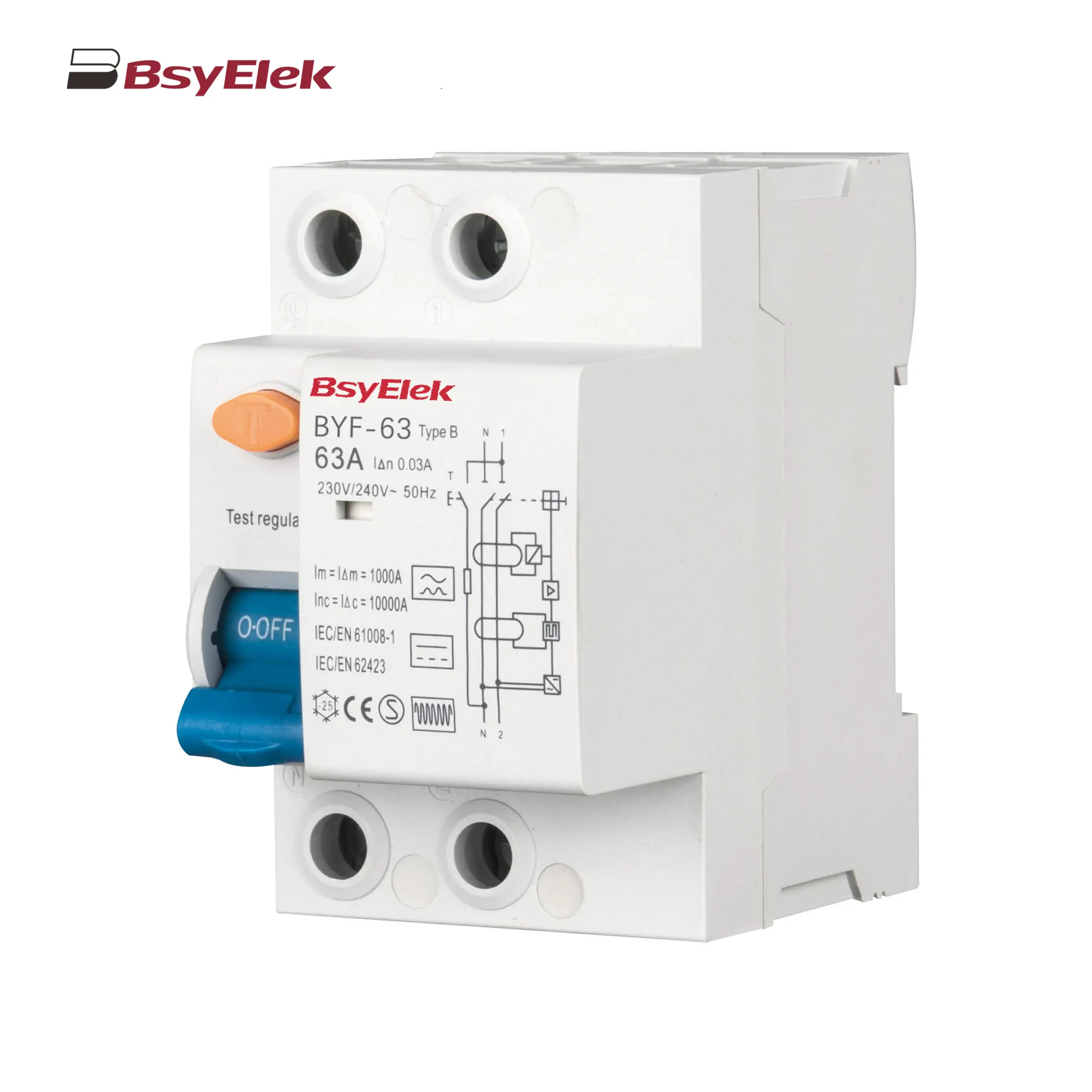 BYF-63 RCD 10KA Type B AC+A+Smoothing DC Residual Current Device
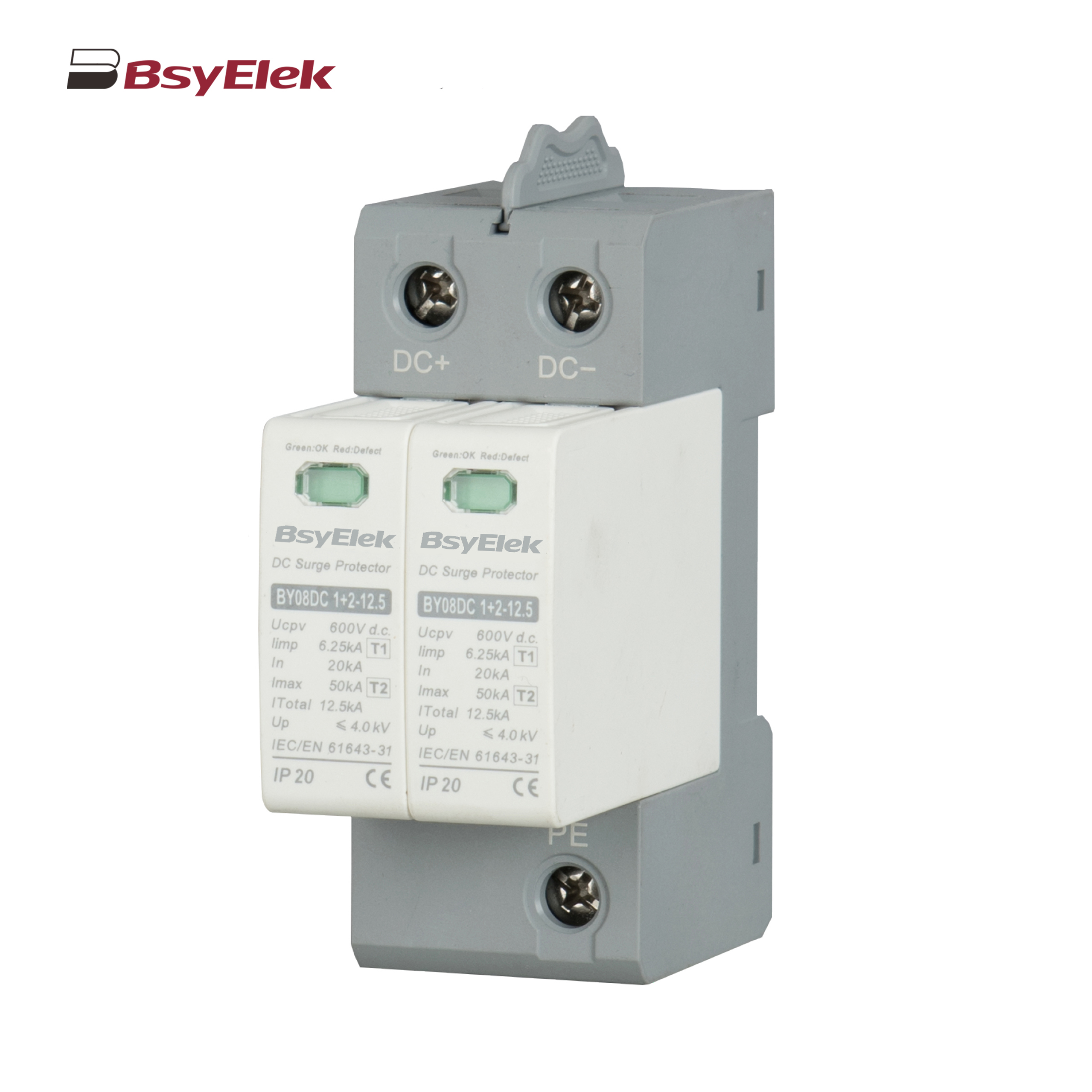 BY08DC 1+2-12.5 SPD Class T1+T2 40KA DC Surge Protective Device
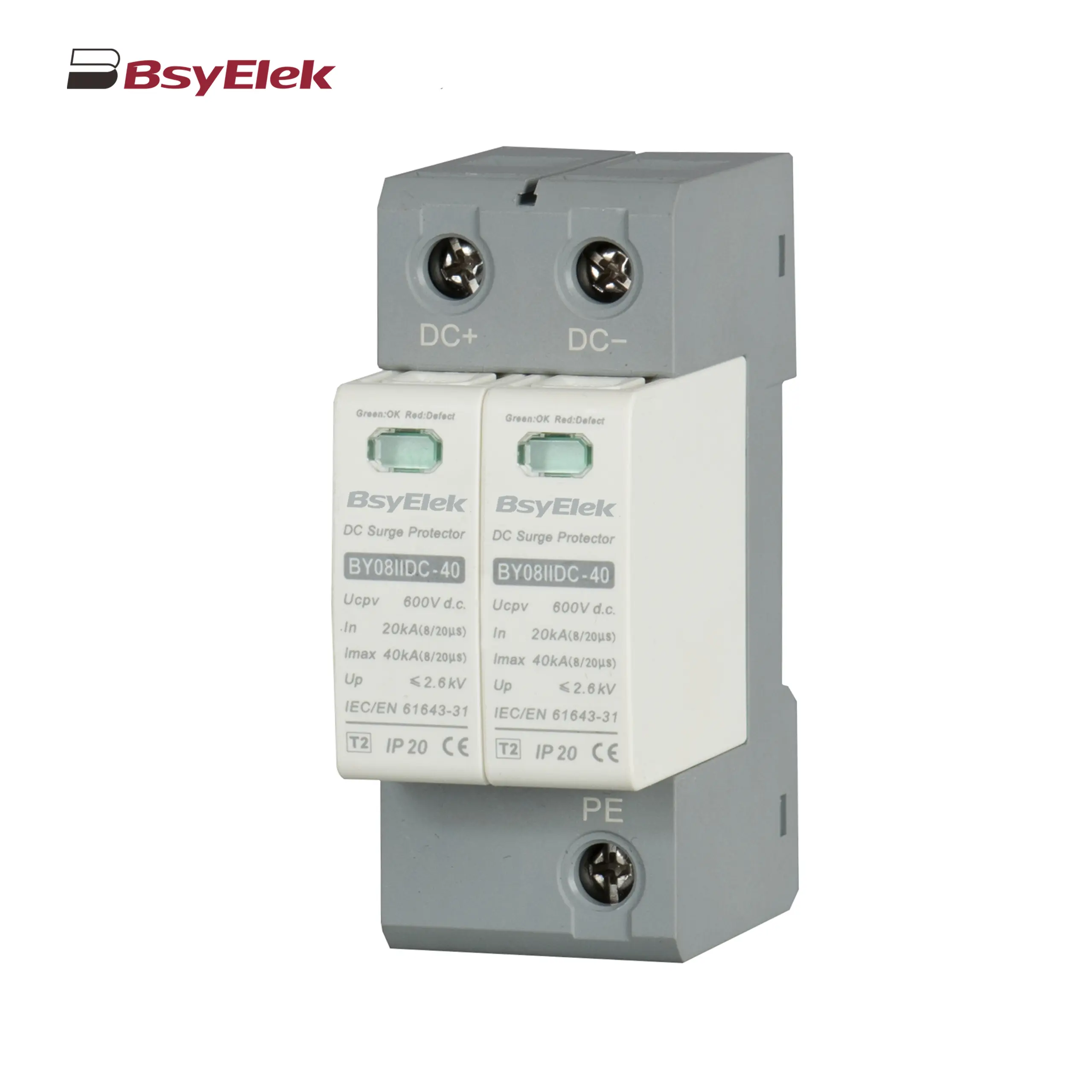 BY08IIDC-40 SPD Class T2 40KA DC Surge Protective Device
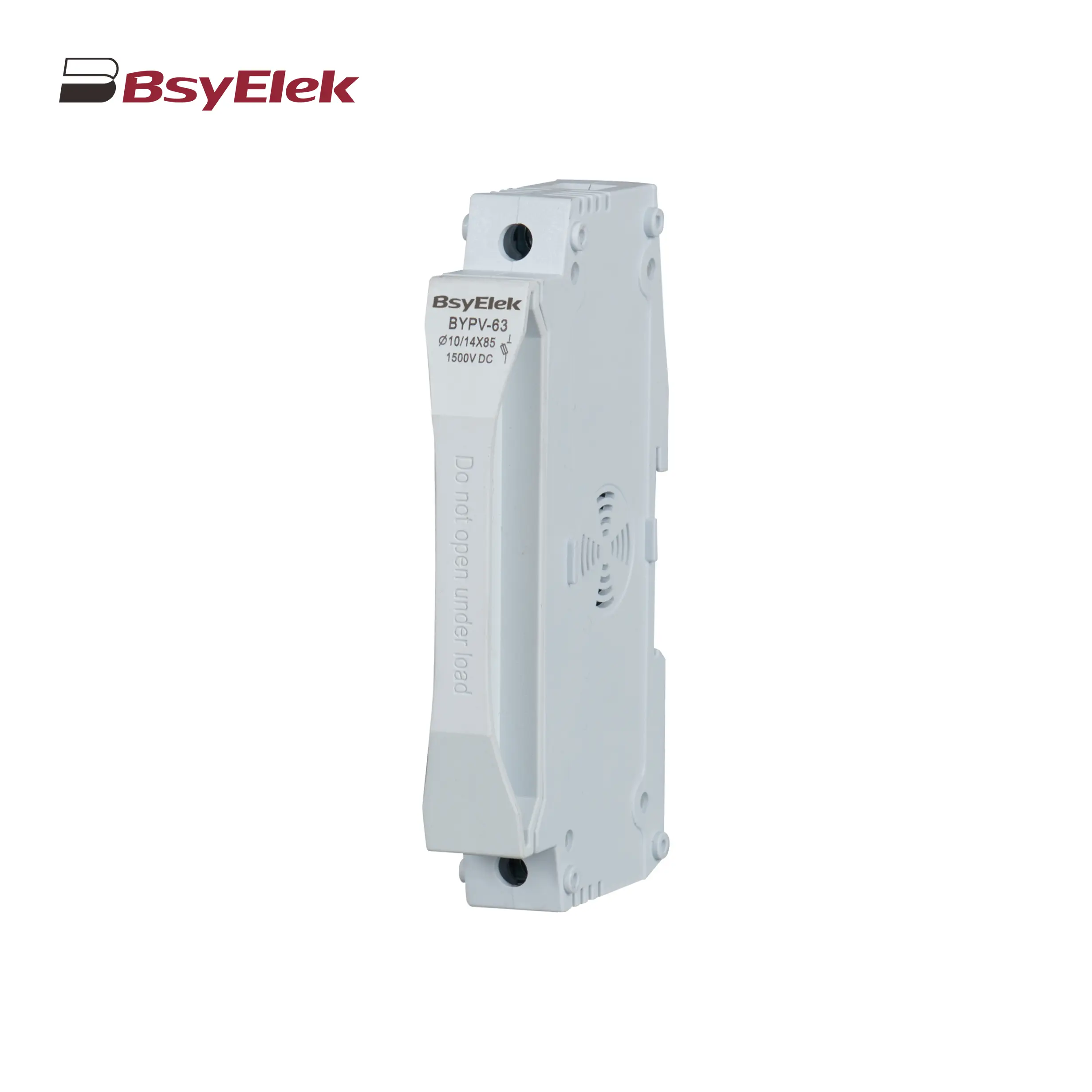 BYPV-63 1500VDC 50A Fuse Holder with 10x85mm 14x85mm Fuse Link
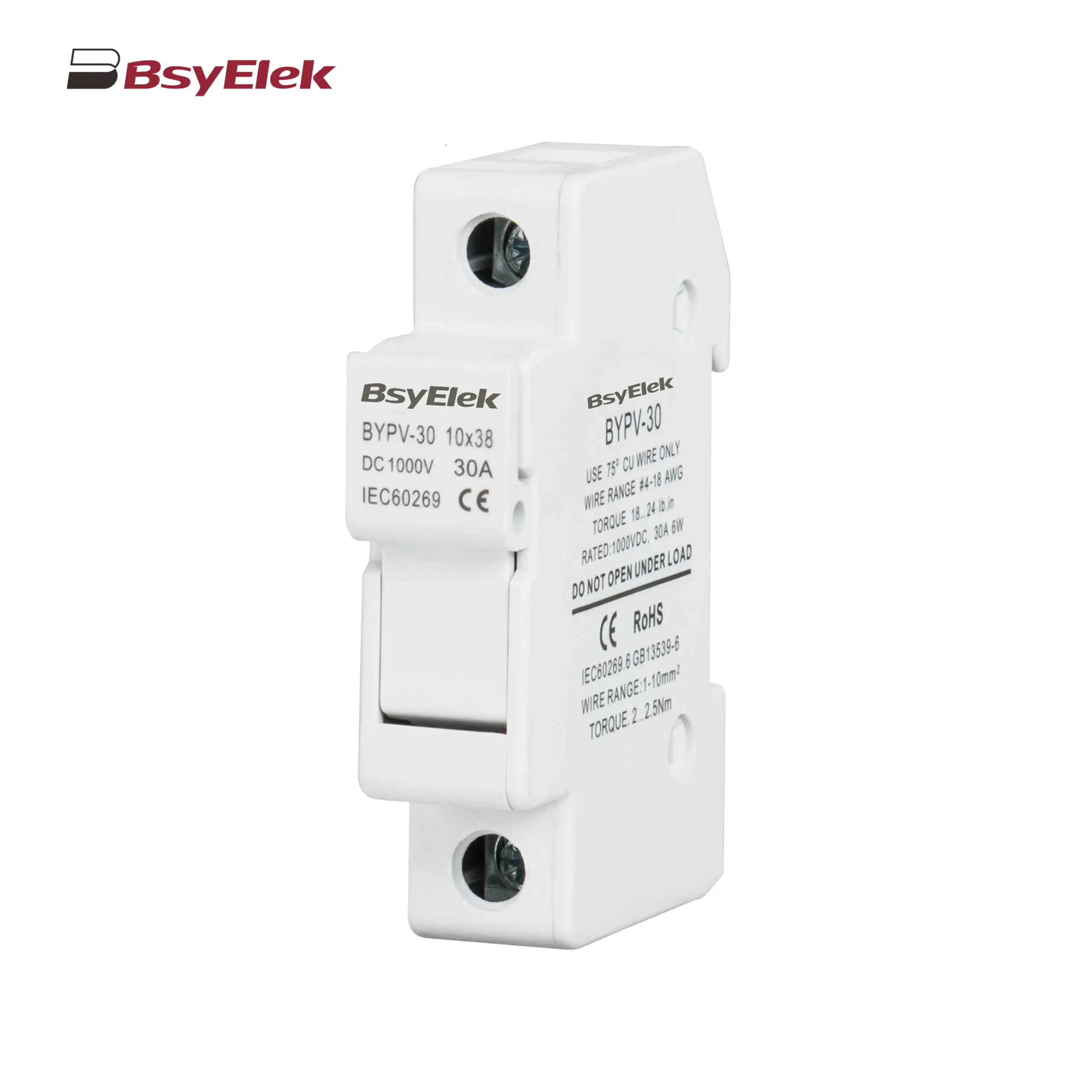 BYPV-30 1000VDC 32A Fuse Holder with 10x38mm Fuse Link
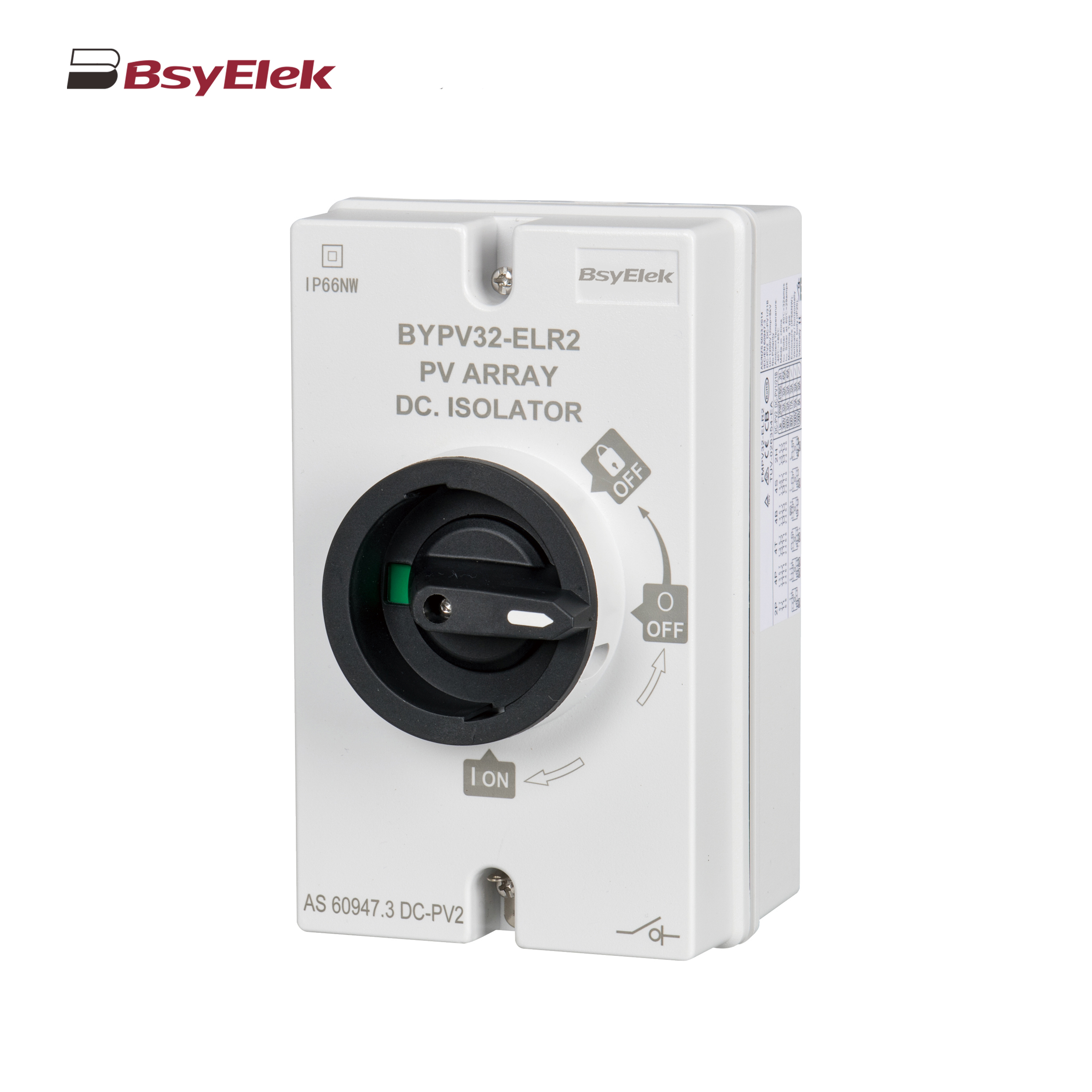 BYPV-ELR2 PV Isolator Switch with Enclosed Version
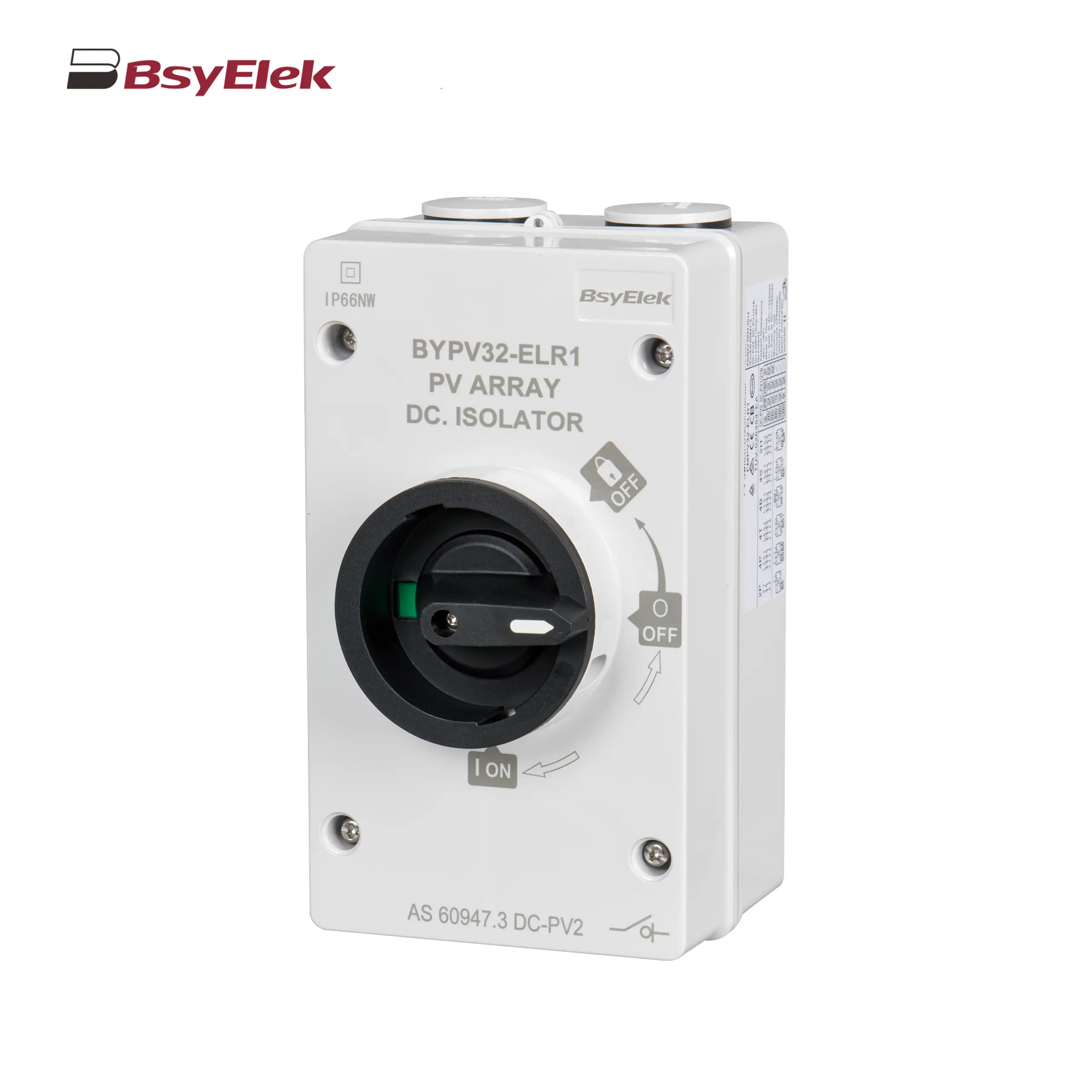 BYPV-ELR1 PV Isolator Switch with Enclosed Version
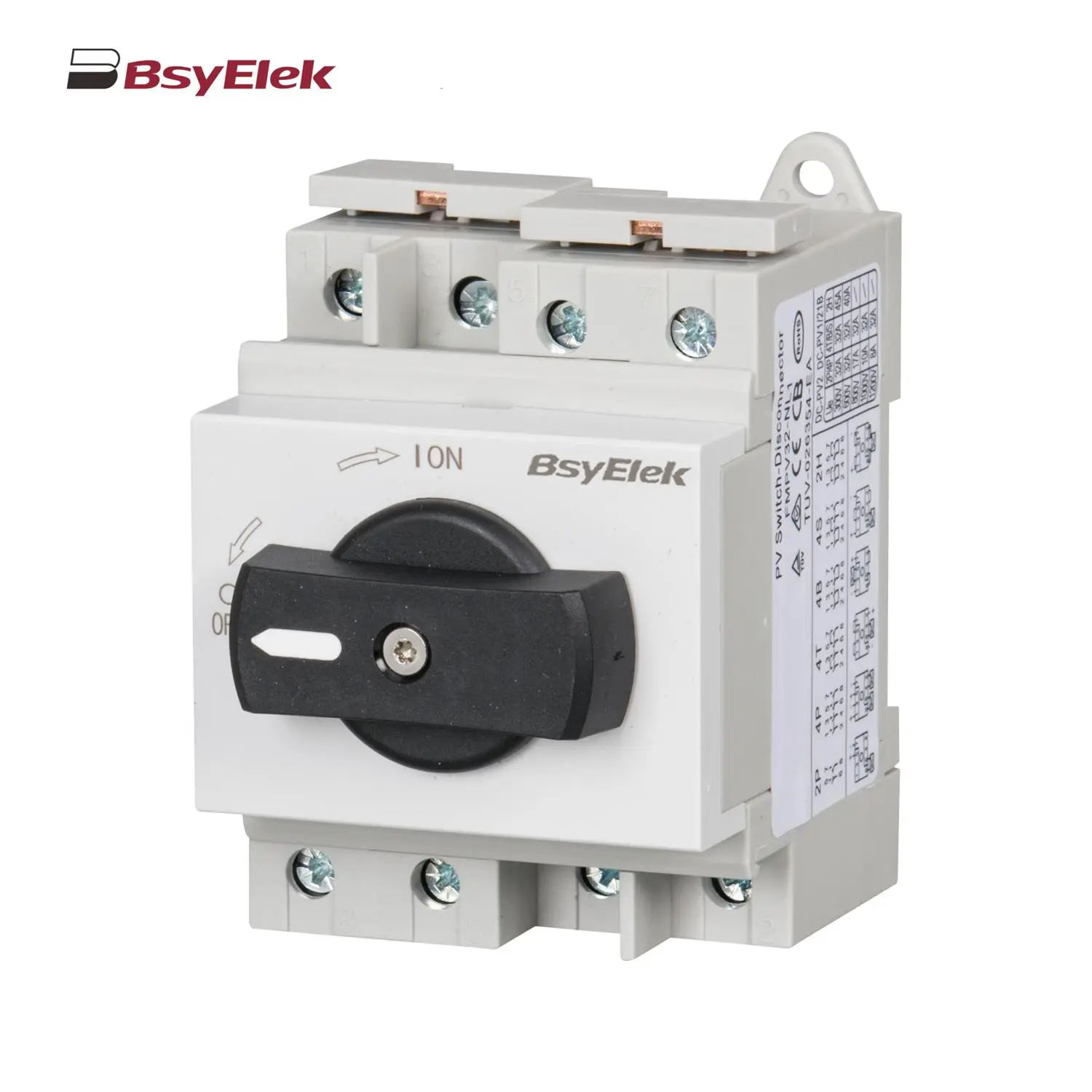 BYPV-NL1/T PV Isolator Switch with Ultra-thin Lever Handle
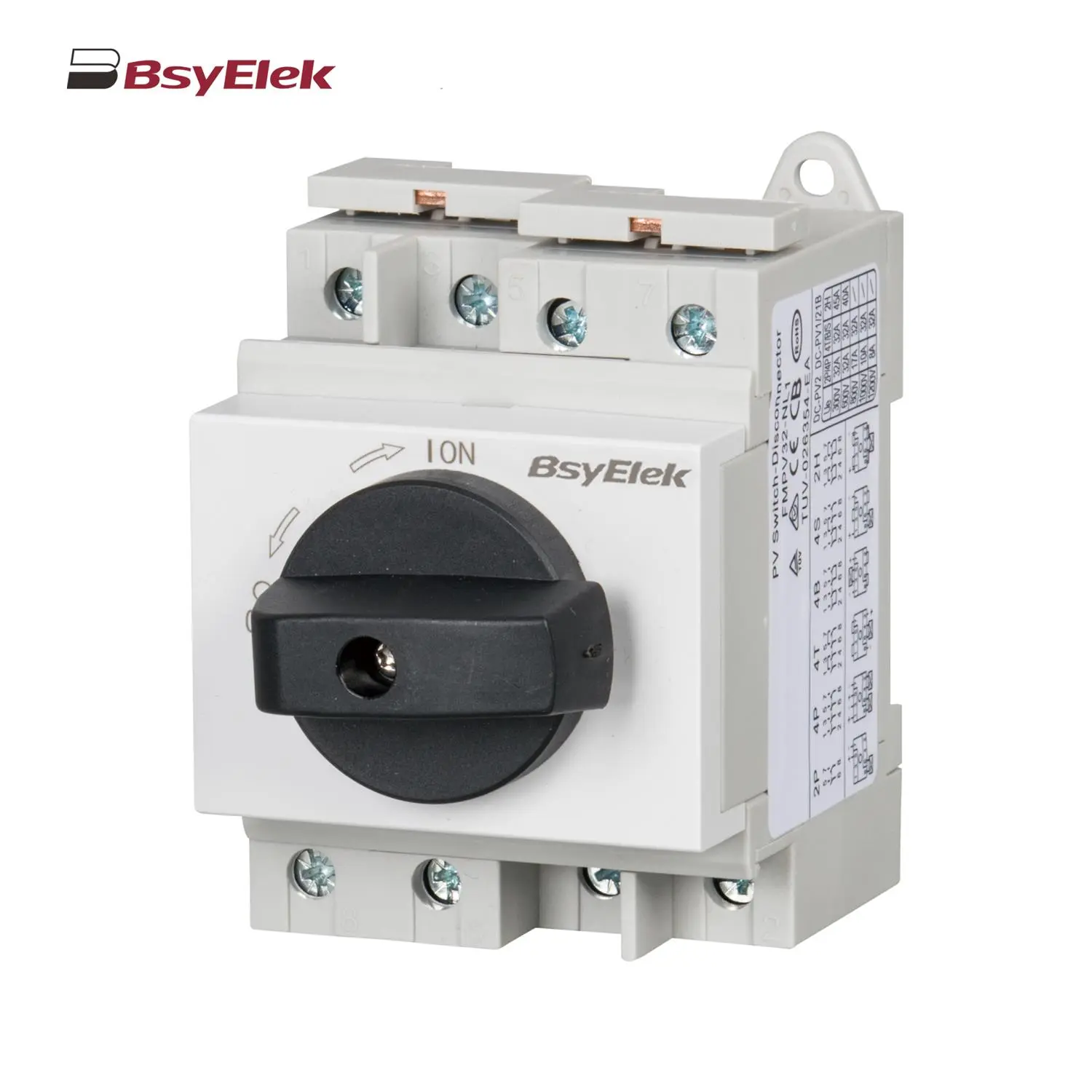 BYPV-NL1 PV Isolator Switch with Lever Handle
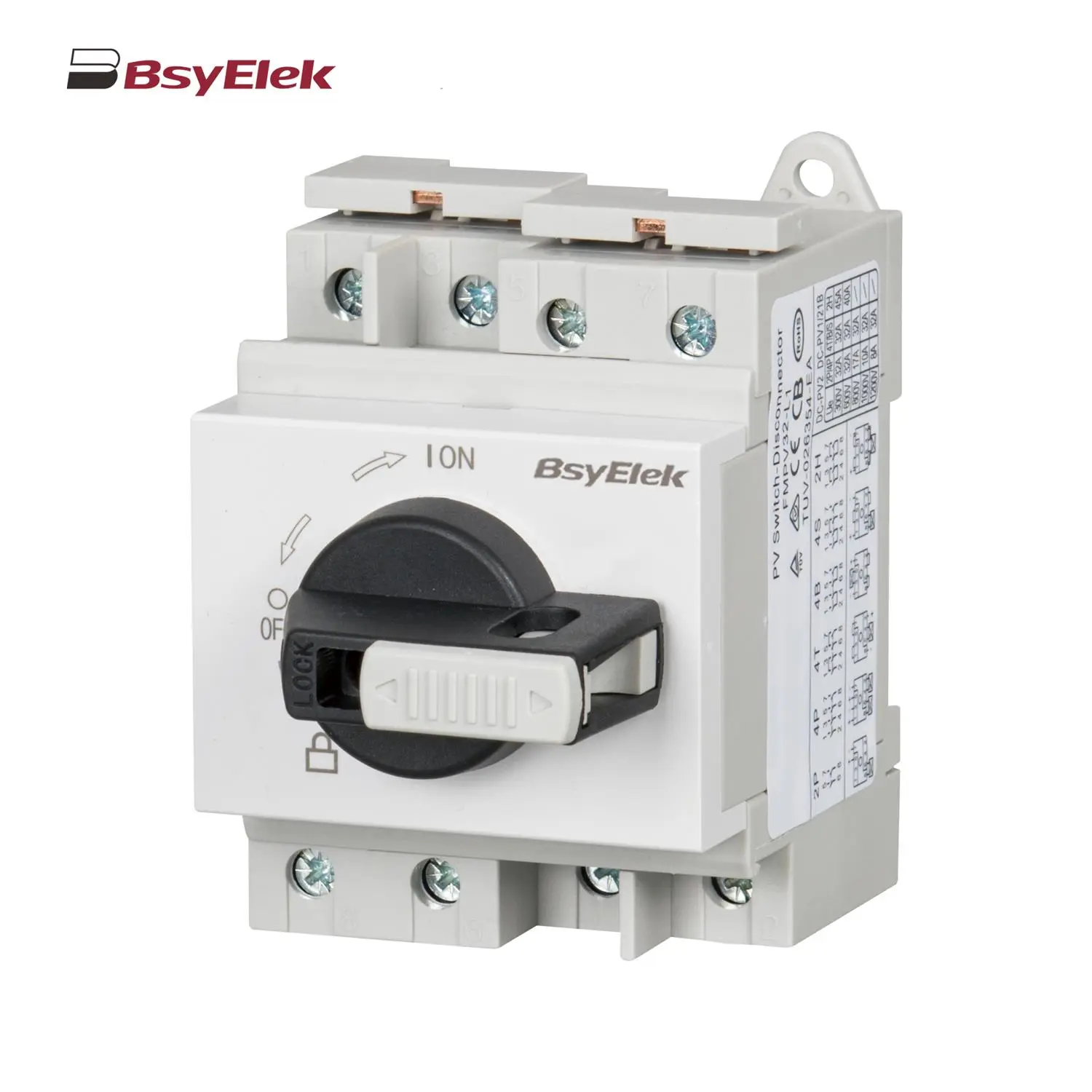 BYPV-L1/L2 PV Isolator Switch with Lockable Lever Handle
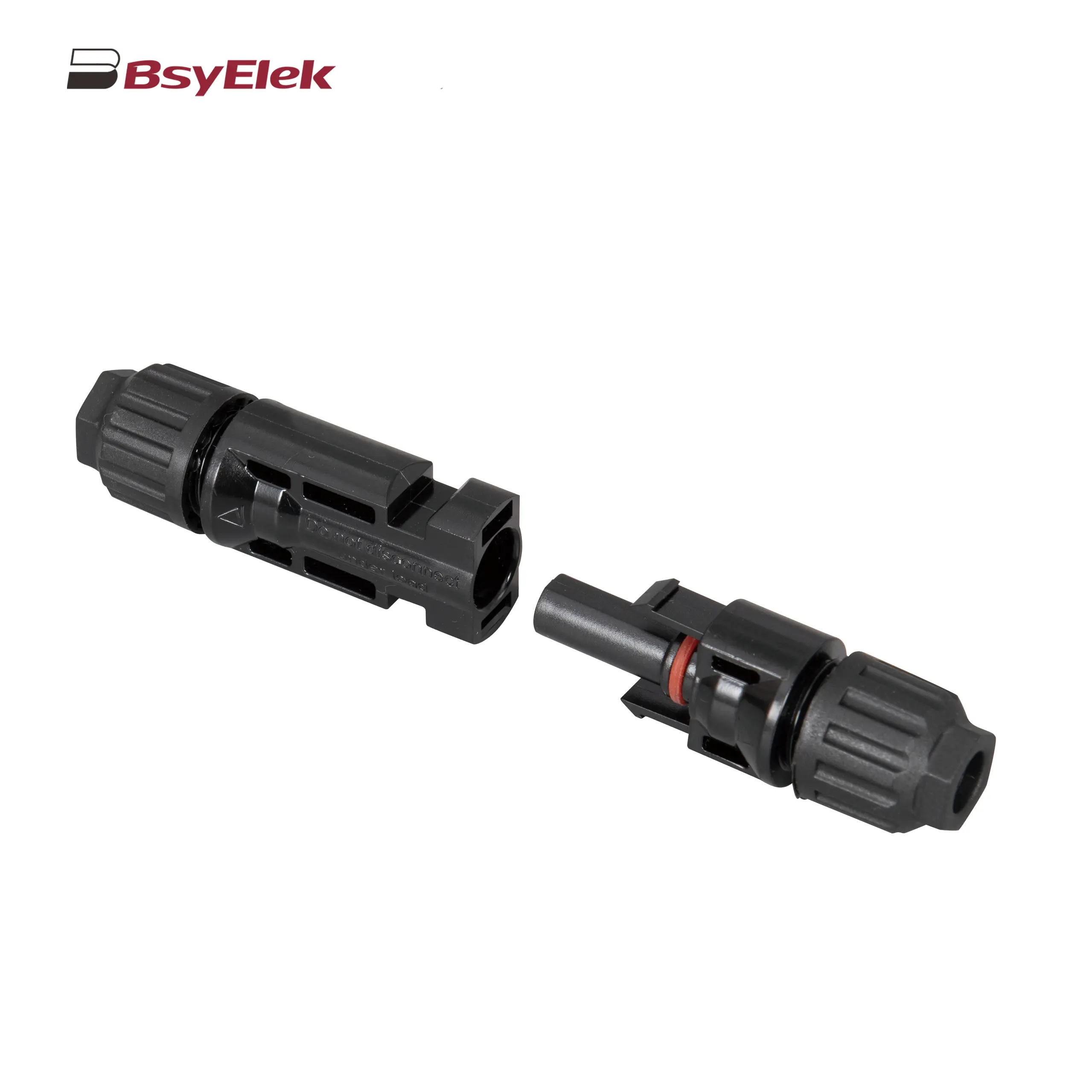 PV-BY-01 30A/50A 1000V Photovoltaic Connector
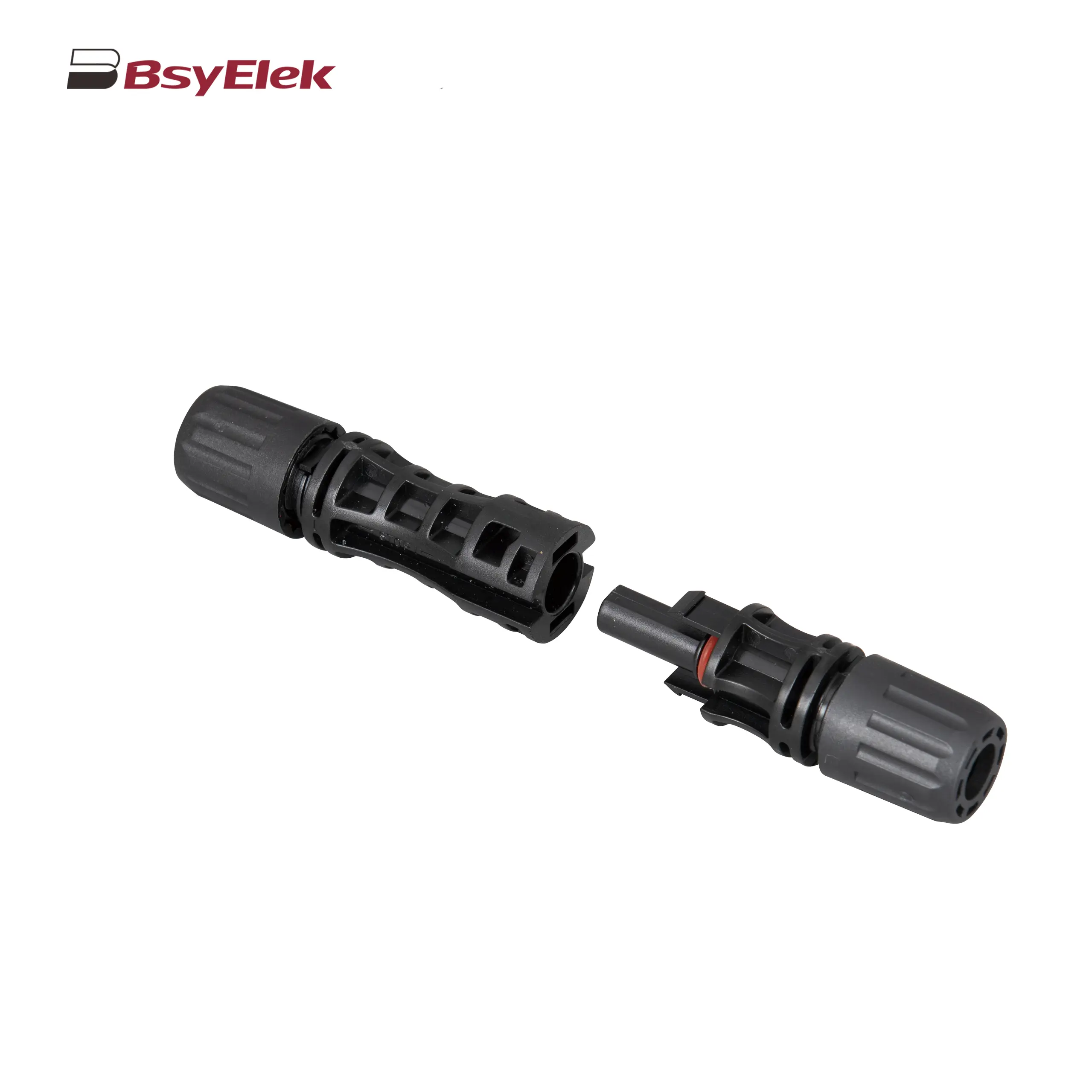 PV-BY-02 30A/50A 1500V Photovoltaic Connector
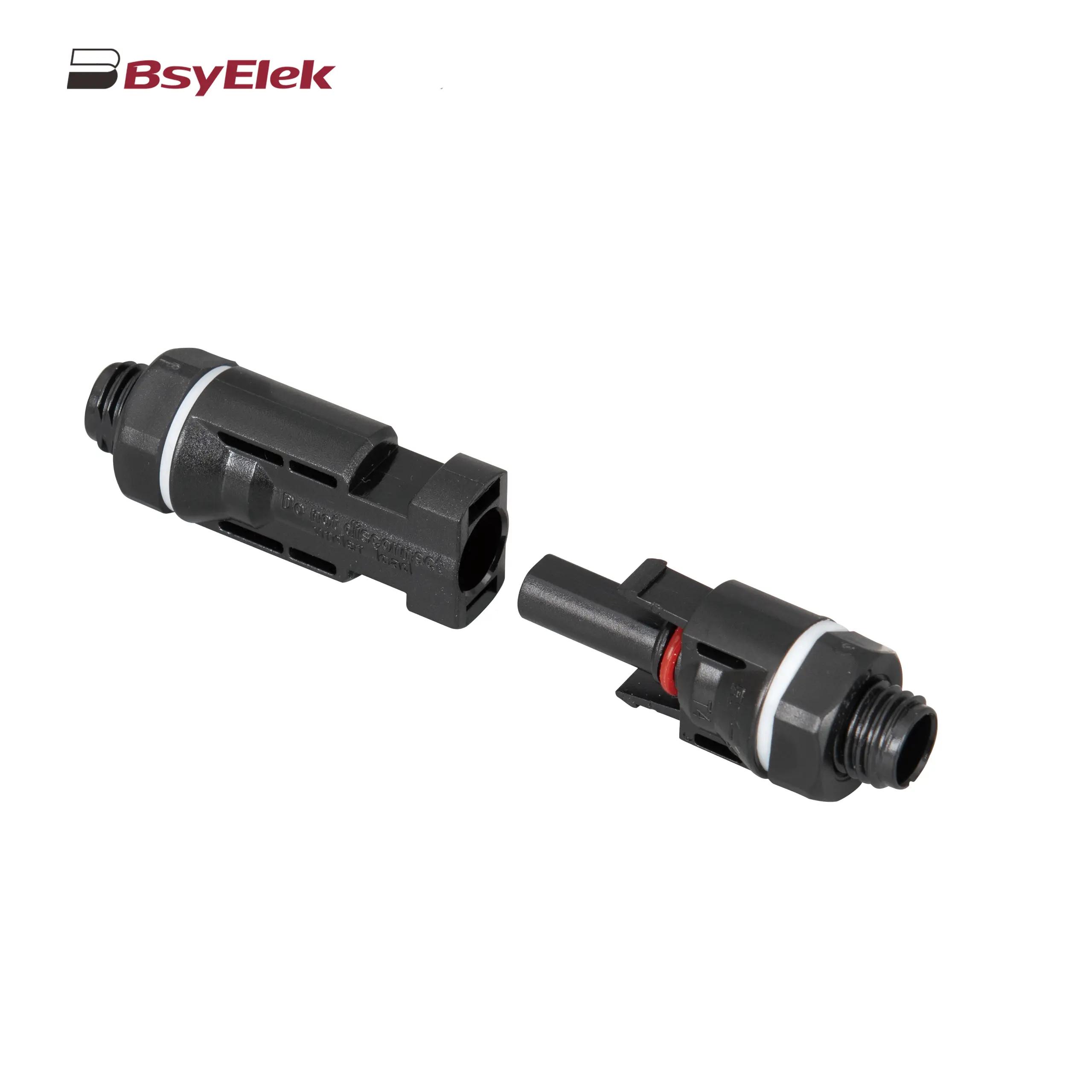 PV-BY-03 30A/50A 1000V Panel Mount Photovoltaic Connector
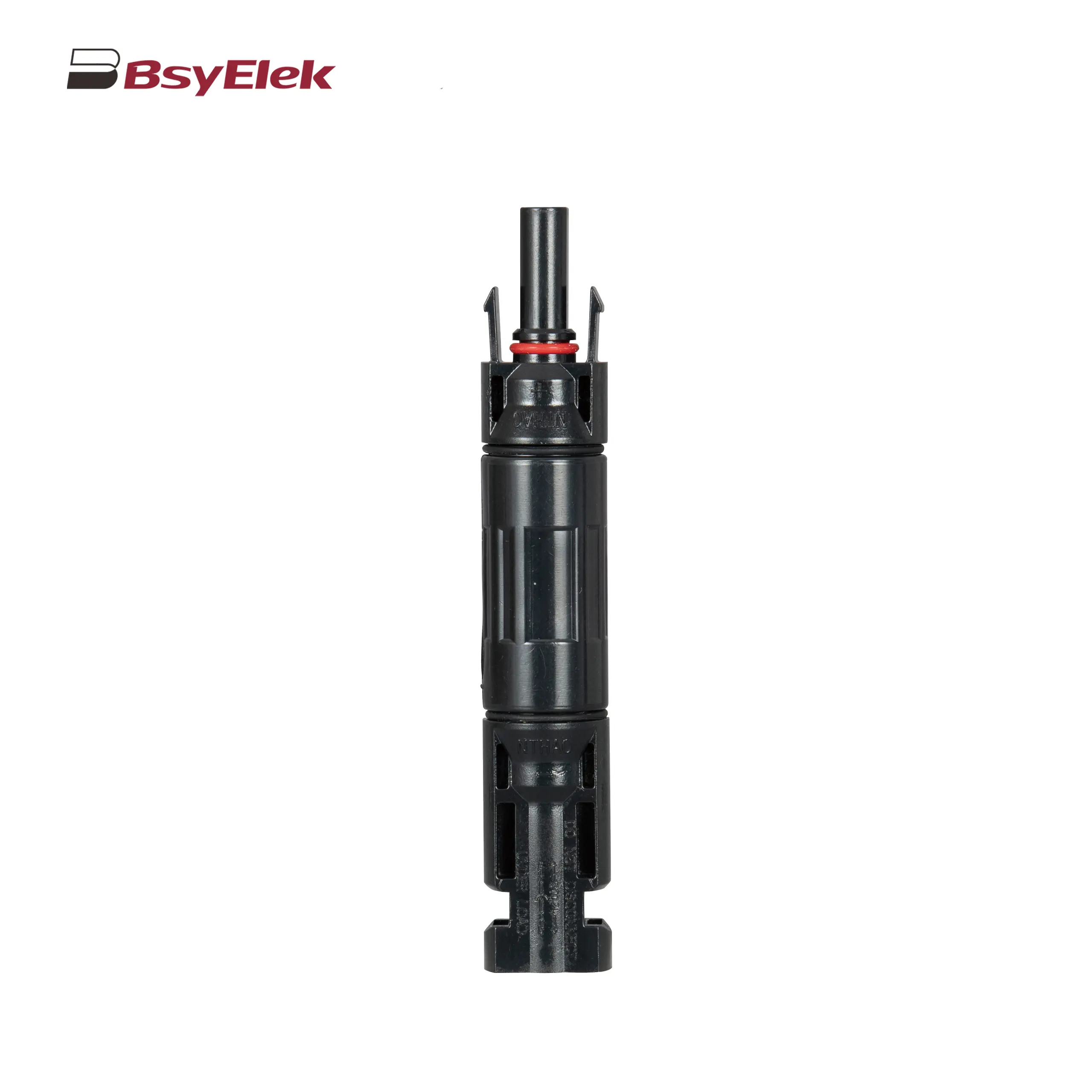 PV-BY-F01 30A 1500V Diode/Fuse Type Connector
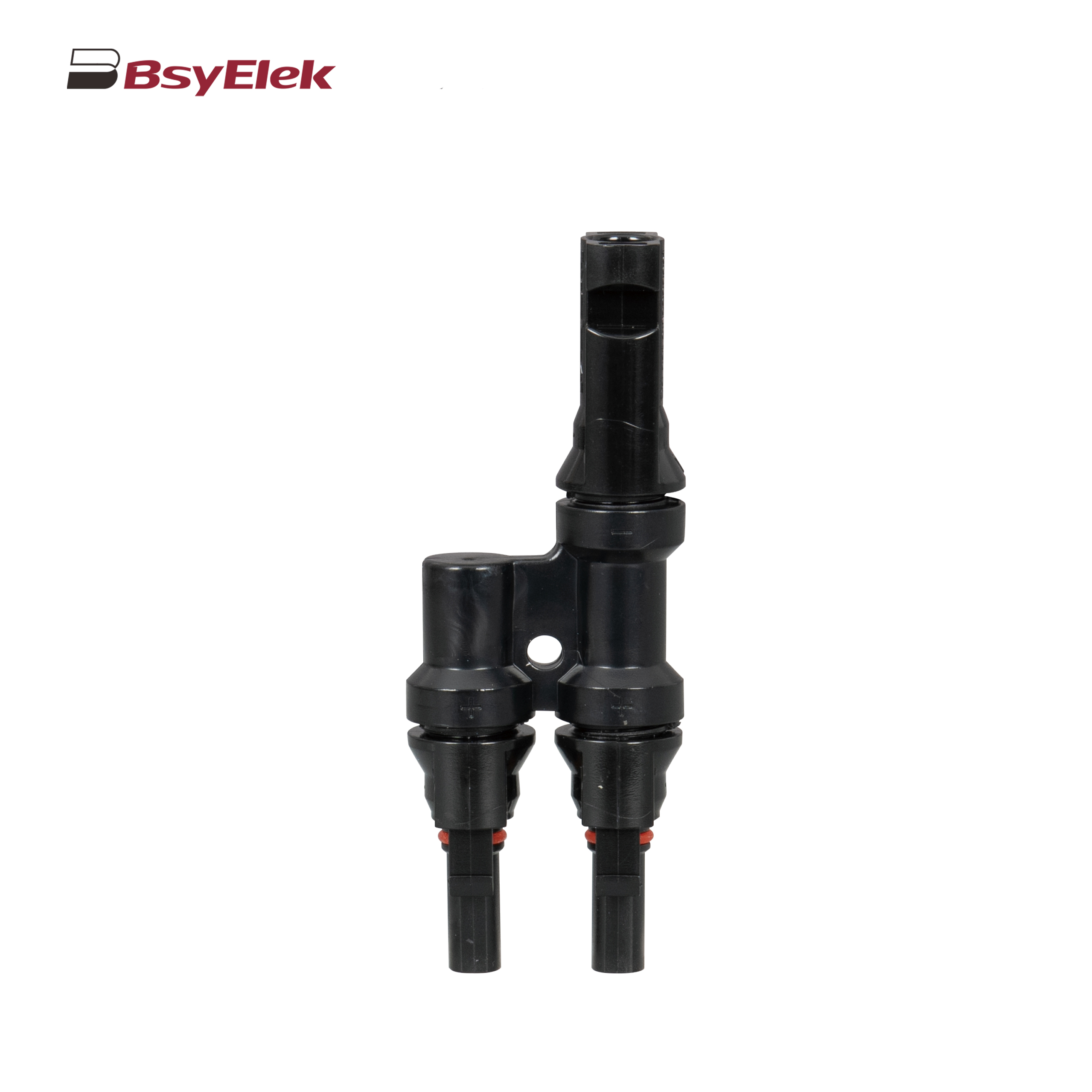 PV-BY-T 50A 1500V T Type Branch Connector
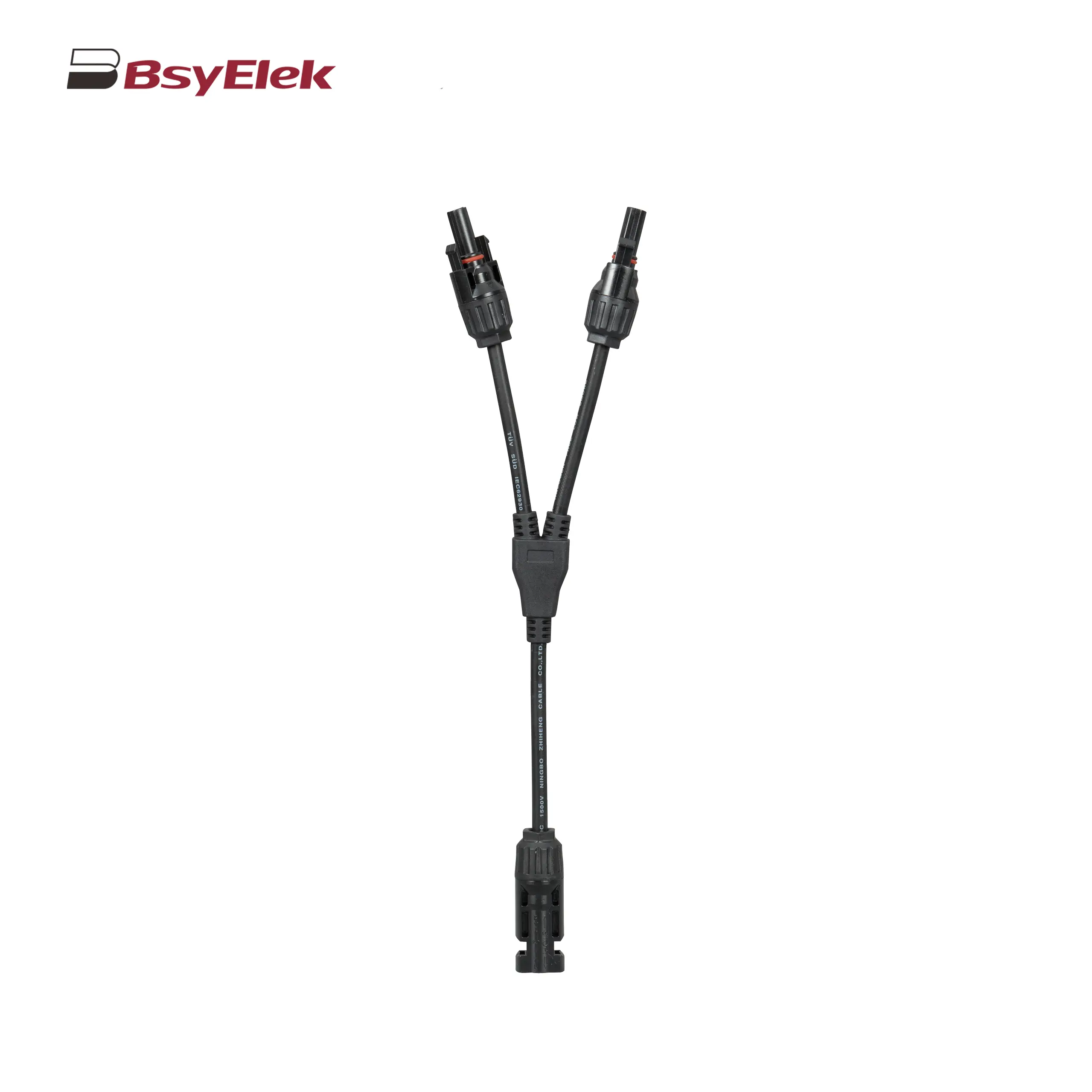 PV-BY-Y 30A 1500V Y Type Branch Connector
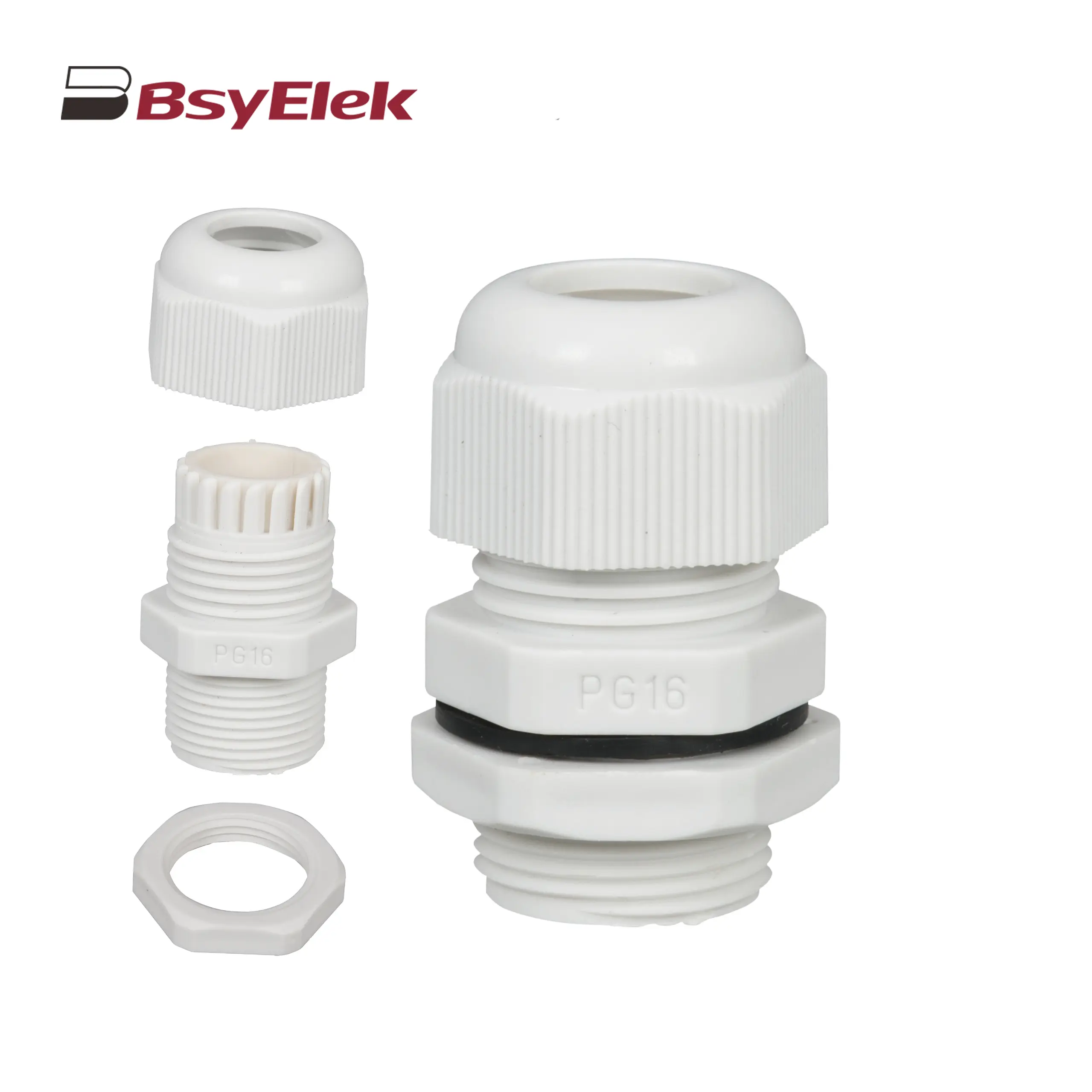 PG Waterproof Cable Gland with Washer
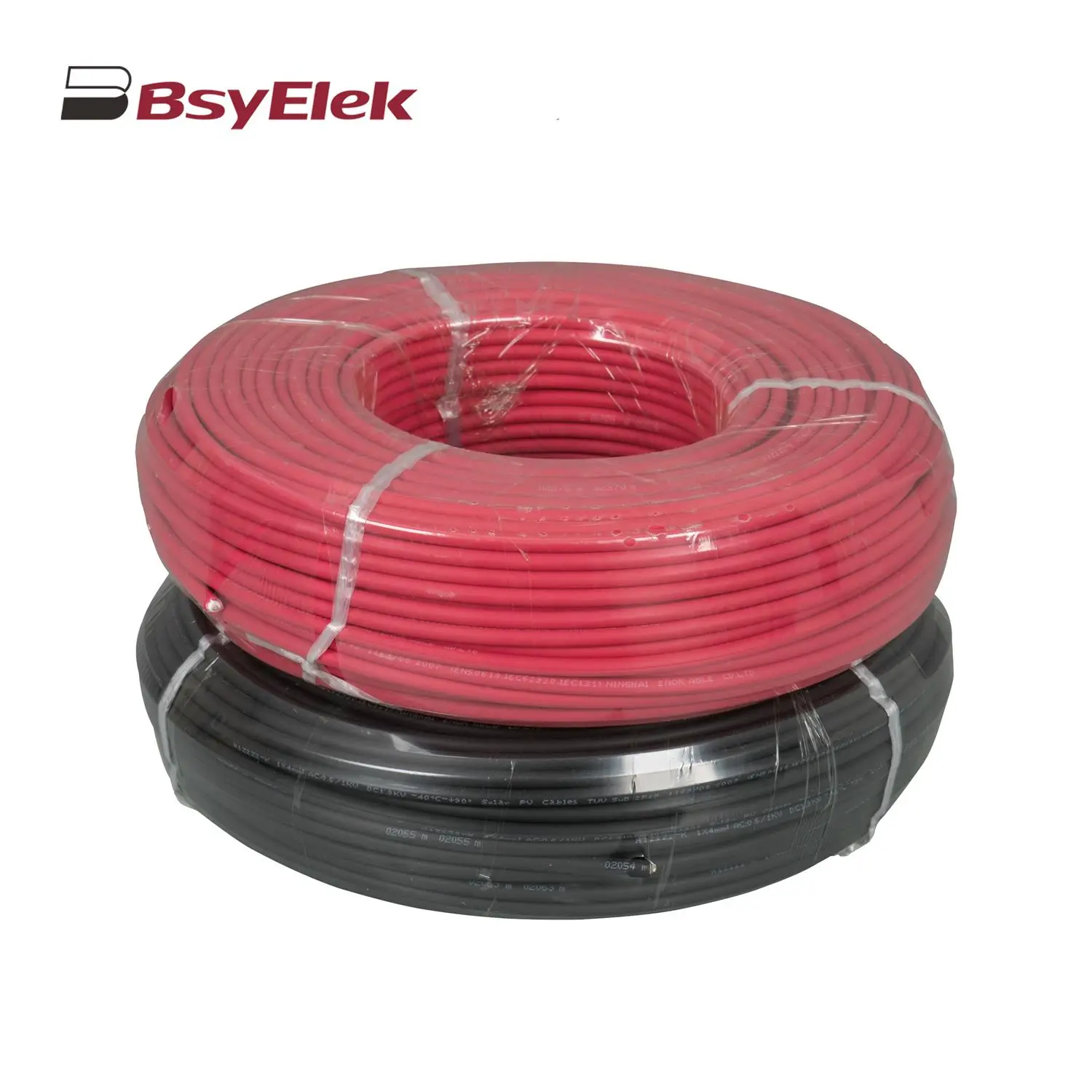 Photovoltaic Cable
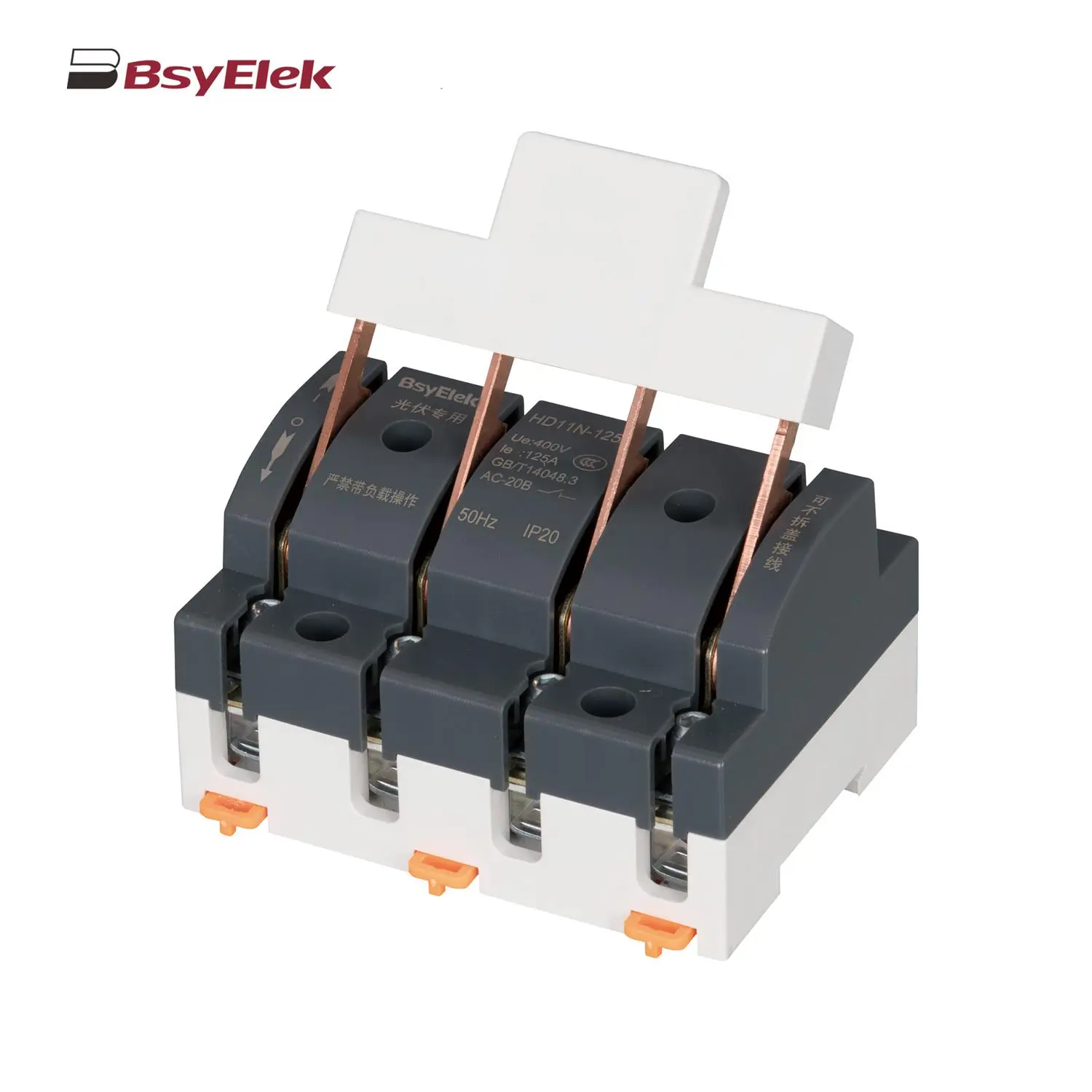 HD11N Photovoltaic Knife Switch
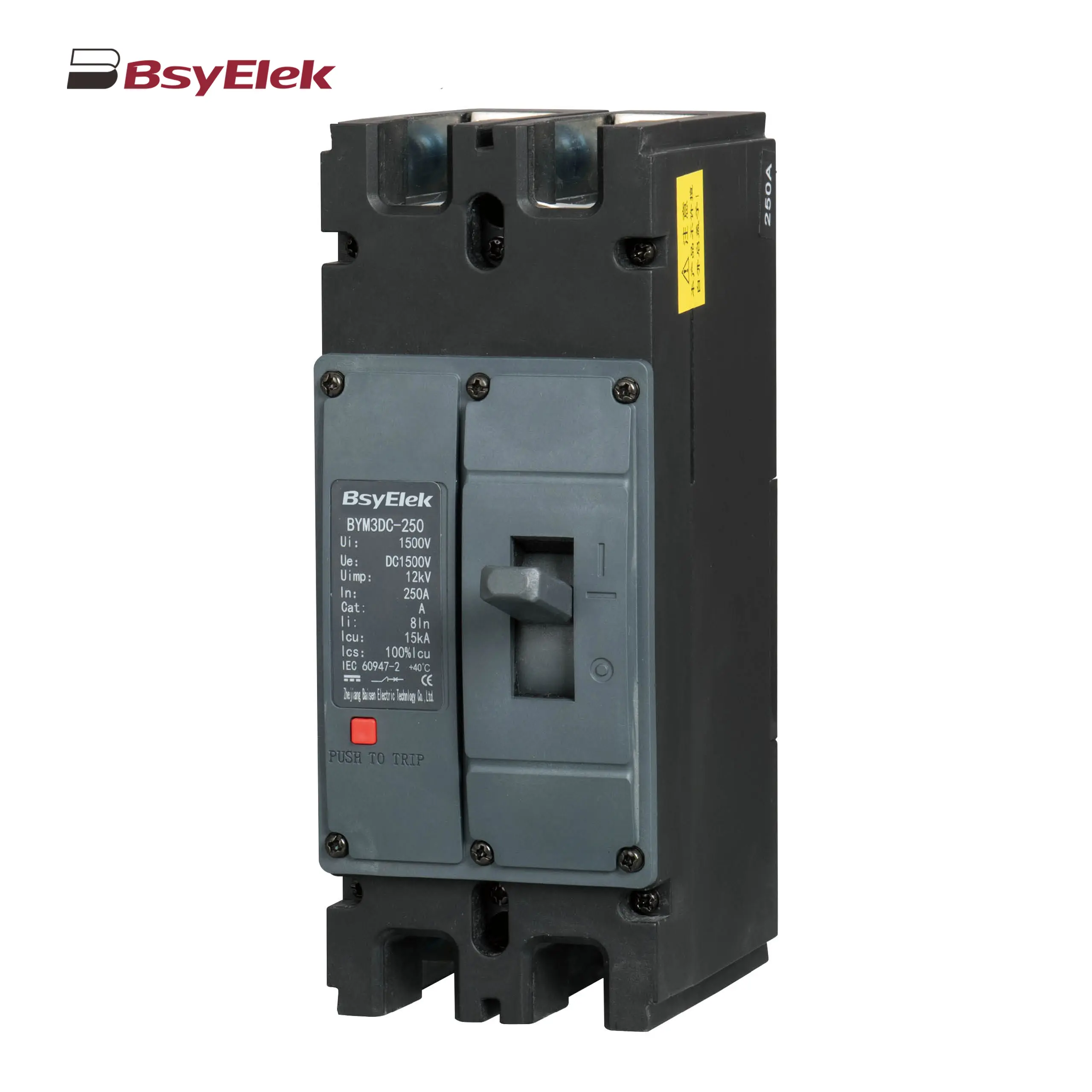 BYM3DC MCCB Photovoltaic DC Molded Case Circuit Breaker
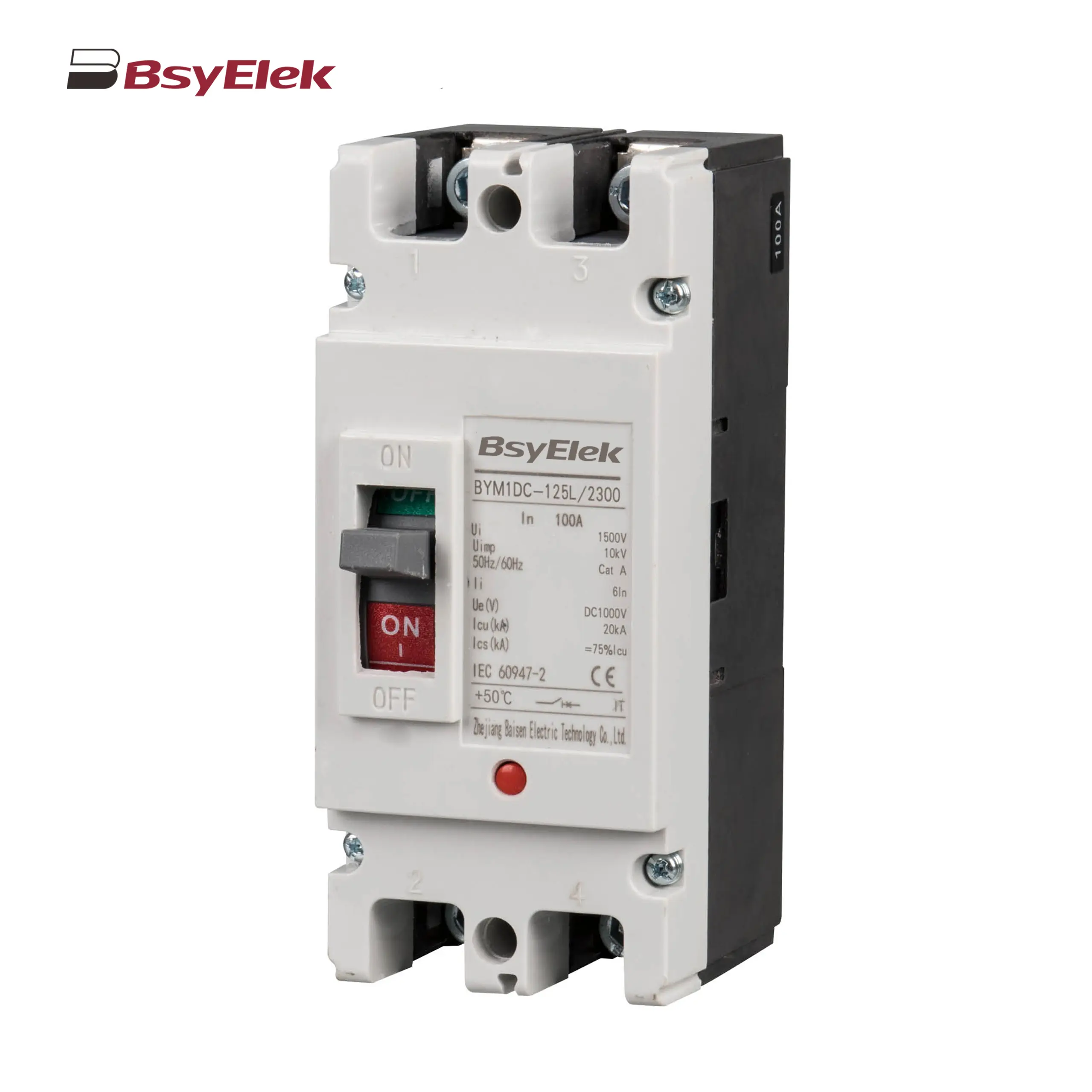 BYM1DC MCCB 1000VDC Thermal Magnetic Type DC Molded Case Circuit Breaker
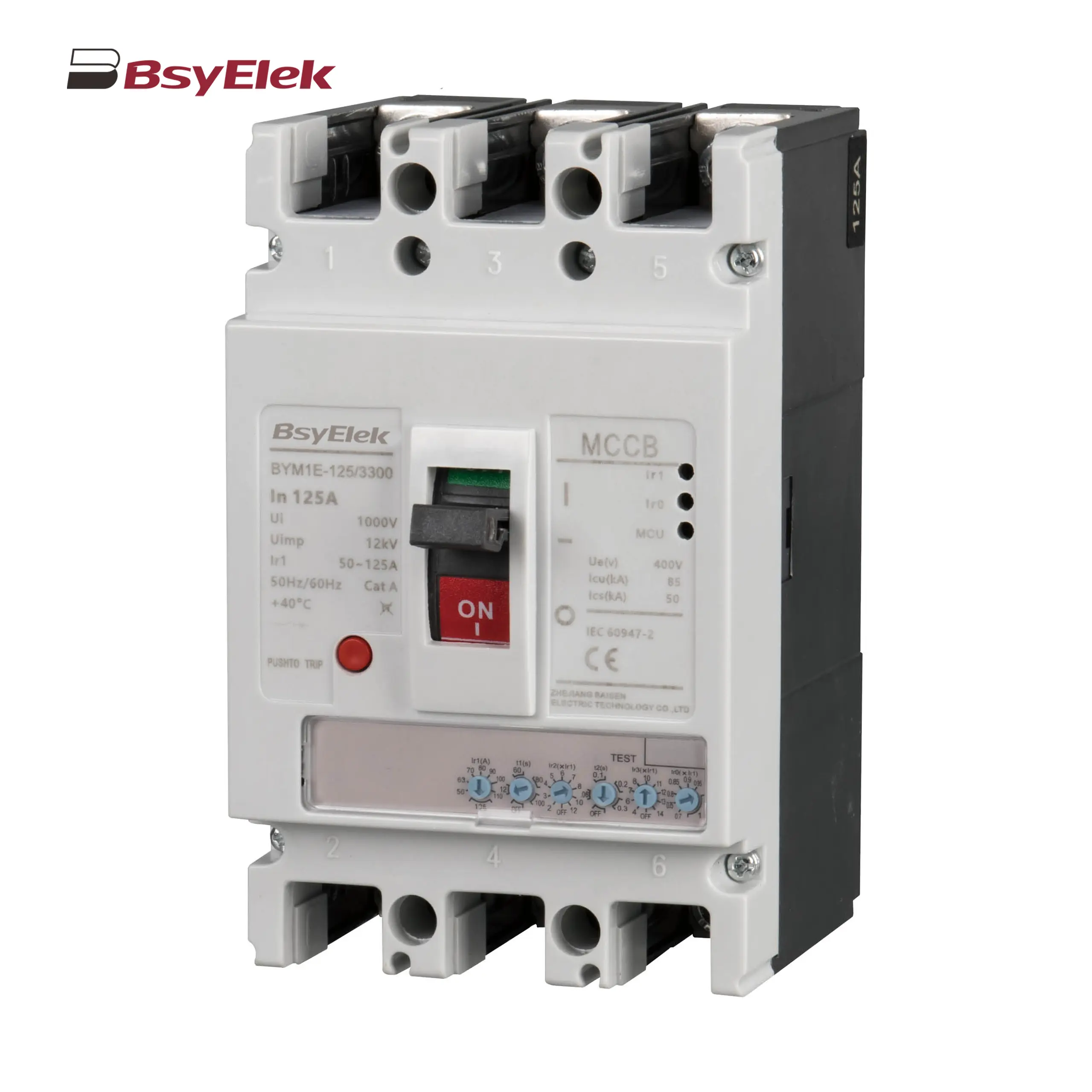 BYM1E MCCB Electronic Type Molded Case Circuit Breaker
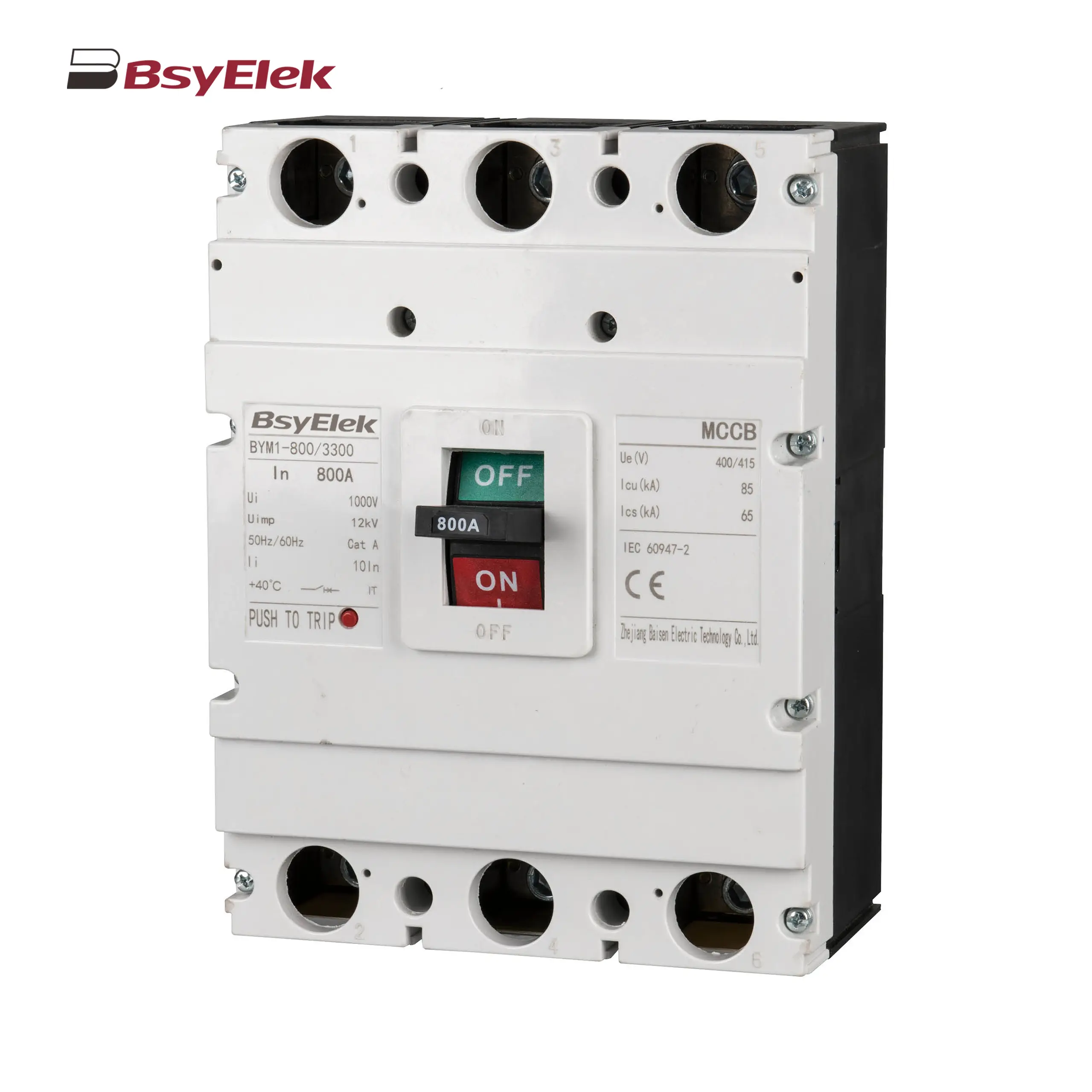 BYM1 MCCB Thermal Magnetic AC Molded Case Circuit Breaker
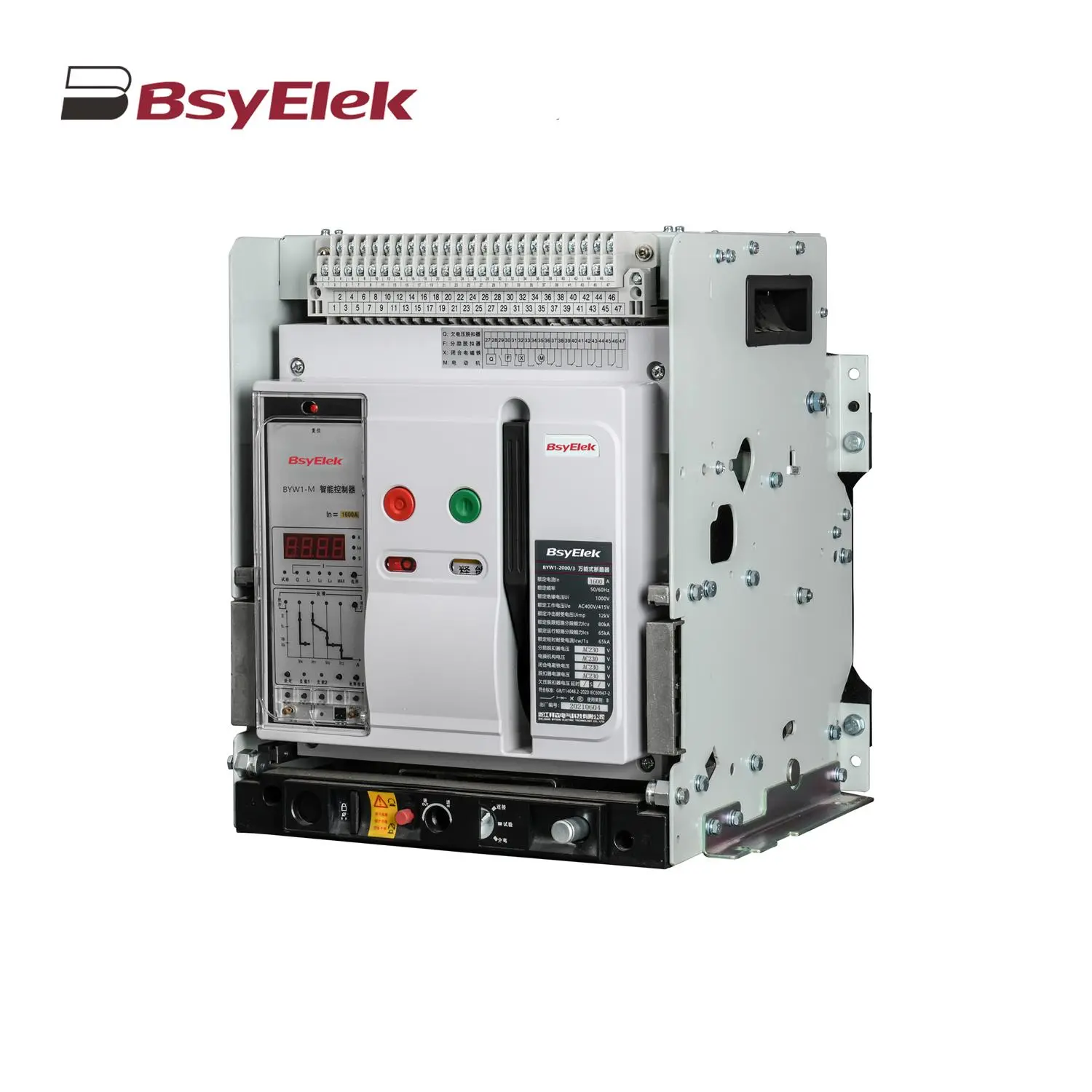 BYW1 ACB Intelligent Universal Air Circuit Breaker
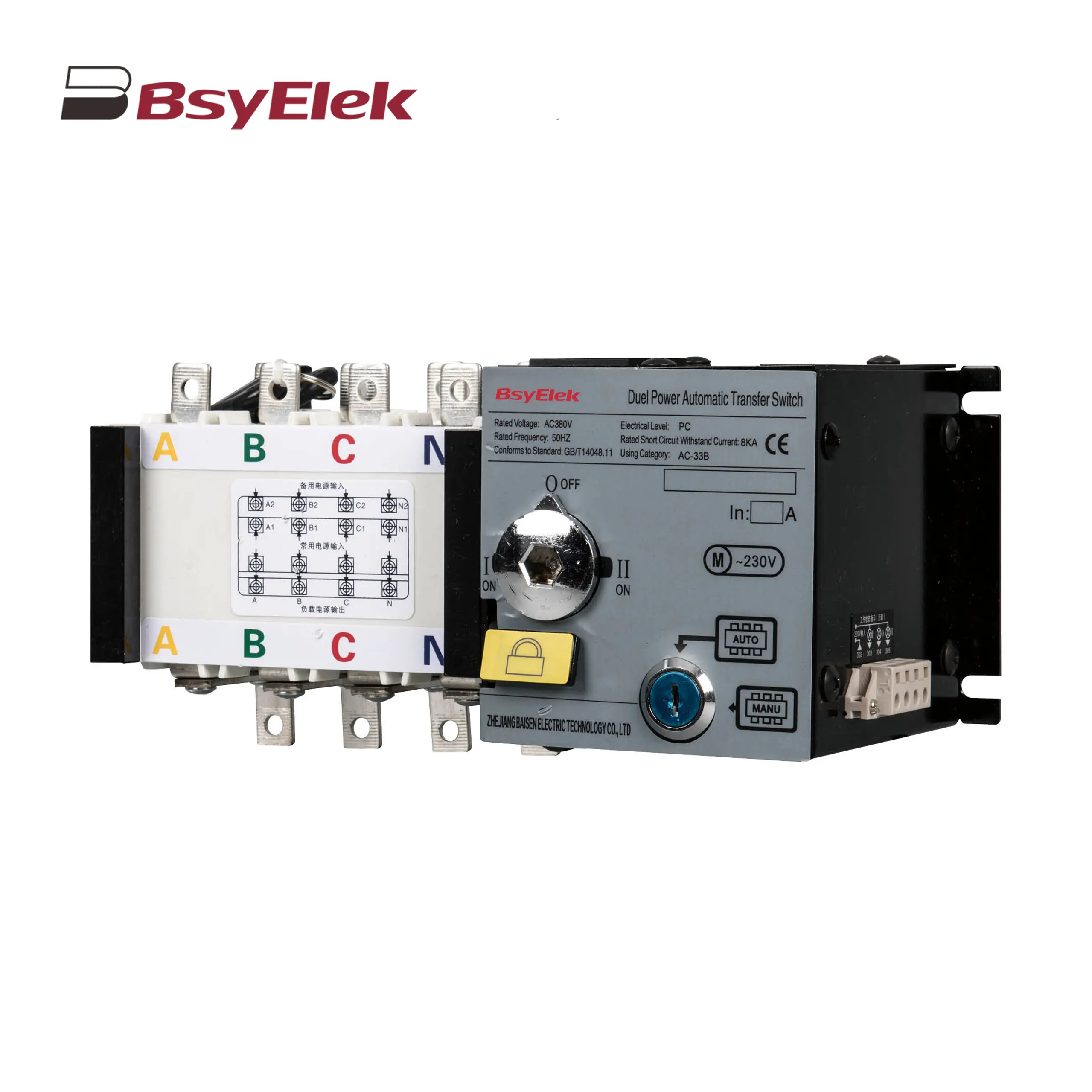 BYQ1 ATS Isolated Type PC Level Dual Power Automatic Transfer Switch
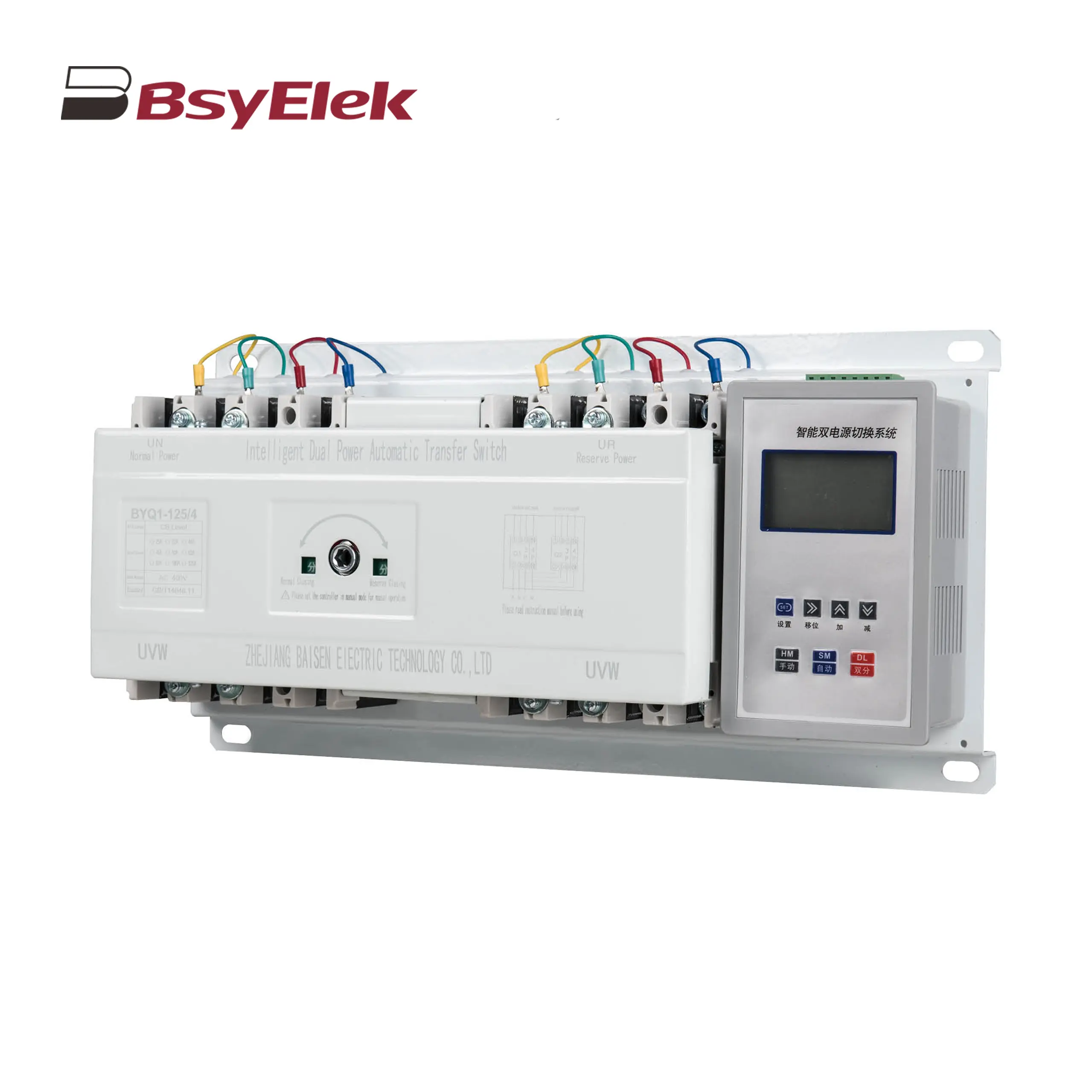 BYQ1 ATS Intelligent Type CB Level Dual Power Automatic Transfer Switch
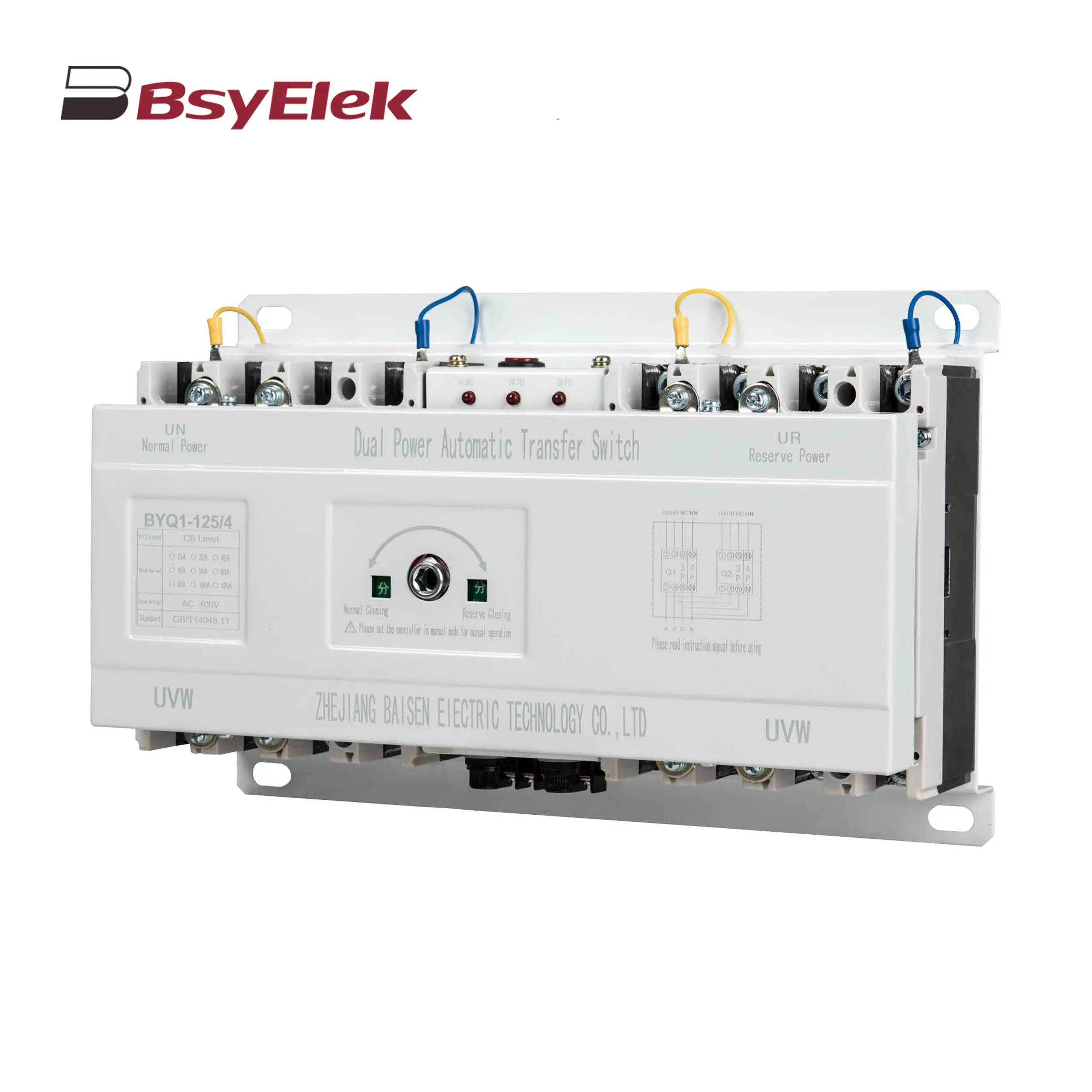 BYQ1 ATS End Type CB Level Dual Power Automatic Transfer Switch
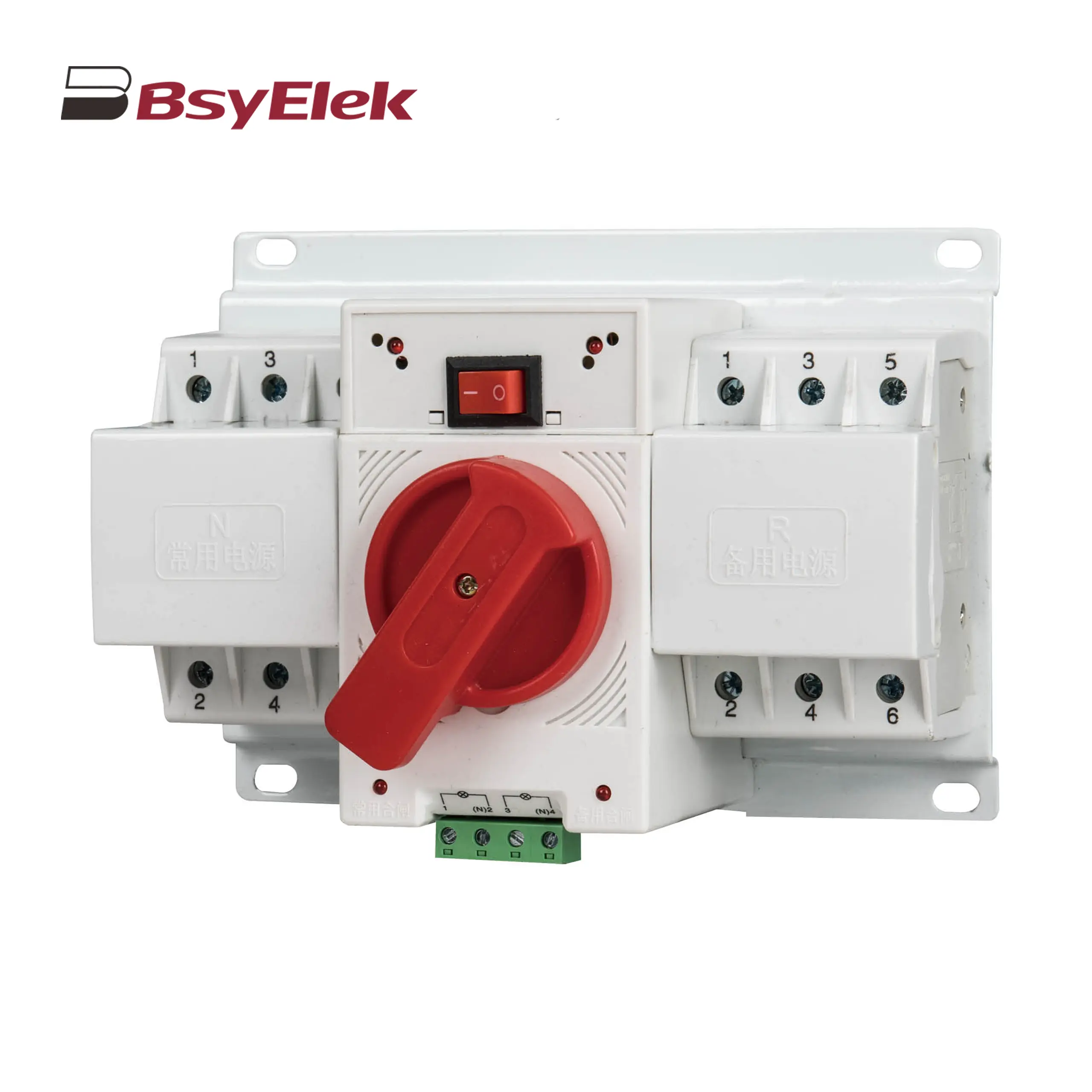 BYQ1 ATS Mini Type CB Level Dual Power Automatic Transfer Switch
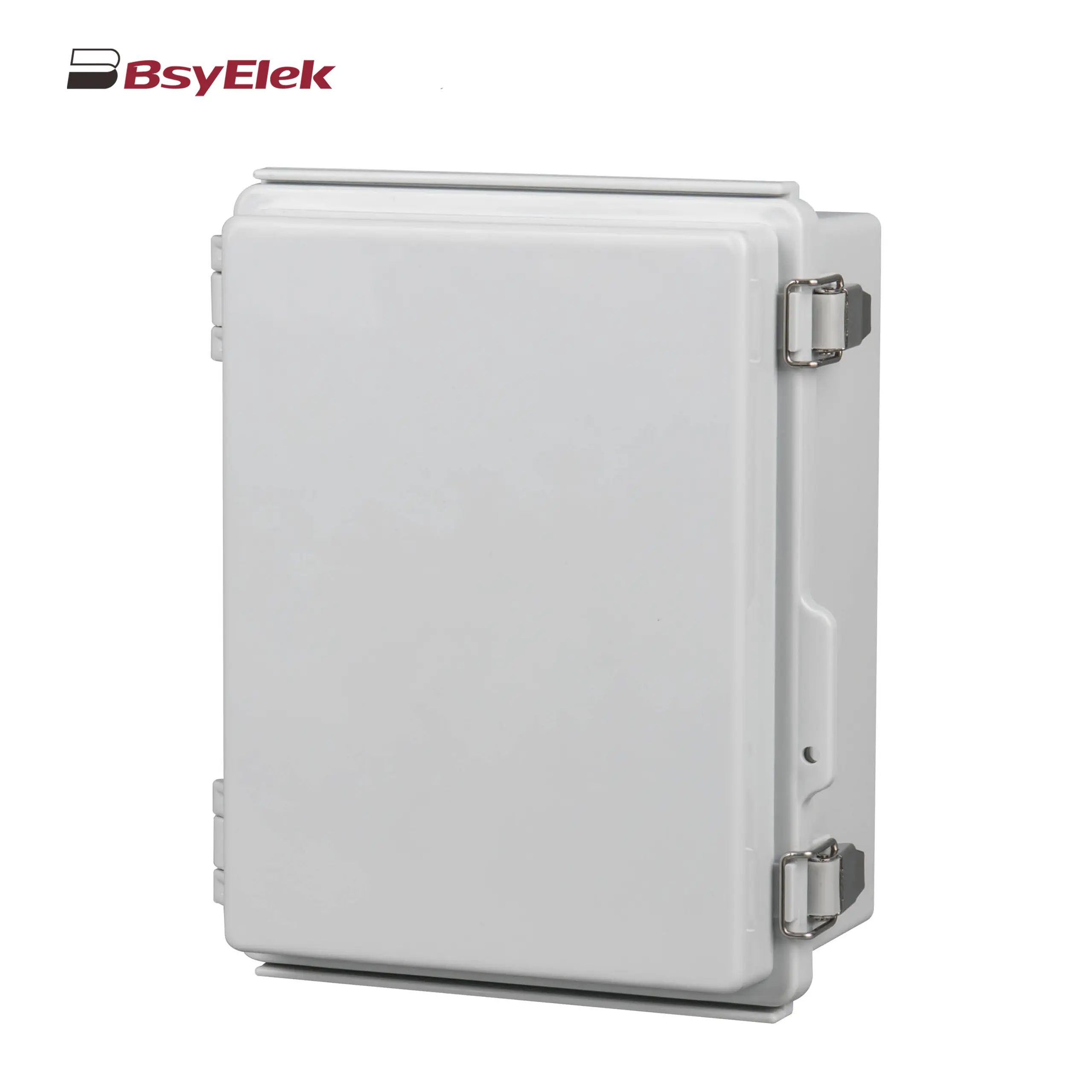 Stainless Steel Hinge Type Electrical Box
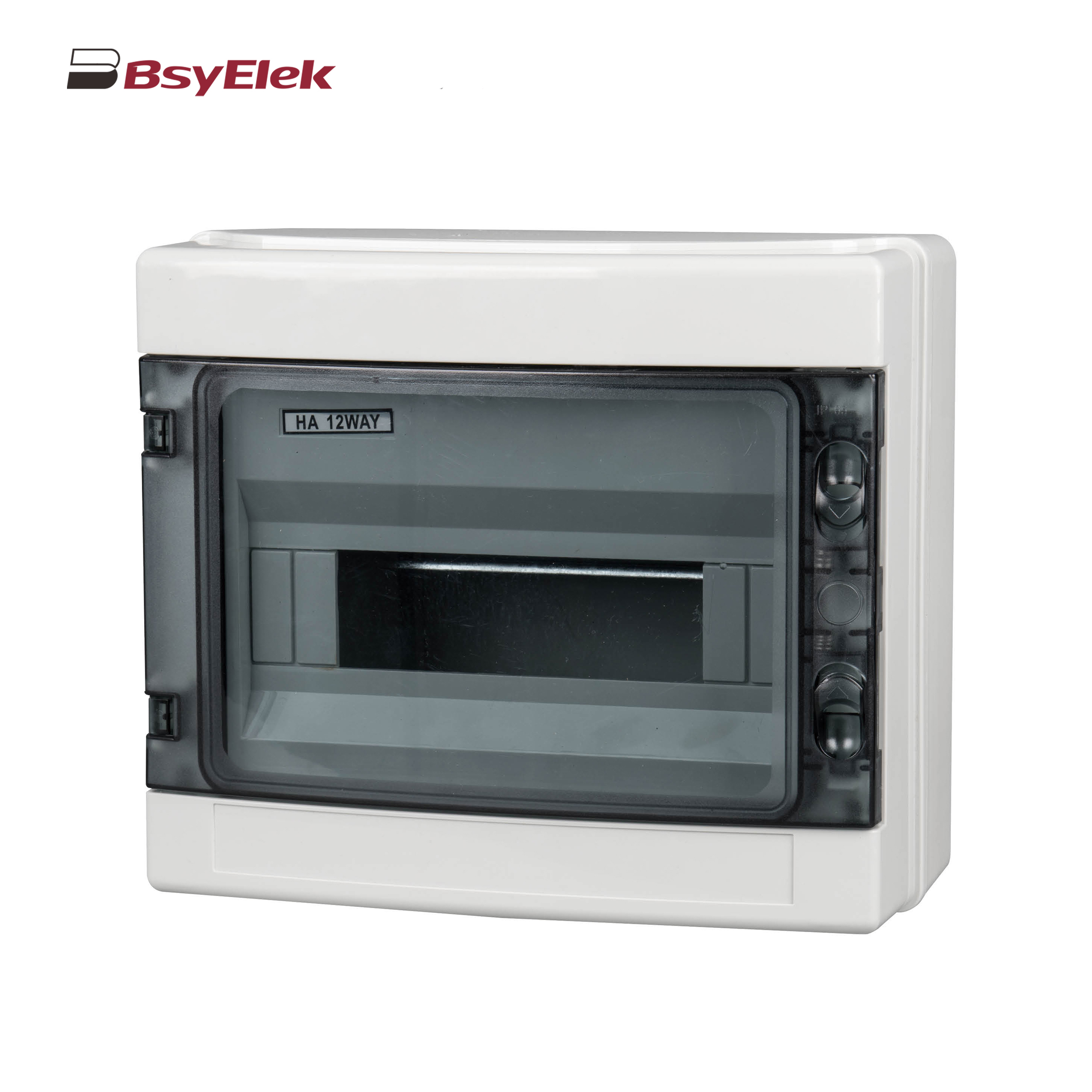 HA Waterproof Distribution Box
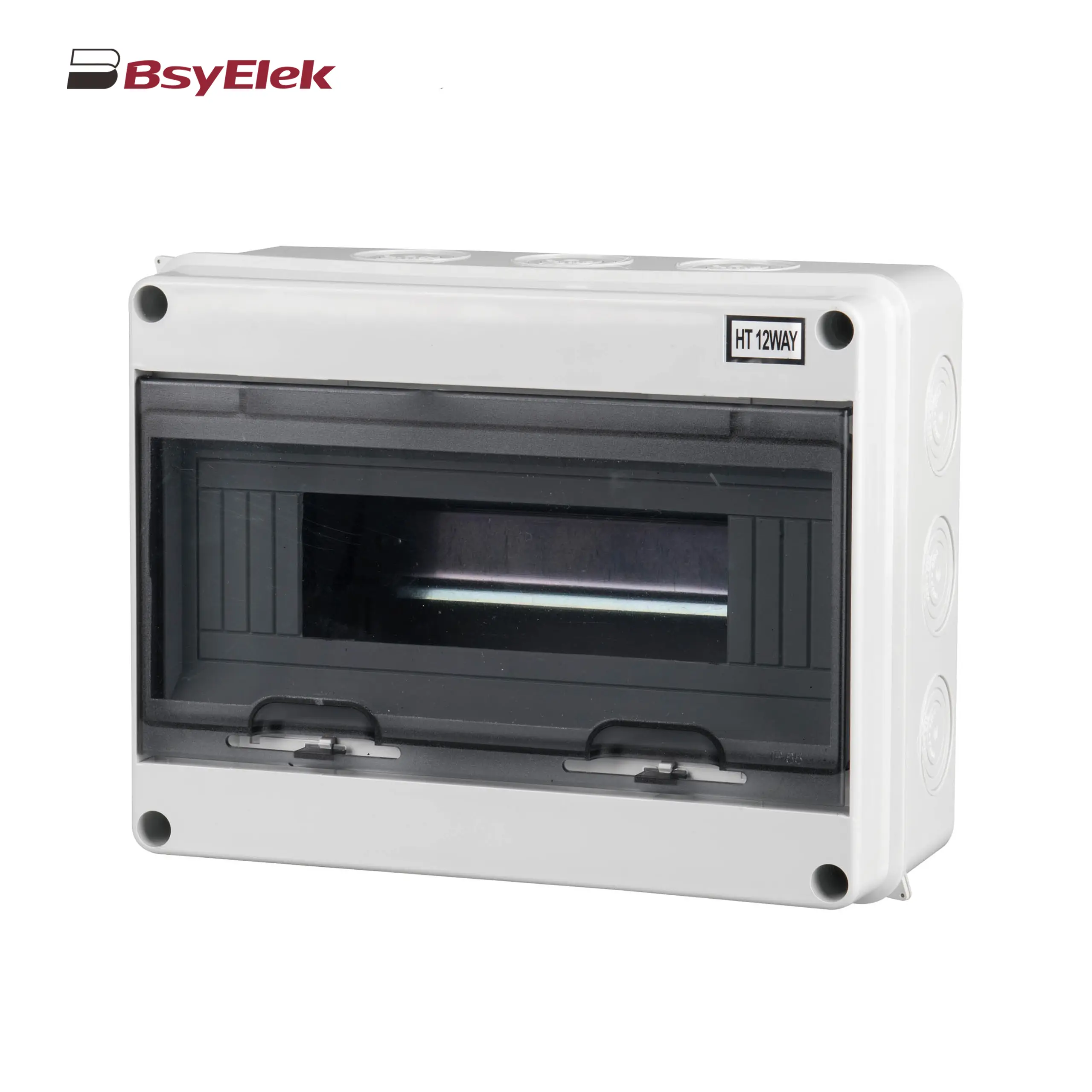 HT Waterproof Distribution Box
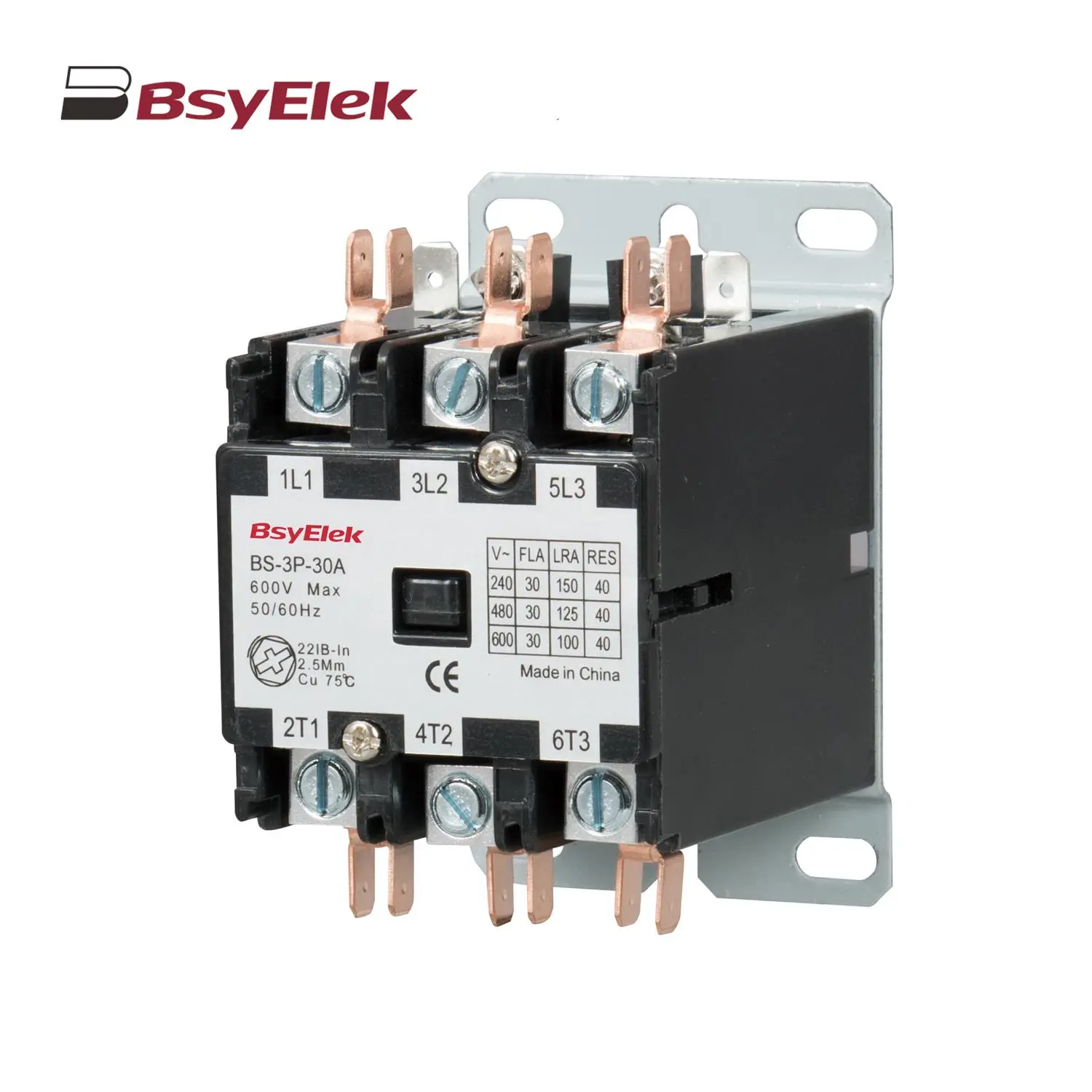 BS Definite Purpose Magnetic AC Contactor